
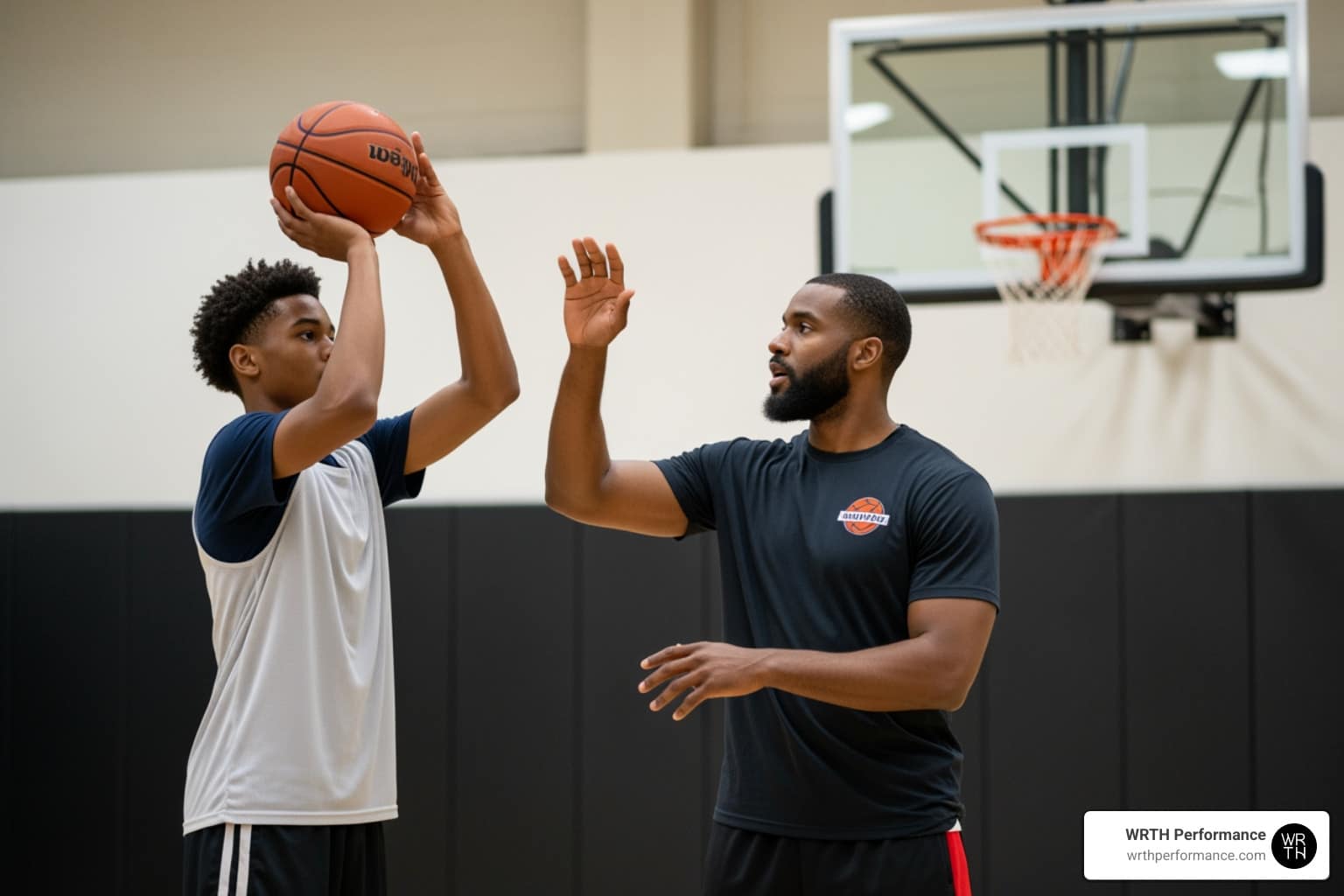
Is Hiring a Basketball Personal Trainer Worth It?
A basketball personal trainer can be one of the most impactful investments you make in your athletic development – but only if it’s the right fit for your goals, budget, and skill level.
Here’s a quick snapshot of what you need to know:
| Factor | What to Expect |
|---|---|
| Average cost | $20 – $150/hour depending on coach level |
| Beginner coaches | $20 – $40/hour |
| Intermediate coaches | $60 – $100/hour |
| Elite/pro-level coaches | $100 – $150+/hour |
| First session | Usually free (97% of coaches offer this) |
| Session length | Typically 1 hour |
| Format options | 1-on-1, small group (max 5), or online |
| Key skills trained | Strength, agility, game preparation |
Whether you’re trying to break through a performance plateau, prep for the next competitive level, or simply build skills faster than self-training allows – the right coach changes everything.
Most players spend hours shooting and scrimmaging on their own, but without structured technical feedback, bad habits quietly build up and progress stalls. A personal trainer gives you objective eyes, a clear development plan, and reps that actually translate to game situations.
The challenge is knowing what to look for, what to pay, and whether the investment matches your goals.
This guide walks you through all of it.
What Does a Basketball Personal Trainer Actually Do?
When people think of a basketball personal trainer, they often imagine someone rebounding balls while a player shoots. In reality, a high-level trainer acts as a technician, a strategist, and a mentor. They don’t just watch you play – they deconstruct your mechanics to build a more efficient athlete.
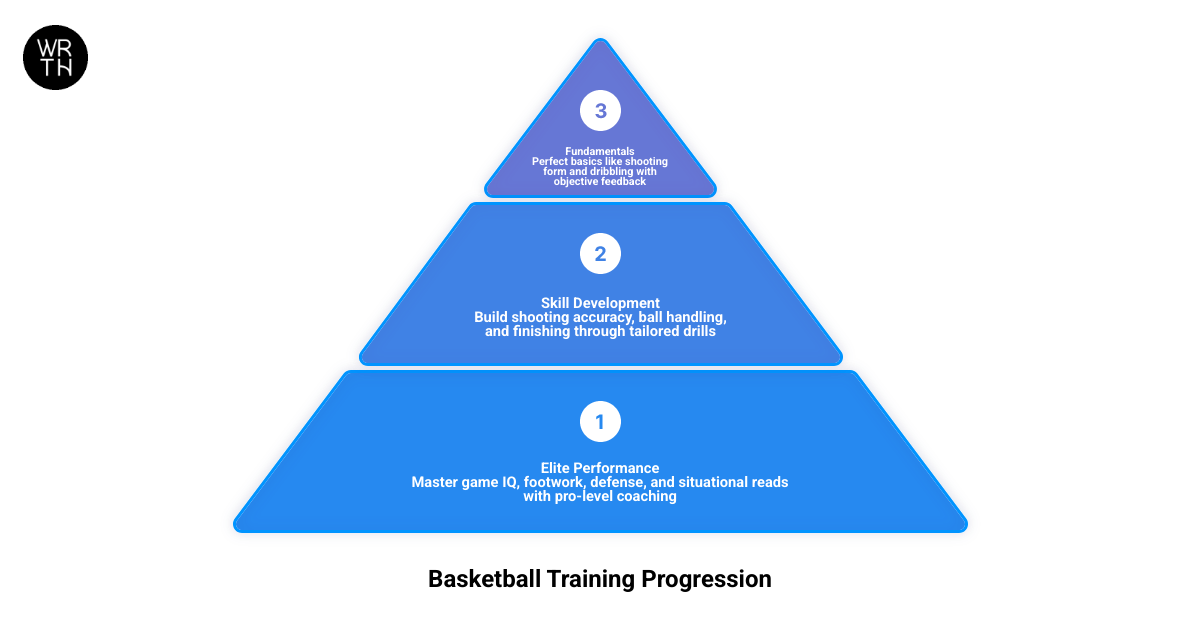
A professional coach focuses on several core pillars – in addition to strength and endurance:
- Shooting Accuracy: Beyond just “making shots,” they look at your release point, arc, and follow-through to ensure your form holds up under fatigue.
- Ball Handling: Moving past basic dribbling to develop “functional handles” that allow you to navigate pressure and create space.
- On-Ball Defense: Teaching lateral speed, proper stance, and the ability to anticipate an opponent’s move rather than just reacting to it.
- Court Vision and Game IQ: This is the “mental” side of the game – learning how to read situational plays, understand spacing, and make the right pass at the right time.
- Mental Toughness: Helping players build the composure needed to perform under pressure and maintain a growth mindset after a missed shot or a loss.
Tailored Drills for Game Translation
The biggest mistake in self-training is practicing “empty calories” – drills that look cool on social media but never happen in a real game. A top-tier basketball personal trainer uses position-specific reps. If you are a guard, you’ll work on pick-and-roll reads; if you’re a big man, the focus shifts to post-footwork precision and finishing moves through contact. The goal is “game translation,” ensuring that every minute spent in the gym shows up on the scoreboard.
The Role of Film Study and Mentorship
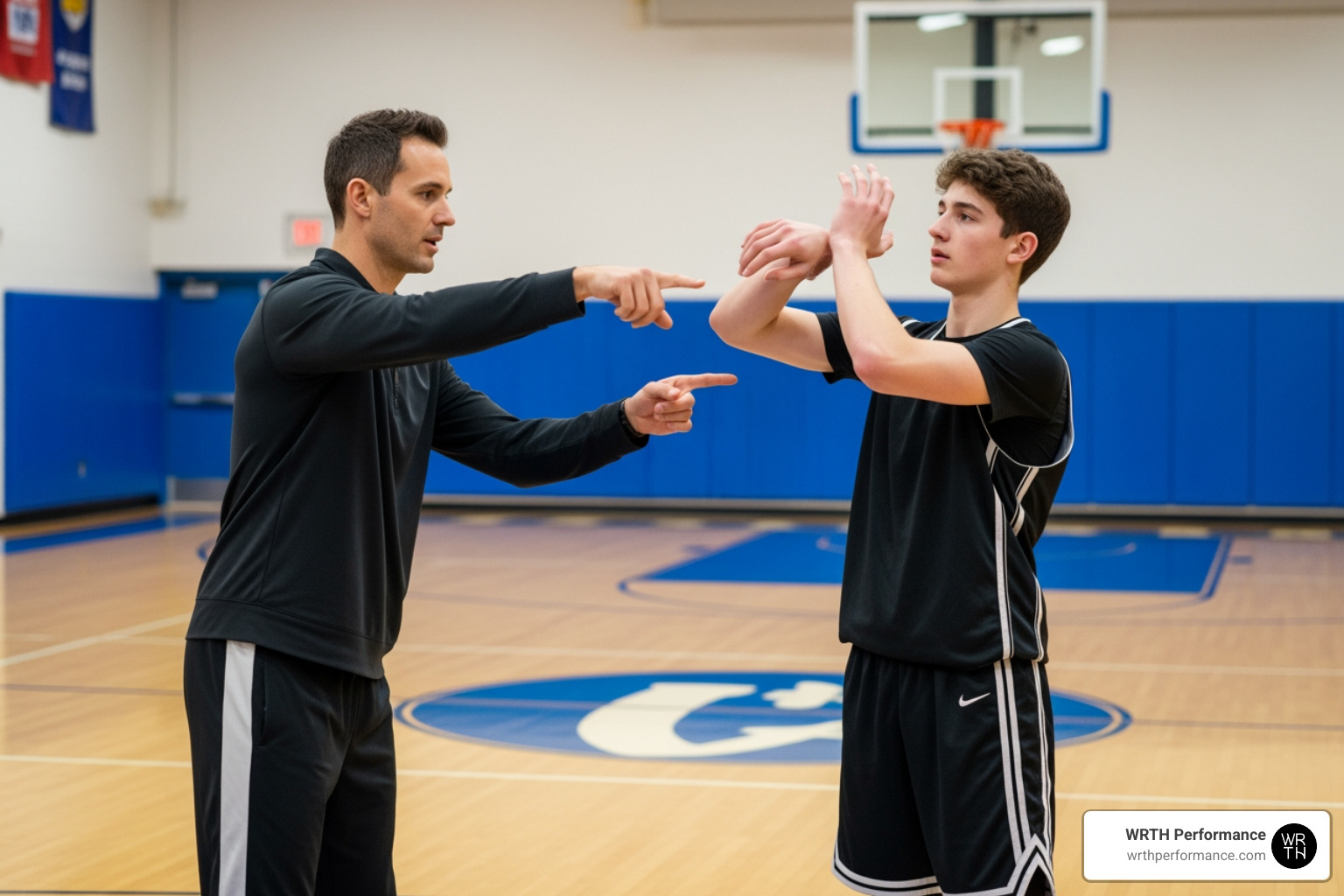
Professional preparation involves more than just physical sweat. Many elite trainers now incorporate film study to provide objective feedback. By watching your game or practice footage, a trainer can provide role clarity, helping you understand exactly what you need to do to earn more playing time. This mentorship builds confidence, as the player no longer has to guess what they are doing wrong.
The Cost of Excellence: Pricing for a Basketball Personal Trainer in 2026
As of May 2026, the market for basketball coaching has diversified significantly. While you can find affordable tutors starting as low as $20 per hour, elite-level training in the US often commands a premium.
| Coach Level | Typical Hourly Rate | Best For |
|---|---|---|
| Beginner/Tutor | $20 – $40 | Youth players, basic fundamentals |
| Intermediate | $60 – $100 | High school players, skill refinement |
| Elite / Pro Experience | $120 – $150+ | Collegiate/Pro prep, specialized skills |
Prices are influenced by several factors, including the trainer’s resume, the session’s duration, and whether you are booking a one-off session or a long-term package. Many professional resources allow you to browse local coaches and compare rates directly to find a fit for your budget.
Factors Influencing Your Investment
The price tag isn’t just for the coach’s time; it often covers the environment. High-end training typically occurs on wooden court surfaces (which offer more consistent ball response than rubber) and in facilities with climate control. Additionally, specialized equipment like shooting machines, defensive “dummies,” and weighted balls add value to the session. Coaches with advanced degrees in Kinesiology or those who hold a USA Basketball Gold License will naturally charge more due to their specialized expertise in biomechanics and injury prevention.
Individual vs. Small Group Sessions
If a 1-on-1 basketball personal trainer feels out of reach for your budget, small group sessions (usually capped at 5 players) offer a fantastic cost-benefit analysis. You still receive individual attention, but the cost is split among the participants. Furthermore, small groups introduce a competitive element – you can practice 1-on-1 moves or defensive drills against a peer, which is something you simply cannot do alone.
Key Qualifications to Look for in a Top Coach
Not all trainers are created equal. In an era where anyone can call themselves a “coach,” it is vital to vet the person responsible for your development.
Why Experience Matters for Your Basketball Personal Trainer
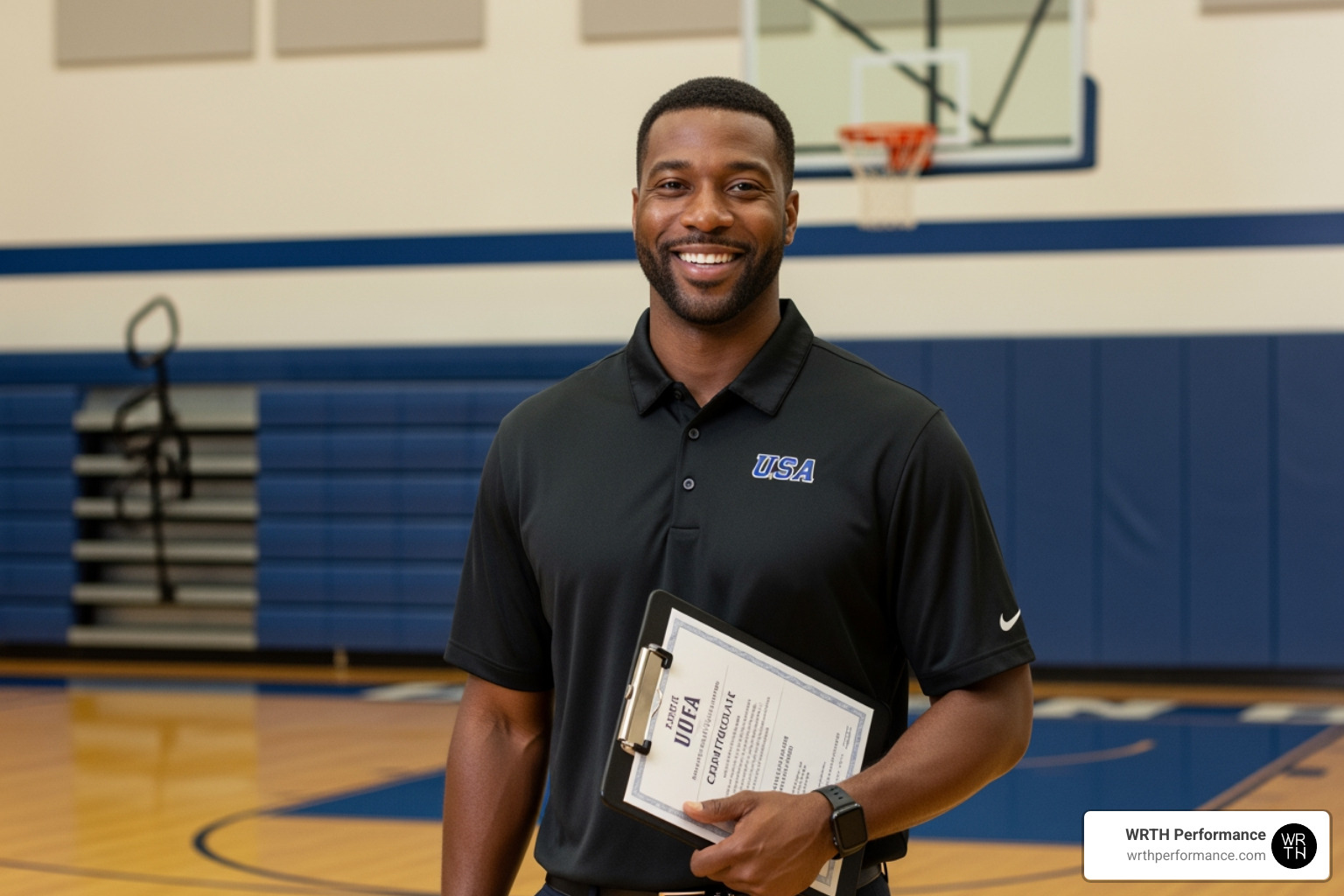
There is a massive difference between a trainer who knows the drills and one who has “lived it.” Look for trainers with professional playing experience or a collegiate coaching background. They bring game-tested methods that have been proven at the highest levels. More importantly, an experienced coach understands the “athlete-first” approach – they know how to push you without causing burnout or injury.
Certifications and Specialized Knowledge
Beyond their playing days, look for academic and professional certifications. A coach with an education, a CSCS (Certified Strength and Conditioning Specialist), or NASM-CPT (Certified Personal Trainer) credential has a deep understanding of how the body moves. This knowledge is crucial for:
- Injury Prevention: Ensuring your knees and ankles are protected through proper landing mechanics.
- Sports Nutrition: Guiding your fuel intake for maximum energy.
- Corrective Exercise: Fixing imbalances in your gait or shooting stance that could lead to long-term issues.
For those in the Florida area, looking at vetted professional directories can help you find coaches who have already undergone background checks and credential verification.
Beyond the Court: Performance, Longevity, and Recovery
In 2026, the best basketball players treat themselves like high-performance machines. This means training doesn’t end when you leave the hardwood. To truly dominate, you need to integrate strength and conditioning into your routine.
Maximizing Results with a Basketball Personal Trainer
A comprehensive basketball personal trainer program should include:
- Explosive Power: Using kettlebell workouts and plyometrics to increase your vertical jump.
- Multi-directional Movement: Training the body to change direction instantly without losing balance.
- Core Stability: Essential for finishing at the rim through contact.
- Grip Strength: An underrated skill that helps with ball security and shooting control.
Science-Driven Recovery for Athletes
Elite performance requires elite recovery. We believe that longevity is just as important as current performance. Incorporating science-driven recovery methods like sauna sessions and cold plunge therapy can significantly reduce inflammation and speed up muscle repair. For serious athletes in Orlando, focusing on metabolic health and recovery ensures you can train harder and more frequently without the risk of overtraining.
What to Expect in Your First Training Session
Walking into your first session with a basketball personal trainer can be nerve-wracking, but knowing what to expect can help you prepare.
Essential Gear to Bring:
- Proper basketball shoes (clean for indoor courts)
- A high-quality basketball
- A large water bottle (hydration is non-negotiable)
- A towel
- A positive, coachable attitude
The Evaluation Process
The first 60 minutes are usually dedicated to a baseline evaluation. Your coach will watch your shooting mechanics, test your dribbling proficiency under speed, and check your defensive stance. They might also run you through basic conditioning tests to see where your “gas tank” currently stands.
Structuring a Long-Term Development Plan
After the evaluation, your trainer should sit down with you to set specific goals. This isn’t just about “getting better” – it’s about periodization. You’ll likely discuss:
- Short-term milestones: (e.g., “Improve free-throw percentage by 10% in four weeks.”)
- Progressive overload: How the workouts will get harder as you get stronger.
- Habit formation: What drills you need to do on your own between sessions.
Frequently Asked Questions about Private Coaching
How many sessions per week are needed to see results?
For most players, 1-2 private sessions per week are the “sweet spot.” This provides enough professional correction to guide your development while leaving you 3-4 days to practice those corrections on your own. Consistency over months is more important than intensity over days.
Can a personal trainer help with college recruitment?
Yes. Many high-level trainers have deep networks in the collegiate and pro worlds. They can help with role clarity, film highlights, and even direct recommendations to coaches. This professional guidance is often the bridge between being a talented player and becoming a recruited athlete.
Is private training suitable for absolute beginners?
Absolutely. In fact, starting with a basketball personal trainer as a beginner is the best way to avoid building bad habits that take years to “unlearn” later. A coach ensures you learn the fundamentals of shooting and footwork correctly from day one.
Conclusion
Deciding to hire a basketball personal trainer is a commitment to your future self. Whether you are a youth player in Orlando looking to make the varsity team or an advanced athlete eyeing a professional career, the right guidance can shave years off your learning curve.
At WRTH Performance, we understand that basketball excellence requires more than just skill – it requires a foundation of strength, precision, and world-class recovery. Located in the heart of Downtown Orlando, our luxury private membership gym provides the state-of-the-art equipment and science-driven recovery (including sauna and cold plunge) that elite athletes need to stay at the top of their game.
We focus on performance and longevity for a limited clientele, ensuring that every member receives the personalized attention they deserve. If you’re ready to stop “just playing” and start dominating, it’s time to elevate your environment.
Start your performance journey today by visiting WRTH Performance.
