
What to Know Before Choosing a Downtown Gym Membership
A Downtown gym membership can range from simple 24/7 gym-floor access to a high-end fitness, training, recovery, and wellness experience. The right choice depends less on the lowest monthly price and more on whether the location, hours, coaching, equipment, privacy, and recovery options fit the way you actually live and train.
Here is the quick comparison:
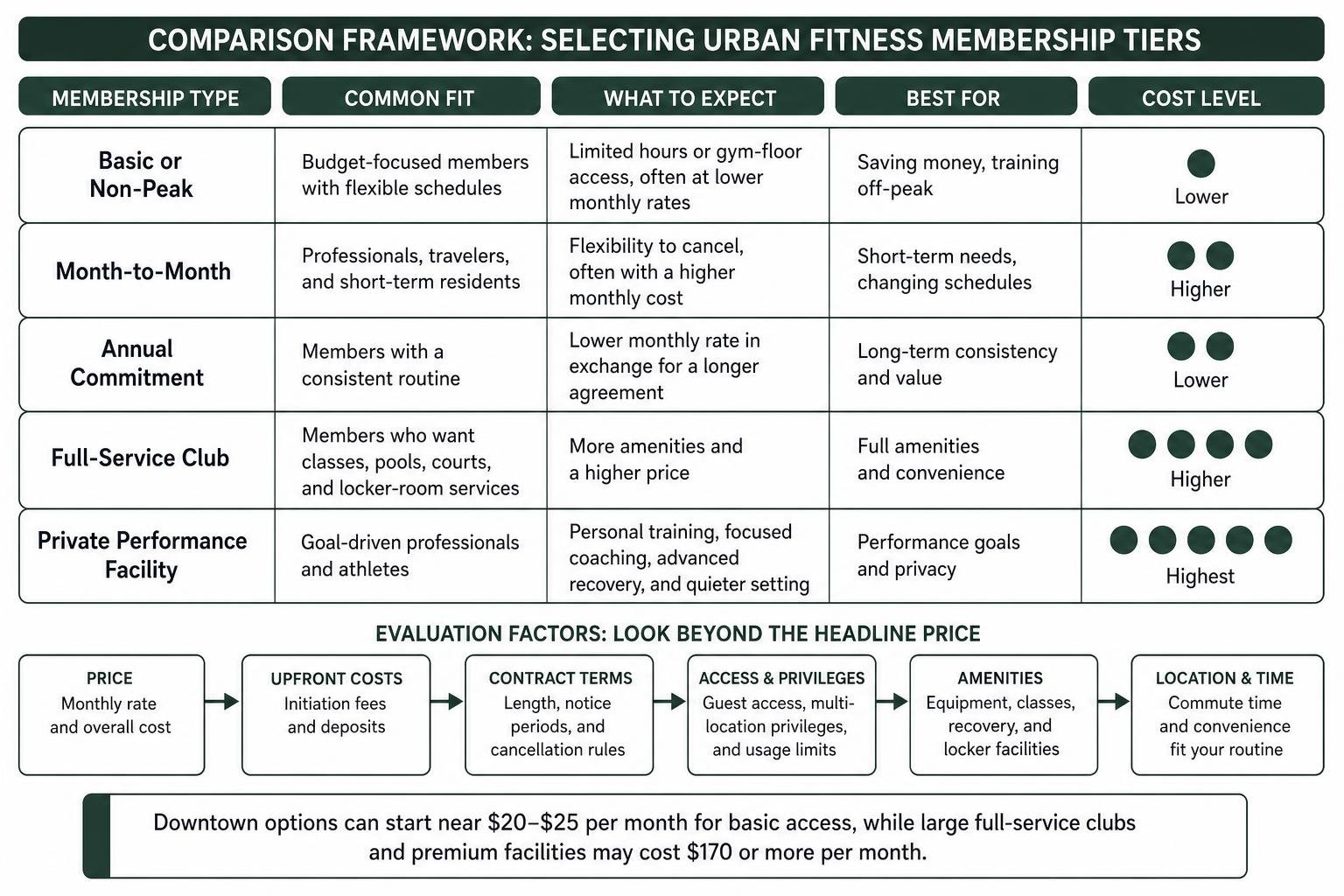
| Membership type | Common fit | What to expect |
|---|---|---|
| Basic or non-peak | Budget-focused members with flexible schedules | Limited hours or gym-floor access, often at lower monthly rates |
| Month-to-month | Professionals, travelers, and short-term residents | Flexibility to cancel, often with a higher monthly cost |
| Annual commitment | Members with a consistent routine | Lower monthly rate in exchange for a longer agreement |
| Full-service club | Members who want classes, pools, courts, and locker-room services | More amenities and a higher price |
| Private performance facility | Goal-driven professionals and athletes | Personal training, focused coaching, advanced recovery, and a quieter setting |
Downtown options can start near $20 to $25 per month for basic access, while large full-service clubs and premium facilities may cost $350 or more per month. Before joining, look beyond the headline price: initiation fees, contract terms, guest access, multi-location privileges, and the time required to get there all affect the real value.
I am Jason Kasheta, an Orlando-based personal trainer with more than 20 years of experience in strength, fitness, nutrition, and performance coaching. I help people evaluate a Downtown gym membership through the lens that matters most: whether the environment and support will help them train consistently and make progress.
Understanding Downtown Gym Membership Structures and Pricing
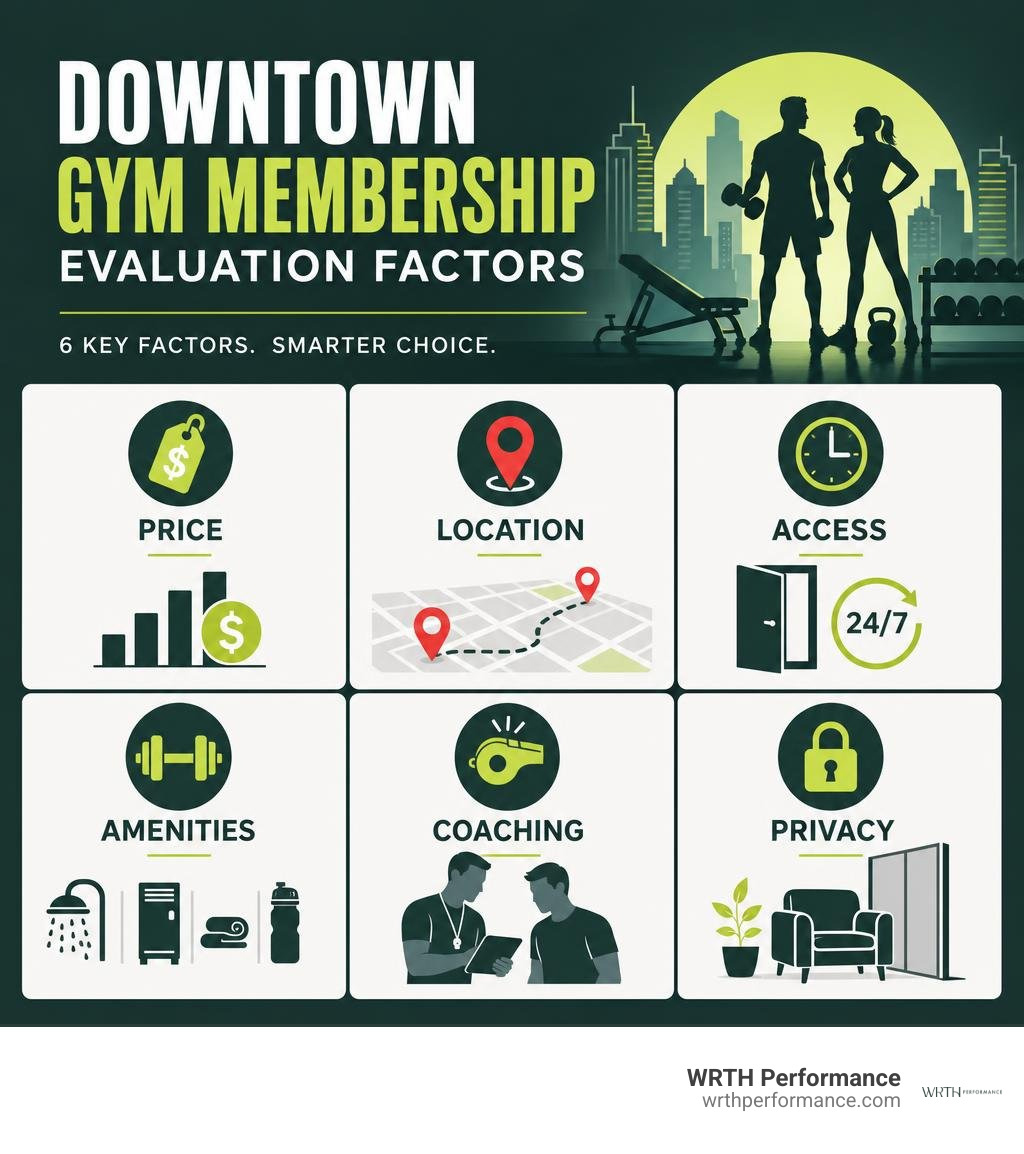
Selecting the right Downtown gym membership requires understanding how urban health facilities structure their offerings. Because real estate in commercial city centers comes at a premium, facilities tailor their contracts, access tiers, and initiation fees around member volume and peak usage patterns.

Key Types of Downtown Gym Membership Plans
Urban fitness facilities generally structure their access agreements into distinct categories to accommodate diverse city schedules:
- Month-to-Month Memberships: These offer maximal flexibility without long-term contractual obligations. While the recurring monthly fee is typically higher, they allow members to pause or cancel with standard notice – ideal for seasonal residents, short-term project contractors, or frequent travelers.
- 12-Month Commitments: Standard annual agreements lock in a lower monthly rate in exchange for a predictable commitment. This model works best for local residents and professionals seeking long-term consistency.
- Peak vs. Non-Peak Tiers: Some urban centers offer discounted access restricted to off-peak hours (for instance, early morning, mid-afternoon, or weekends). This benefits shift workers, early risers, or remote workers with fluid midday availability.
- Tiered Access Levels: Entry-level plans typically cover open gym-floor access, while elite or premium tiers integrate perks like unlimited studio classes, guest passes, locker storage, towel service, or specialized training zone access.
Typical Price Ranges and Cost Factors
The financial investment for a city center gym varies significantly based on facility footprint, member density, and included services. Nationwide statistics highlight this broad spectrum:
| Facility Type | Average Monthly Range | Unique Characteristics |
|---|---|---|
| Community & University Tiers | $20 – $50 / month | Public community rates, non-peak access options, expansive sports facilities |
| Essential / Express Centers | $25 – $60 / month | Basic gym floor equipment, multi-location regional access, 24/7 keycard entry |
| Full-Service Urban Clubs | $100 – $175 / month | Multi-level layouts, lap pools, group classes, saunas, court sports |
| Boutique & Luxury Facilities | $175 – $275+ / month | Limited member counts, specialized coaching, cutting-edge recovery, zero crowds |
Operating overhead, equipment quality, staff-to-member ratios, and facility size heavily dictate these figures. When evaluating our straightforward Pricing, factor in ancillary costs like initiation fees, biannual facility improvement fees, locker rentals, or parking costs.
Core Amenities and Recovery Modalities in Urban Health Clubs
Urban fitness enthusiasts increasingly prioritize facilities that support both high-intensity physical exertion and comprehensive physical recovery.
Fitness Facilities and Equipment Diversity
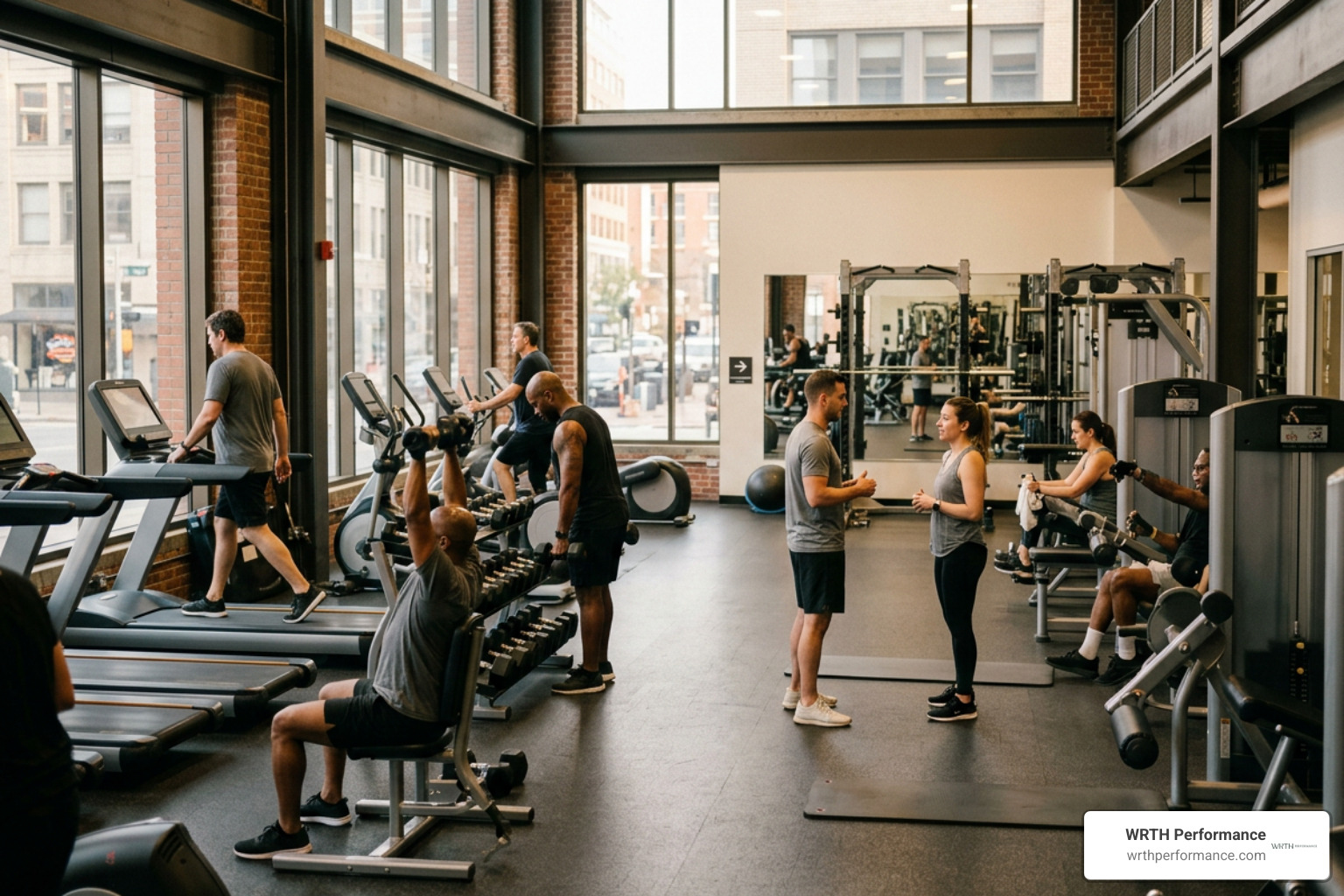
Urban gyms vary widely in floor layout and equipment selection. A well-equipped city gym floor typically features:
- Strength and Resistance Training: Comprehensive free-weight areas, power racks, specialized dumbbell setups, and precision selectorized strength training machines.
- Functional Movement Zones: Dedicated turf lines, kettlebell stations, plyometric boxes, suspension trainers, and heavy bags for dynamic athletic conditioning.
- Cardiovascular Machinery: Premium treadmills, ellipticals, rowing machines, and stationary bikes with digital integration for tracking performance.
Facilities offering specialized gear and expansive layout options cater directly to serious athletes seeking targeted performance development, as outlined in our review of The 10 Best Luxury Fitness Gyms Compared.
Advanced Longevity and Recovery Amenities
Modern training science emphasizes that adaptation and progress occur during rest and recovery. High-end urban health facilities feature recovery suites that far exceed simple post-workout showers:
- Infrared Sauna Therapy: Delivers deep radiant heat to support relaxation, circulation, and tissue recovery.
- Cold Plunge Therapy: Immerses the body in cold water to reduce post-workout muscular soreness, decrease systemic inflammation, and boost mental clarity.
- PEMF Therapy (Pulsed Electromagnetic Field): Utilizes targeted energy fields to support cellular energy production and overall tissue recovery.
- Red Light Therapy: Emits specific light wavelengths to enhance cellular energy and support skin and tissue vitality.
Combining focused strength work with advanced recovery technology under one roof provides a complete environment for long-term health and performance.
Catering to Urban Lifestyles: Atmosphere, Perks, and Accessibility
A successful fitness routine relies on seamless integration into your everyday daily schedule. Urban fitness centers adapt their operational frameworks to eliminate common barriers to consistency.
Membership Perks, Discounts, and Guest Access
When evaluating a Downtown gym membership, assess the value-added benefits included across different tiers:
- Guest Passes: Premium tiers often provide complimentary monthly guest passes, allowing you to train alongside friends or co-workers.
- Multi-Location Privileges: Regional health networks let you utilize nearby locations near home or during business travel.
- Corporate Wellness Partnerships: Many downtown employers sponsor partial gym dues or offer corporate rate discounts to foster employee health.
- Insurance Fitness Benefits: Select insurance networks offer discounted or covered access to partner fitness facilities.
Evaluating these extras can reveal hidden savings that enhance your overall membership value.
Atmosphere: Intimate Boutique Spaces vs Big-Box Gyms
The atmosphere inside a fitness center directly affects workout efficiency and stress management:
- Big-Box & Multi-Level Urban Clubs: Feature expansive square footage, extensive group class schedules, court sports, and lap pools. However, peak hours (5:00 AM – 8:00 AM and 4:30 PM – 7:30 PM) often bring crowded weight floors and waiting times for key equipment.
- Capped Boutique Facilities: Focus on a tailored, quiet, and private experience. By intentionally capping total active memberships, these clubs eliminate equipment waiting times, lower ambient noise, and provide an executive-level environment for uninterrupted training.
Choosing between a bustling social hub and a focused private club depends entirely on whether you thrive in energetic group settings or prefer quiet, distraction-free environment.
Determining the Best Downtown Gym Membership for Your Lifestyle
To select the best facility for your routine, evaluate these practical considerations:
- Commute and Proximity: Is the gym within a short walk or quick drive from your home or office? Convenience directly drives gym attendance.
- Facility Cleanliness and Space: Tour the facility during your primary workout hours to evaluate cleanliness, crowd levels, and equipment availability.
- Coaching Quality: Look for facilities providing expert Personal Training and individual instruction rather than generic floor oversight.
- Customized Wellness Approach: Ensure your routine reflects your personal goals, a philosophy detailed in Beyond One-Size-Fits-All Why Your Wellness Plan Should Be All About You.
Frequently Asked Questions About Urban Fitness Clubs
What is the average monthly cost for a gym membership in a city center?
City center gym memberships range widely depending on facility type. Basic 24/7 keycard access centers and community facilities start between $20 and $50 per month. Mid-tier to full-service athletic clubs with extensive amenities typically range from $89 to $175 per month. Premium private health clubs and specialized boutique facilities often range from $175 to $275+ per month, before factoring in personal or semi-private training options.
Can I get a downtown gym membership covered through health insurance?
Yes, many commercial health insurance plans offer wellness benefits, fitness reimbursement programs, or network access passes. Certain plans partner with national fitness networks to subsidize monthly dues or grant access to participating urban gyms. Contact your insurance provider’s wellness representative to confirm eligible fitness benefits.
What recovery amenities should I look for in a high-end downtown gym?
A well-rounded, high-end downtown health facility should feature recovery options that complement heavy physical training. Look for contrast recovery modalities like infrared saunas and cold plunges, alongside modern cellular support tools like PEMF therapy and red light therapy. These tools help lower stress, promote tissue restoration, and keep your body operating at peak levels.
Conclusion
Finding the ideal Downtown gym membership comes down to aligning your health goals with an environment that respects your time, energy, and vision for longevity.
At WRTH Performance, we operate a luxury private membership facility located in the heart of Downtown Orlando. We intentionally limit our active client base through a strict membership cap to preserve space, eliminate crowds, and deliver an elite training environment. We combine state-of-the-art strength and cardio equipment with science-driven recovery therapies – including infrared sauna, cold plunge, PEMF, and red light therapy – alongside expert personal training and nutrition coaching tailored to performance and longevity.
If you are ready for a refined, outcome-driven fitness experience, explore our Boutique Gym to learn more about our private membership opportunities.
