
Why Finding the Right Performance Training Gym Changes Everything
A performance training gym is not the same as a standard fitness center – and knowing the difference can save you months of wasted effort.
Quick answer: What is a performance training gym?
- A gym focused on measurable athletic outcomes – speed, strength, power, agility, and durability
- Offers structured programming with assessments, cycles, and progress tracking
- Staffed by credentialed coaches (not just floor monitors)
- Serves athletes of all ages and levels, from youth to competitive adults
- Integrates recovery, nutrition, and injury prevention alongside training
Most gyms give you access to equipment and leave you to figure out the rest. A true performance training gym gives you a plan, a coach, and a system built around your specific goals.
The gap between the two matters more than most people realize. Data from programs training thousands of athletes shows measurable gains are absolutely achievable – things like gaining a mile per hour of speed or improving body composition significantly in under five months – but only when training is structured, coached, and tracked properly.
This guide walks you through 10 smart ways to compare and choose the right gym before you commit your time, money, or athletic development to the wrong place.
What a Performance Training Gym Actually Does Better Than a Regular Gym
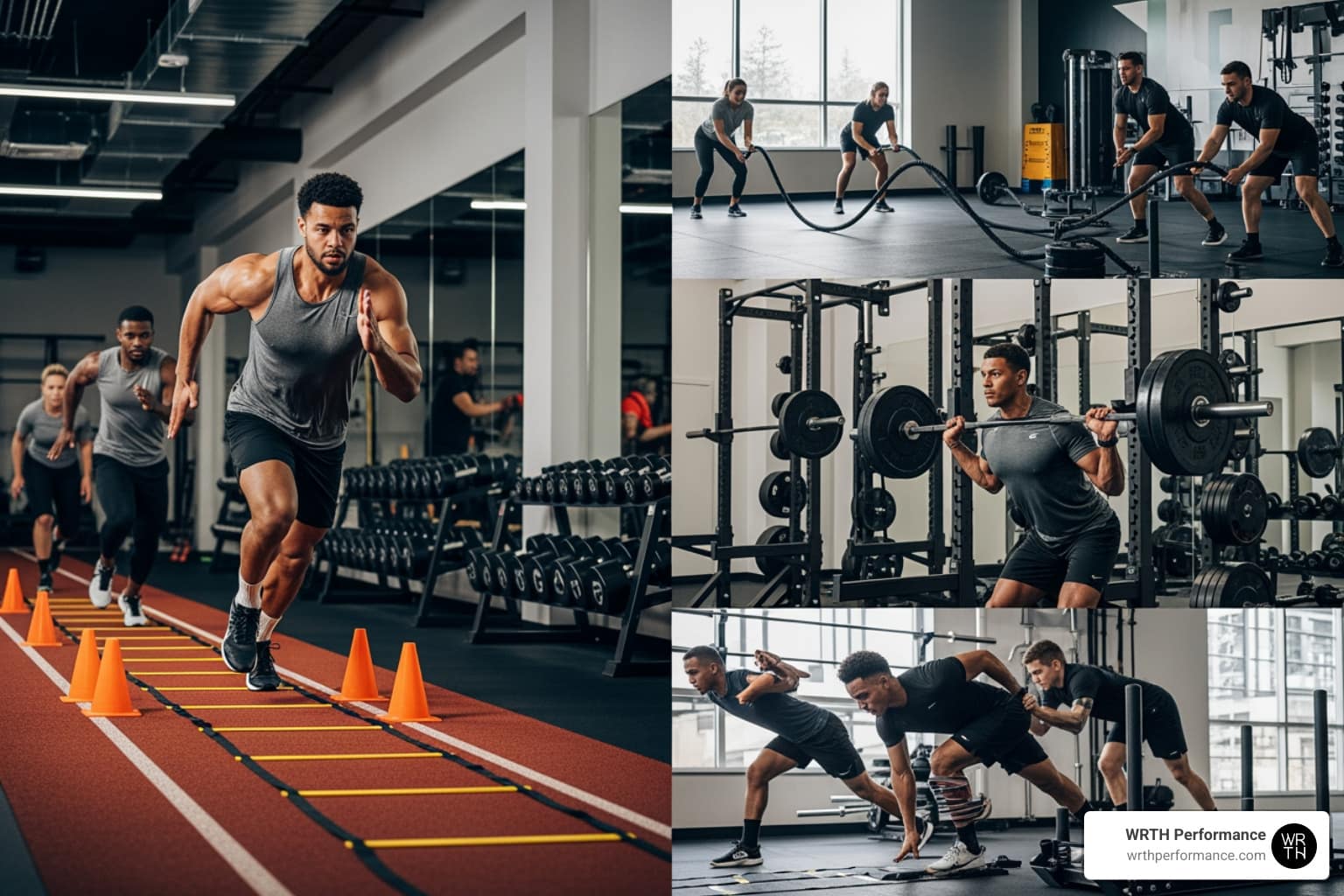
When you walk into a typical big-box gym, you see rows of cardio machines and people doing random exercises they found on social media. A performance training gym operates on an entirely different frequency. Here, every movement has a purpose, and every set is a step toward a specific athletic goal.
Performance training vs general fitness training
General fitness training is often about the “burn”-sweating for the sake of sweating or burning calories to lose weight. While those are fine goals, they lack the precision of sports performance. Performance training focuses on how you move and how that movement transfers to your sport or your life. We prioritize things like movement quality, explosive power, and body composition changes that serve a functional purpose. Instead of just “working out,” you are following a system of progressive overload and structured coaching designed to make you a more capable human being. Concepts like progressive overload and strength and conditioning are foundational in this kind of training.
Why performance training works for athletes and adults
This isn’t just for the pros. Whether we are talking about youth athletes building a foundation, high school students eyeing college prep, or adults who want to remain weekend warriors without getting hurt, the principles remain the same. Performance training builds resilience and confidence. It is about long-term development, ensuring that a 40-year-old professional can move with the same agility and durability they had in their 20s.
The signs you’re looking at a true performance training gym
How do you spot the real deal? Look for assessments right at the door. If they don’t test you, they can’t help you. A true facility offers individualized plans, even within small groups, and provides constant coach feedback. You should see progress tracking tools and a clear recovery integration strategy. If the gym feels like a laboratory for human movement rather than a playground for heavy lifting, you’re in the right place.

10 Smart Ways to Compare a Performance Training Gym Before You Join
Choosing where to train is a major decision. You aren’t just buying a membership – you’re investing in your health and your future performance. Use this checklist to separate the elite facilities from the hype.
1. Start with assessments, not hype
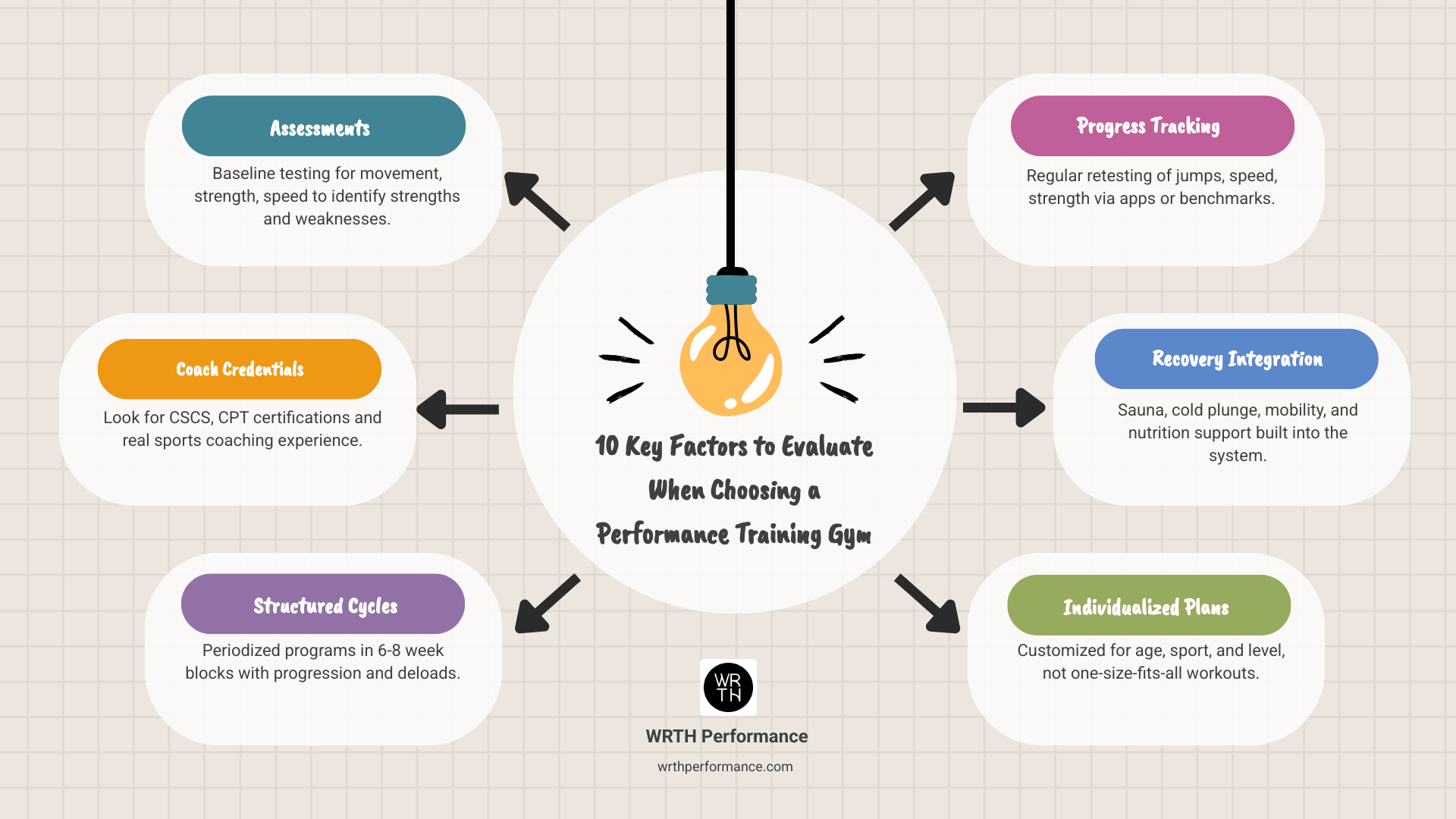
A “one-size-fits-all” workout is a recipe for stagnation or injury. Any reputable performance training gym should begin your journey with a comprehensive movement screen or athletic assessment. This baseline testing identifies your strengths and weaknesses, mobility restrictions, and power output. This onboarding process ensures your program is built for your body, not a generic template.
2. Look for coaches with real performance credentials
In performance, “certified” can mean many things. Look for gold-standard credentials like the CSCS (Certified Strength and Conditioning Specialist) or relevant education. Great coaches often have a sport background themselves and a commitment to continuing education. They should act as mentors, guiding you through the nuances of elite movement rather than just shouting reps at you.
3. Make sure programs are structured in cycles
Randomness is the enemy of progress. Elite gyms use periodization, which means they structure training into 6-week cycles or 8-week blocks. This allows for focused phases of strength, power, or hypertrophy, followed by deloads to allow the body to recover. Some gyms even hold a “Finals Week” to benchmark your progression before starting the next cycle.
4. Ask how they track progress in a performance training gym
If you aren’t measuring, you’re guessing. Ask if the gym uses speed testing, jump testing, or strength benchmarks. Many top-tier facilities use a dedicated app for tracking attendance and measurable gains. You should be able to see, in black and white, how much faster or stronger you’ve become over a 24-session span.
5. Compare services beyond open gym access
A performance gym is rarely just a place to lift on your own. Compare their personal training, semi-private (usually max 6 people), and group classes. Do they offer online coaching for when you travel? Are there sport-specific programs or team training options? The best gyms offer a menu of services that adapt to your lifestyle.
6. Check whether the gym trains your age and level
The needs of a 6-10 year old (coordination and fun) are vastly different from a college athlete (max power) or a special needs individual (functional independence). Ensure the gym has experience across the lifespan. A gym that understands the nuances of all levels can support your long-term athletic development as your goals evolve.
7. Evaluate equipment and layout for real performance work
You won’t find many “pec deck” machines here. Instead, look for performance turf, high-quality racks, barbells, sleds, and velocity tools. The layout should allow for explosive movements, sprints, and heavy carries. Small touches, like clean shower rooms, also matter for those training before work or school.

8. Don’t overlook recovery, nutrition, and injury prevention
Training is only half the battle. If a gym ignores recovery, they are ignoring your results. Look for facilities that offer a sauna, cold plunge, and soft tissue work. Nutrition plans and weight management advice are also critical, especially for athletes needing to hit specific weight classes or body comp goals. Longevity: The New Performance Standard is a core philosophy at elite gyms—training hard today so you can still train 30 years from now.
9. Compare pricing, contracts, and membership flexibility
Performance training is an investment. Many offer monthly plans, trial offers, or private membership models for a limited clientele. Be wary of “corporate gimmicks” and look for value in the coaching and results provided.
10. Choose community, accountability, and culture carefully
The best performance training gym is a place where people know your name and your goals. Hands-on coaching and a serious clientele create an environment of accountability. You want a supportive culture where everyone, from the pro athlete to the busy executive, is pushing for their personal best.
What Services, Equipment, and Support You Should Expect
When you pay for a premium experience, you should receive a holistic ecosystem of support. It’s not just about the weights – it’s about the environment that surrounds them.
Core training services that matter most
A well-rounded service menu should include:
- 1-on-1 personal training for maximum attention.
- Small group/Semi-private sessions for a mix of coaching and community.
- Adult performance options that mimic athletic training for the everyday person.
The best facilities support training and recovery together
The facility should be divided into functional zones. You want a leg room for heavy squats, an upper body area, and plenty of performance turf for dynamic work. But the “great” gyms also include a recovery lounge. This is where you’ll find the sauna, cold plunge, and/or compression sleeves.
| Feature | General Fitness Gym | Performance Training Gym |
|---|---|---|
| Goal | General health/sweat | Measurable athletic gain |
| Coaching | Minimal/Independent | Constant/Hands-on |
| Program | Random/Machines | Structured/Cycles |
| Recovery | Maybe a basic sauna | Cold plunge/Sauna/Compression |
| Tools | Cardio/Selectorized | Turf/Racks/Velocity tools |
Nutrition, recovery, and rehab support separate good gyms from great ones
Top-tier gyms often have rehab partnerships or in-house massage and mobility specialists. They help manage weight cuts for competitive athletes and provide fatigue management strategies. Nutrition coaching isn’t just a handout; it’s a data-driven approach to fueling your performance and improving body composition.
Who Benefits Most From a Performance Training Gym
Performance training is a “cradle to grave” philosophy. It’s about building the human, not just the athlete.
College athletes, competitive adults, and pros: performance with purpose
At this level, it’s about explosiveness, speed, and power. Training becomes highly sport-specific. We focus on durability and career longevity, ensuring the athlete can withstand the rigors of a long season and “return to play” quickly if an injury does occur.
Adults who want more than “just a workout”
Many of our clients are adults who are tired of the same old routine. They want fat loss, muscle gain, and higher energy levels. They value structure and pain-free movement. By training like an athlete, they achieve a level of lifestyle performance that generic gyms simply can’t provide.
Real Results, Real Costs, and the Best Questions to Ask Before Joining
The proof is in the data. Performance training is driven by numbers, not feelings.
What success stories should look like
When evaluating a gym, look for concrete proof points. We’ve seen athletes gain 30 pounds through a dedicated training and nutrition plan, or transform their body composition from 211 lbs to 198 lbs in under five months. In just 24 sessions, it is entirely possible to gain one mile per hour in speed and jump one inch higher. These aren’t just stories; they are the result of athlete data points driving the programming.
How much does performance training usually cost?
Price varies by the level of coaching. Small group value often sits around $40-50 per session. Private coaching or luxury private memberships with limited access will be higher, reflecting the premium pricing of elite expertise and state-of-the-art recovery tools. Most gyms will require an onboarding fee or an initial athletic assessment to get started.
Questions to ask on a tour or consultation
Don’t be afraid to grill the staff. Here is a list of questions to bring:
- What are the coach credentials (CSCS, etc.)?
- Can you walk me through your assessment process?
- How do you handle injury prevention for my specific age?
- What recovery offerings are included in my membership?
- How often do we do progress reviews?
- What is the average class size?
Frequently Asked Questions About a Performance Training Gym
Is a performance training gym only for serious athletes?
Absolutely not. While we train pros, we also train beginners and recreational athletes. Because the coaching is individualized, the “intensity” is scaled to your current ability. Everyone deserves to move well and feel strong.
How often should you train to see results?
For most, 2-4x weekly is the sweet spot for seeing measurable gains over an 8-week period. Consistency is the most important factor. We balance this with a recovery balance to ensure you aren’t overtraining.
What’s the biggest red flag when comparing gyms?
Random workouts. If you walk in and the coach says, “Let’s do this today because it looks hard,” leave. No assessments, no tracking, and overcrowding are all signs that your performance isn’t the priority.
Conclusion: Find the Right Fit and Train for Performance That Lasts
Finding the right performance training gym is the difference between spinning your wheels and hitting a new personal best. At WRTH Performance in Downtown Orlando, we believe in a luxury private membership model that prioritizes the individual. With a limited clientele, we can focus deeply on performance and longevity, utilizing state-of-the-art equipment and science-driven recovery like our sauna and cold plunge.
Ready to see what your body is actually capable of? It starts with a conversation.
Book your consultation at WRTH Performance
