

Build Flexibility That Helps You Move Better
To improve flexibility and joint mobility, start with dynamic movements before workouts and save gentle, held stretches for afterward. Train strength through a range of motion you can control, and make mobility work a regular part of your week. When pursuing structured flexibility training Orlando active adults and athletes achieve the best results by pairing targeted movement prep with strength and recovery.
The best approach depends on what you want to do better, whether that is lifting, playing a sport, or moving more comfortably after a long workday. Combining functional personal training with personalized training programs ensures that every mobility gain translates into real-world strength.
I’m Jason Kasheta, an Orlando personal trainer with 20 years of experience building strength and performance programs. In the realm of private personal training, understanding the difference between gaining passive range of motion and learning to actively control it is the true key to lasting physical longevity.
Core Approaches to Flexibility Training Orlando
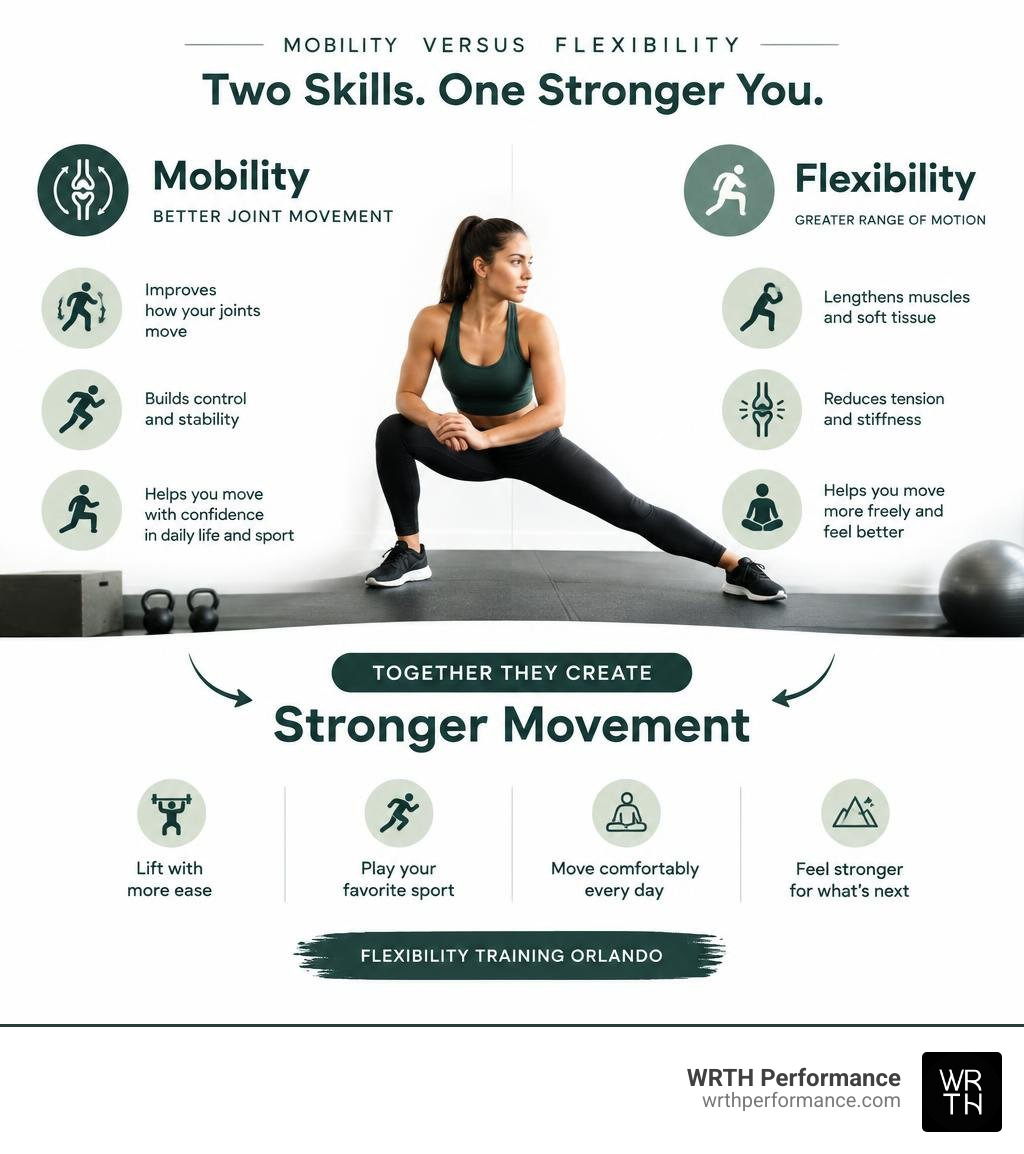
Flexibility is often treated as an afterthought in fitness, yet it forms the structural foundation of every lift, sprint, and daily movement. Flexibility refers to the ability of a muscle to lengthen passively, while mobility encompasses joint range of motion and your ability to control that movement actively. Residents seeking flexibility training Orlando programs can begin by understanding the core techniques available today.
- Static Stretching: Elongating a muscle group and holding the position for 30 to 60 seconds. This is best reserved for post-workout cool-downs to calm the nervous system and lengthen tissues.
- Dynamic Mobility: Active, continuous movement drills that take joints through their usable ranges (like leg swings or arm circles) to prime blood flow and lubricate cartilage before exercise.
- PNF (Proprioceptive Neuromuscular Facilitation): An advanced method combining passive stretching with isometric muscle contractions to override protective stretch reflexes and rapidly expand safe range of motion.
- Assisted Stretching: A practitioner-led approach where a trained coach manually guides, stabilizes, and deepens your stretches.
| Modality | Primary Focus | Active vs. Passive | Best Application |
|---|---|---|---|
| Assisted Stretching | Targeted muscle lengthening & joint decompression | Passive / Guided Active | Recovering from deep tension; breaking through movement plateaus |
| Yoga & Flow Classes | Whole-body stability, balance, and mind-body flow | Active & Isometric | General movement quality; breathwork; muscular endurance |
| Self-Myofascial Release | Fascial hydration & local trigger-point relief | Self-Guided Active | Pre-workout tissue prep; easing localized tightness with rollers |
Assisted Stretching vs. Traditional Yoga Classes
While both disciplines improve range of motion, their mechanisms differ substantially. Traditional yoga relies on verbal cues, self-sustained body weight, and active balance. You generate the muscular tension required to hold a shape, which builds stability but can sometimes limit how deeply a tight muscle relaxes.
In contrast, assisted stretching removes the need for balance and active support. By letting a professional manage your body positioning, you eliminate compensatory tension in adjacent muscle groups. Techniques like contract-relax PNF allow neuromuscular systems to reset, producing noticeable increases in joint clearance that complement functional personal training.
Mobility Assessments and 3D Movement Scans
Before jumping into intense flexibility protocols, assessing where your body actually holds restrictions is crucial. Guessing often leads to overstretching unstable areas while ignoring genuinely restricted joints.
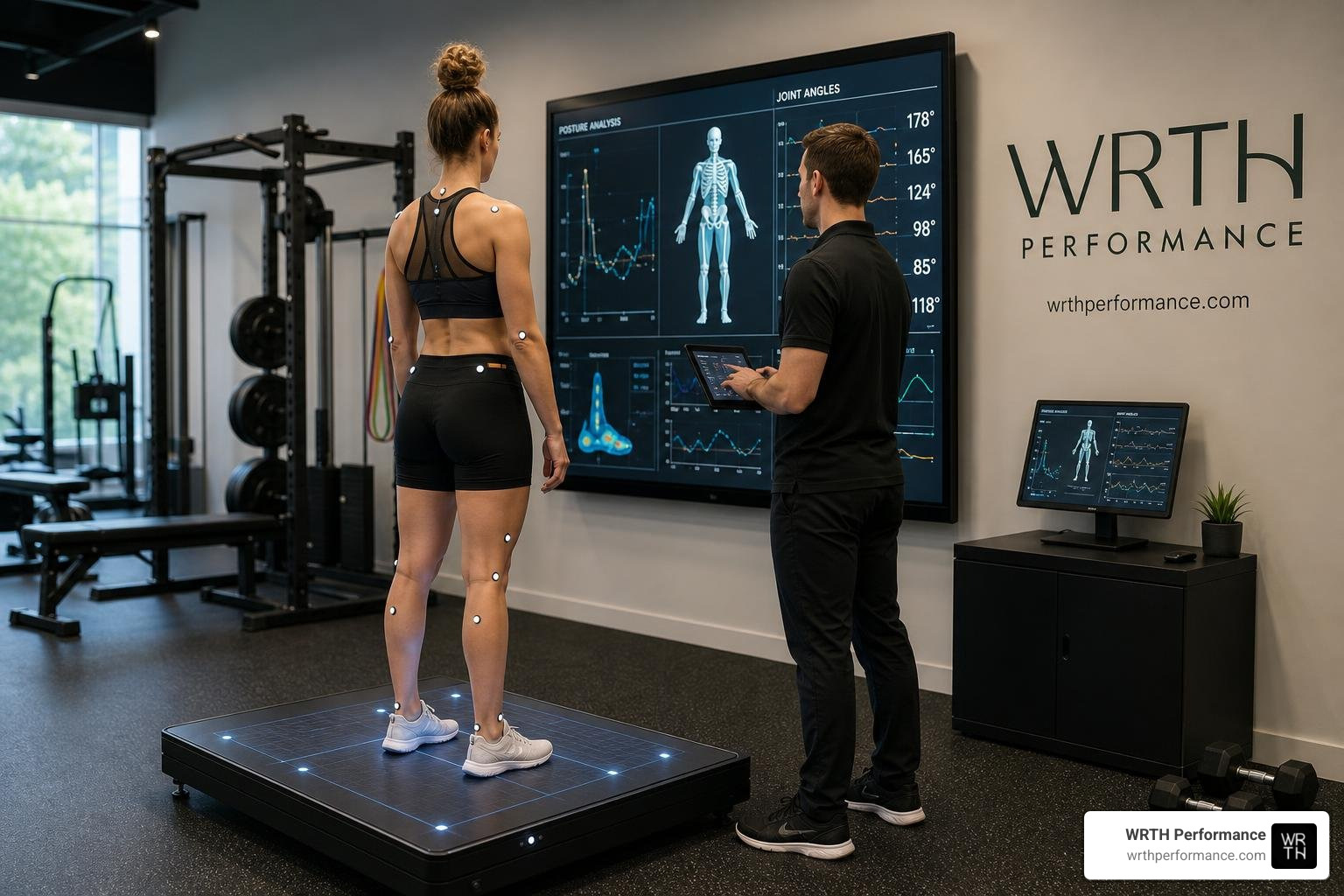
Modern training programs use digital screens and movement evaluations to examine postural symmetry, joint angle limitations, and kinetic chain imbalances. Pinpointing whether a tight sensation stems from joint capsule stiffness, muscle short-tissue length, or motor control deficits ensures your mobility work creates lasting change rather than temporary relief. For a broader look at how movement screening fits into a complete training plan, the American Council on Exercise offers a useful overview of functional movement assessments.
Key Benefits of Targeted Mobility and Range of Motion Work
Improving tissue elasticity and joint range does far more than help you touch your toes; it fundamentally upgrades how your body dissipates mechanical stress during daily life and rigorous training.
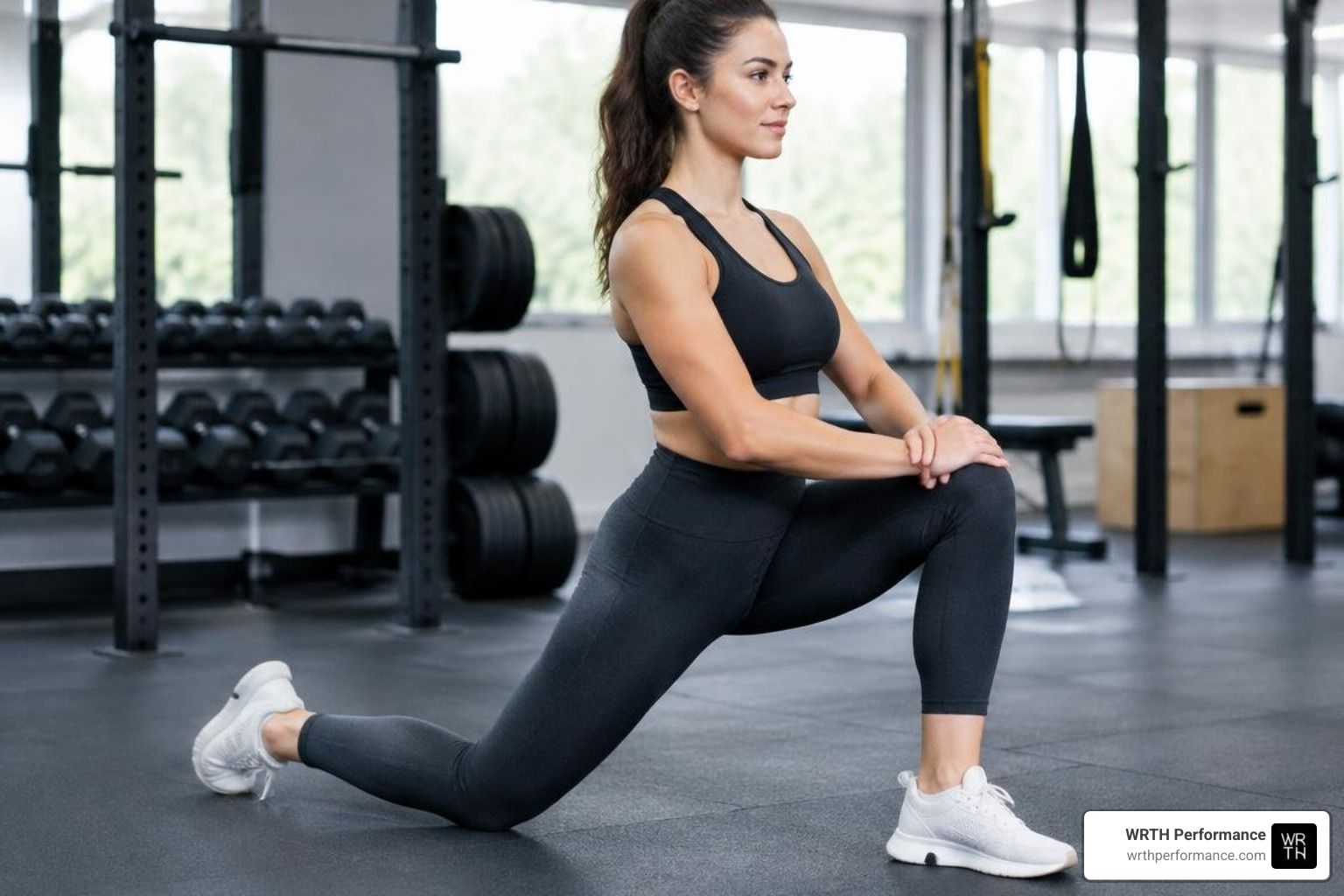
- Fascial Health and Hydration: Controlled movement redistributes fluid throughout connective tissues, reducing stiffness and friction between muscular layers.
- Joint Decompression: Restoring natural muscle length takes chronic tension off joint capsules, cartilage, and tendons.
- Injury Risk Reduction: Balanced range of motion ensures forces distribute evenly across prime movers rather than overloading vulnerable secondary stabilizers.
- Enhanced Movement Efficiency: Moving without joint friction conserves energy during exercise, allowing you to train harder and recover quicker.
Maximizing Athletic Output with Flexibility Training Orlando
For active residents, dedicated flexibility work directly to unlock higher athletic output. When tight hip flexors or a stiff thoracic spine block natural movement pathways, your body bleeds power through inefficient mechanics.
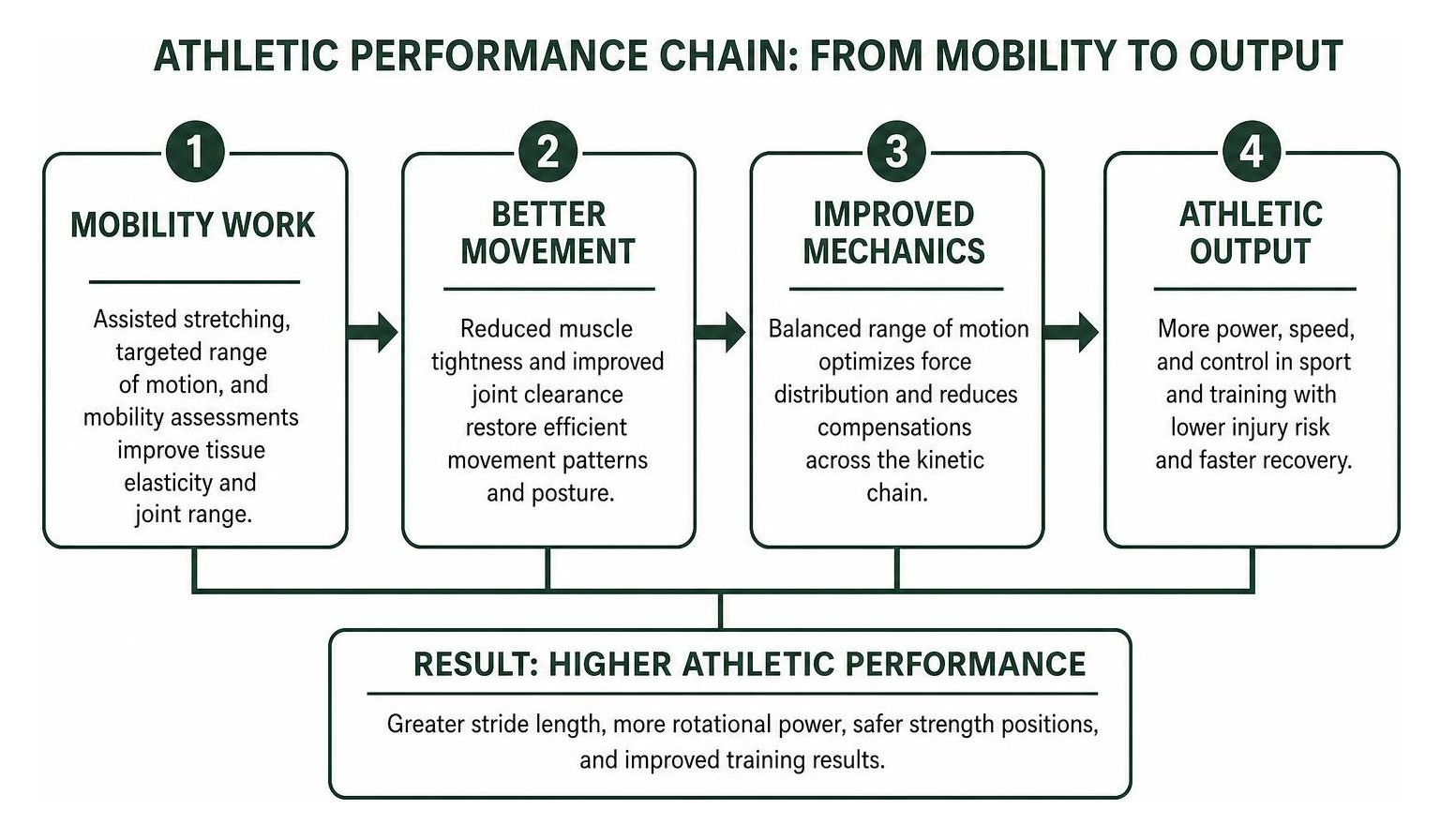
Expanding usable range of motion refines running stride length, generates greater rotational torque during golf or tennis swings, and allows deeper, safer positions in heavy squats. We explore how top performers coordinate range of motion with power in our breakdown of how local athletes master performance.
Alleviating Muscle Tightness and Postural Imbalances
Prolonged desk work and long commutes lock the body into persistent patterns: rounded shoulders, shortened hip flexors, and a collapsed upper back. Over time, these postures become the baseline structure your nervous system defaults to.
Structured mobility routines counteract these imbalances by systematically opening the chest, mobilizing the thoracic spine, and decompressing the pelvis. Restoring baseline alignment relieves chronic neck and lower back discomfort, helping you stand taller and move with effortless ease.
Integrating Mobility Work into a Comprehensive Fitness Routine
Mobility should never exist in a silo. True structural longevity happens when flexibility training is seamlessly woven into your overall fitness and recovery framework.
- Dynamic Warm-Up (8–12 mins): Multi-planar movements that elevate core temperature and dynamically open joints before lifting or running.
- Strength Training Through Full Range: Loading joints in their deepest controlled positions to build strength where you are most vulnerable.
- Structured Cool-Down (5–10 mins): Gentle static stretching and parasympathetic breathing; read more on structured cool-down practices to optimize tissue restoration.
- Dedicated Weekly Mobility Sessions: Focused 30-to-60-minute blocks combining guided stretching, soft tissue work, and contrast recovery.
Designing Tailored Routines with Flexibility Training Orlando
No two bodies share identical joint architecture or movement histories. A distance runner often battles stiff calves and hip capsules, while a strength athlete may need thoracic extension and shoulder internal rotation.
Our approach emphasizes customized frameworks over generic stretch routines. By tailoring stretching volume, intensity, and active control drills to your unique mechanics, personalized training programs create sustainable mobility without destabilizing the joint complex.
Pairing Active Stretching with Contrast and Cellular Recovery
To truly accelerate tissue recovery and maintain joint health, advanced training pairs active mobility with science-backed recovery modalities.
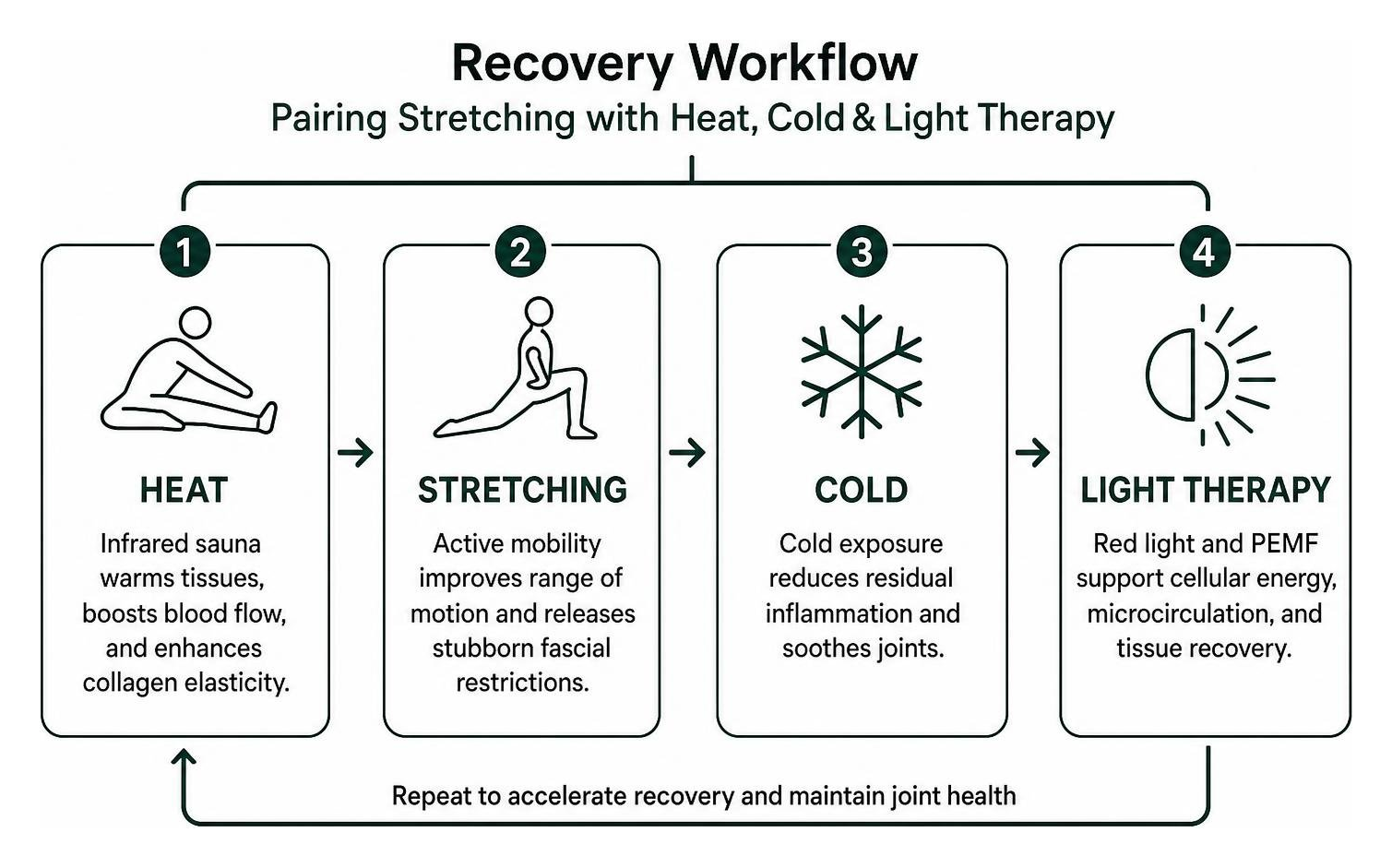
Heating tissues in an infrared sauna before stretching promotes collagen elasticity and increases blood flow to stubborn fascial planes. Following up with cold exposure reduces residual joint inflammation, while red light and PEMF therapy support cellular energy and microcirculation. This integrative standard is central to our philosophy on high performance personal training.
Frequently Asked Questions About Mobility Training
How much does professional flexibility work typically cost in the area?
Professional mobility and flexibility coaching across Central Florida typically varies based on personalization, session length, and facility amenities. Individual one-on-one sessions generally range from $75 to $150 per hour when working with a specialized movement coach. For high-tier private training facilities, customized mobility, joint conditioning, and recovery protocols are typically integrated directly into comprehensive, all-inclusive private memberships.
Who should avoid aggressive or deep assisted stretching protocols?
While gentle, active movement benefits nearly everyone, intense or forceful assisted stretching is not suitable for all individuals. People with underlying joint hypermobility or connective tissue concerns should avoid aggressive end-range stretching, as their ligaments already lack stability and overstretching can lead to joint subluxations. Additionally, those experiencing acute muscle strains, active tendon irritation, or recent joint sprains should pause deep stretching until tissues have sufficiently healed. Expectant mothers must also exercise caution, as hormonal shifts (such as elevated relaxin) can loosen ligaments and increase the risk of overextension.
What credentials should you look for in a flexibility trainer?
When trusting a professional with your joint health, verify their foundational certifications and continuing education. Look for coaches holding recognized national credentials such as the National Academy of Sports Medicine (NASM), the International Sports Sciences Association (ISSA), or the National Strength and Conditioning Association (NSCA). Advanced specializations in Corrective Exercise (CES), Functional Movement Screen (FMS), or dedicated mobility and stretch coaching credentials indicate that your coach understands joint mechanics, neuromuscular reflexes, and safe progression strategies.
Conclusion
Building lasting flexibility is not about forcing your body into uncomfortable contortions – it is about restoring natural movement quality, protecting your joints, and unlocking the physical freedom to perform at your absolute best. When you combine targeted stretching with structured strength and cutting-edge recovery, you create a resilient body built for long-term health and athletic performance.
At WRTH Performance in Downtown Orlando, we provide an exclusive, boutique environment dedicated to human longevity and elite conditioning. We intentionally cap our membership to ensure every client receives personalized coaching, advanced movement evaluations, and seamless access to our full suite of contrast and cellular recovery therapies. If you are ready to move better, eliminate chronic restrictions, and elevate your fitness journey, explore our approach to personalized personal training in Downtown Orlando today.
