
Why Gym Recovery Equipment Belongs in Every Serious Training Plan
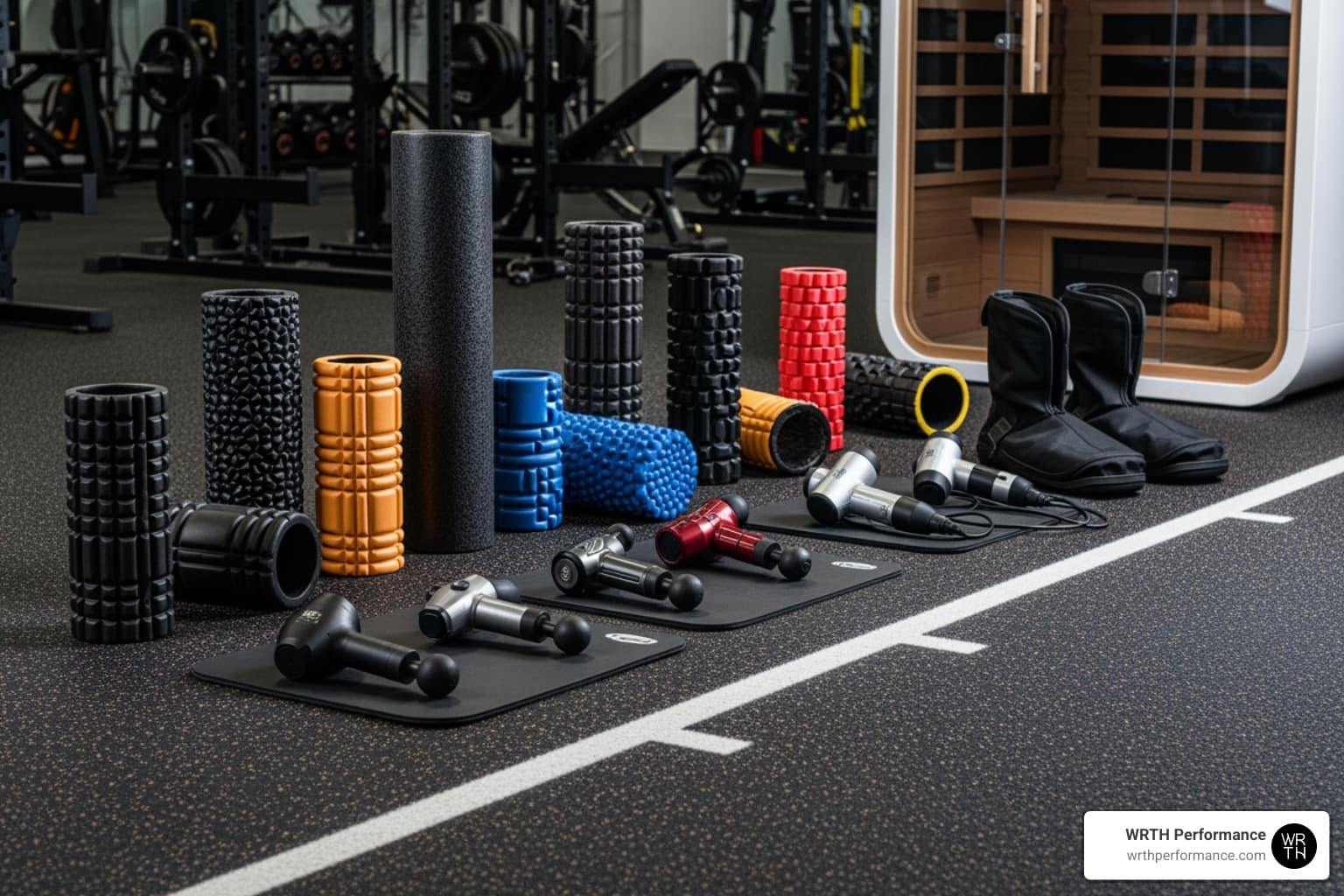
Gym recovery equipment is the category of tools – from foam rollers and massage guns to compression boots and infrared saunas – designed to help your body repair, rebuild, and perform better after intense training.
Here’s a quick overview of the most common types:
| Equipment Type | Primary Benefit |
|---|---|
| Foam rollers | Myofascial release, flexibility |
| Massage guns | Targeted deep tissue relief |
| Compression boots | Circulation, swelling reduction |
| Cold plunges | Inflammation control |
| Infrared saunas | Muscle relaxation, detoxification |
| TENS / muscle stimulators | Localized pain relief |
| Inversion tables | Spinal decompression |
| Vibration platforms | Neuromuscular activation |
Most people focus almost entirely on the workout itself. But what you do after training determines how fast you progress – and how long you stay in the game.
Soreness, stiffness, and fatigue aren’t just uncomfortable. Left unaddressed, they slow down performance gains and raise your injury risk over time.
The good news? There are now more science-backed recovery tools available than ever before – from portable massage guns you can throw in your gym bag to full-body compression systems used by professional sports teams worldwide.
Whether you’re pushing through a performance plateau or simply want to feel better between sessions, the right recovery setup makes a measurable difference.
The Most Popular Types of Gym Recovery Equipment
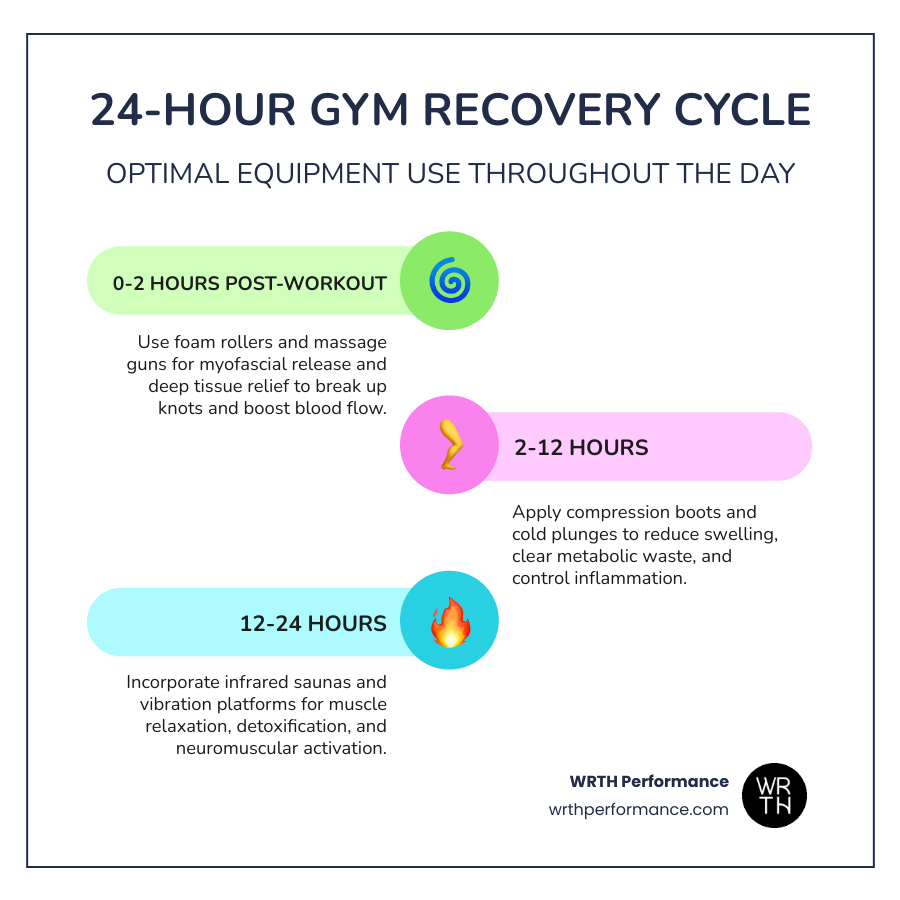
When we walk into a high-end training environment today, the “recovery lounge” is often just as impressive as the weight room. As of May 2026, the market for gym recovery equipment has exploded, offering over 26 distinct categories of tools ranging from simple manual rollers to complex pneumatic systems.
The most popular tools currently dominating the scene include percussion massagers (massage guns), dynamic air compression boots, and advanced temperature therapy units. Brands like Hyperice and Normatec have become household names among athletes, while specialized tools like the AbMat Forge or Power Plate vibration trainers are becoming staples in professional gym setups.
Choosing the right tool depends on your specific needs. Are you dealing with localized muscle “knots,” or do you need a systemic flush of your lower limbs? Understanding the difference between these tools is the first step toward building a Longevity: The New Performance Standard mindset.
Benefits of Myofascial Release Tools
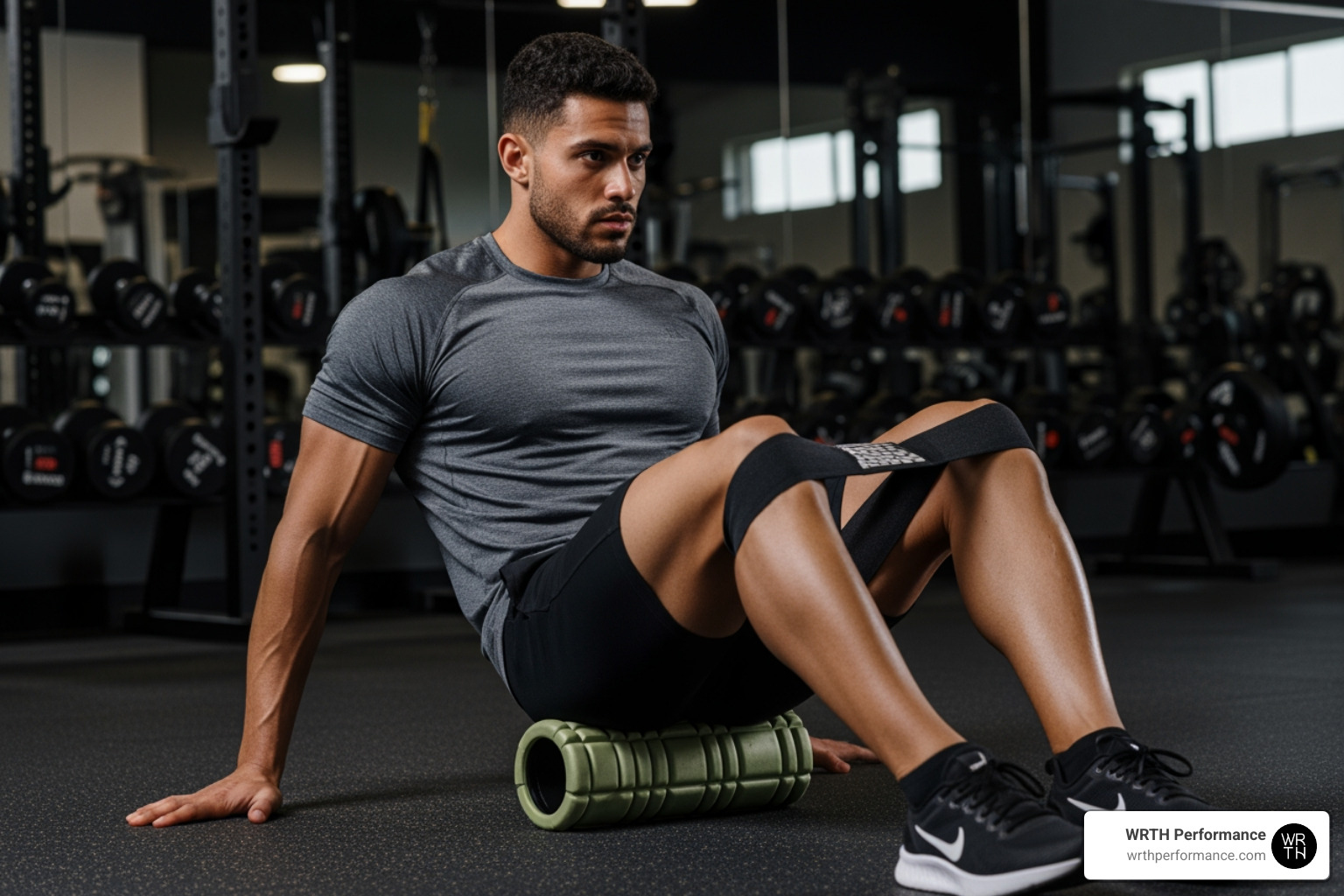
At the foundation of any recovery routine is myofascial release. Your fascia is the connective tissue that wraps around every muscle in your body. After a heavy lifting session or a long run, this tissue can become “sticky” or develop adhesions, commonly known as trigger points or knots.
Using tools like foam rollers, lacrosse balls, or the Plate-Loaded Tempering Roller for Recovery | AbMat – Living.Fit allows for self-myofascial release (SMR). By applying pressure to these specific areas, you encourage the soft tissue to “unstick,” which improves blood flow and restores muscle density.
The primary benefits include:
- Increased Flexibility: Regular rolling helps maintain a full range of motion.
- Improved Circulation: Pressure moves stagnant blood out of the tissue, allowing fresh, oxygenated blood to rush in.
- Pain Reduction: SMR can quiet the nervous system’s pain response in overactive muscles.
Percussion Massagers for Targeted Relief
If foam rollers are the “shotgun” approach to recovery, percussion massagers are the “sniper rifle.” These devices, such as the Theragun PRO Plus or the Hyperice Hypervolt 3 Pro, deliver rapid bursts of pressure deep into the muscle tissue.
This percussive therapy works by overriding the pain signals sent to your brain, allowing the device to reach deeper into the muscle than manual massage often can. This is particularly effective for breaking up lactic acid buildup and releasing deep-seated muscle knots that a standard roller might miss. For athletes in Orlando, having a portable version like the Hypervolt Go 2 in a gym bag is a game-changer for immediate post-workout relief.
| Feature | Traditional Foam Roller | Vibrating Foam Roller |
|---|---|---|
| Primary Action | Static Pressure | Pressure + Oscillating Vibration |
| Nervous System | Mechanical release | Neuromuscular desensitization |
| Effort Level | High (requires body movement) | Low to Medium |
| Price Range | $20 – $50 | $100 – $200 |
Advanced Technologies: Compression and Vibration
Beyond manual tools, we are seeing a massive shift toward “passive” recovery technologies. These are the tools that do the work for you while you sit back and relax.
How Dynamic Air Compression Aids Recovery
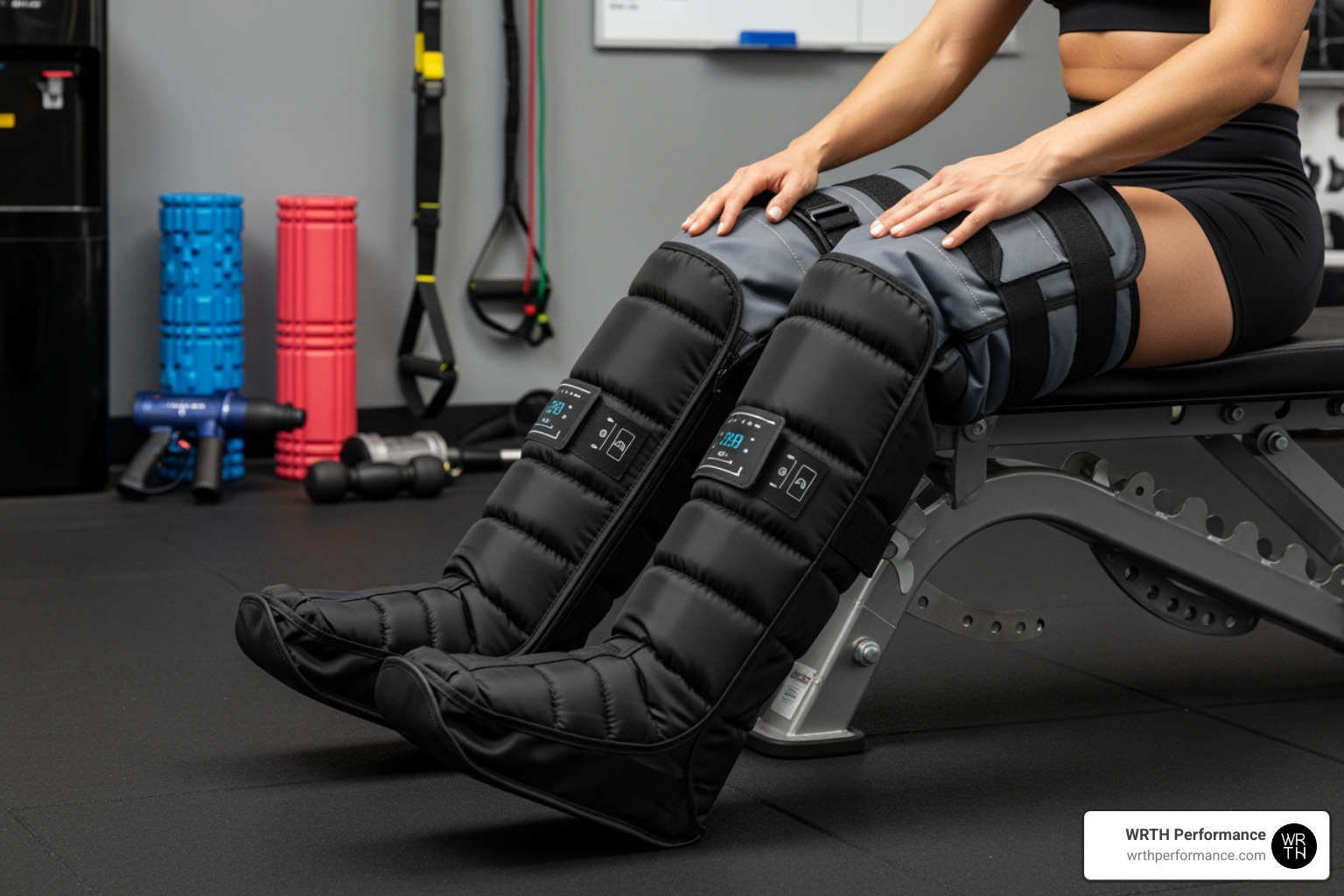
Dynamic air compression systems, most notably the Normatec 3 Legs, use a patented pulsing massage pattern to mimic the natural muscle pumps of the body. This technology, known as biomimicry, uses sequential inflation zones to “flush” metabolic waste and fluids out of the limbs.
These systems are no longer just for the pros. Whether you are using the Normatec 3 Full Body or just the leg attachments, the benefits are clinically backed. By using seven levels of compression and “ZoneBoost” technology, athletes can target specific areas—like the calves or quads—to reduce swelling and significantly shorten recovery windows. Many athletes find that a 20-minute session in these boots makes their legs feel “fresh” even after a high-volume leg day.
The Role of Whole Body Vibration
Whole body vibration (WBV) technology, pioneered by Power Plate for over 20 years, is another heavyweight in the recovery world. These platforms vibrate at high frequencies, causing your muscles to contract and relax dozens of times per second.
This isn’t just about “shaking” the muscles; it’s about neuromuscular efficiency. WBV improves bone density, enhances lymphatic drainage, and increases metabolic demand without the joint stress of traditional exercise. It’s an incredible tool for warming up the nervous system before a lift or cooling it down afterward to promote relaxation.
Temperature Therapy: The Power of Heat and Cold
If you’ve ever seen an athlete jump into a tub of ice or sit in a steaming room, you’ve witnessed temperature therapy. In 2026, we’ve moved far beyond simple ice packs.
Benefits of Cold Plunge and Cryotherapy
Cold water immersion, or “cold plunging,” has become a cornerstone of science-driven recovery. By exposing the body to temperatures typically between 45°F and 55°F, you trigger massive vasoconstriction. This helps to reduce inflammation and “numb” the pain response in sore muscles.
When you exit the cold, the body undergoes rapid vasodilation, which acts like a systemic “reset,” pumping fresh blood through the entire body. For those in the Florida heat, our cold plunge allows full body immersion – for full body recovery.
Heat Therapy and Infrared Technology
On the flip side, heat therapy – specifically infrared technology – is about relaxation and detoxification. Unlike traditional saunas that heat the air around you, infrared saunas use specific wavelengths to heat your body directly.
This deep-penetrating heat helps with muscle stiffness and joint pain by increasing blood flow and promoting a state of deep relaxation. It’s also a powerful tool for detoxification, as the sweat produced in an infrared sauna often contains a higher concentration of heavy metals and toxins compared to traditional steam saunas.
Maximizing Results with Specialized Recovery Tools
While massage guns and saunas get the most “likes” on social media, several specialized tools provide the “missing links” in a complete recovery plan.
Portable Gym Recovery Equipment for Travel
For the athlete on the go, portability is king. You can’t exactly fit a sauna in your carry-on, but you can fit a Hyperice Normatec 3 Legs System | Titan Fitness or a compact massage gun. Many of today’s top-tier devices are TSA-approved for carry-on, ensuring you don’t lose your progress while traveling. Mini rollers and dual-sphere massage balls are also excellent, lightweight additions to any travel kit for addressing “plane stiffness.”
Gym Recovery Equipment for Home vs. Professional Use
There is a distinction between the gear you keep in your living room and the commercial-grade equipment found in a professional recovery lounge.
- Home Use: Focus on versatility and ease of storage. Percussion guns, foam rollers, and infrared blankets are ideal.
- Professional Use: These environments offer “heavy hitters” like hyperbaric chambers, full-body compression systems, and whole-body vibration platforms.
A major advantage for consumers in 2026 is that many of these tools are now HSA/FSA eligible. This means you can use pre-tax dollars to invest in high-quality gym recovery equipment, making professional-grade recovery more accessible than ever.
Frequently Asked Questions about Recovery Gear
Are recovery tools eligible for HSA/FSA reimbursement?
Yes! Many high-end recovery tools, including massage guns (like the Theragun PRO Plus), compression systems (like Normatec), and even certain cold plunge tubs, are now FDA-registered medical devices. This makes them eligible for purchase using Health Savings Account (HSA) or Flexible Spending Account (FSA) funds. Always check the specific product listing or consult your provider to confirm.
How often should athletes use recovery equipment for optimal results?
For most athletes, daily use of “low-intensity” tools like foam rollers or massage guns is beneficial. Higher-intensity treatments like cold plunges or long compression sessions are typically best used 3+ times per week, or immediately following your most grueling training sessions. The key is consistency; recovery is a cumulative process.
Can recovery equipment help prevent injuries and improve performance?
Absolutely. By maintaining tissue quality and reducing chronic inflammation, gym recovery equipment helps prevent the “overuse” injuries that often sideline athletes. Furthermore, by ensuring your muscles are fully recovered, you can train at a higher intensity during your next session, leading to better long-term performance gains.
Conclusion
The evolution of gym recovery equipment has shifted the focus from “working out” to “performing.” We now understand that the hour you spend in the gym is only half the battle – the other 23 hours of the day determine your ultimate success.
At WRTH Performance in Downtown Orlando, we believe that recovery shouldn’t be an afterthought. Our luxury private membership provides access to the world’s most advanced, science-driven recovery tools, from our an infrared sauna and cold plunge to the latest in PEMF and red light therapies. We combine state-of-the-art equipment with personalized training to ensure our members aren’t just getting stronger, but are building the foundation for long-term health and performance.
If you are ready to stop “limping into the office” and start recovering like a professional, it’s time to upgrade your standards. Experience luxury recovery at WRTH Performance.
Learn more about our Downtown Orlando facility at wrthperformance.com
