The Problem With “Just Trust the Science” in Fitness
Science based fitness means using the best available evidence — research, real-world results, and practical experience — to guide your training decisions. Here’s the core idea at a glance:
| Principle | What It Means |
|---|---|
| Evidence hierarchy | Peer-reviewed research > anecdotal evidence > popular trends |
| Core drivers | Progressive overload, training volume, consistency |
| Flexibility | Science sets guardrails, not rigid rules |
| Common trap | Overcomplicating training instead of simplifying it |
| Bottom line | Bros and nerds end up with 90% identical workouts when both are truly evidence-based |
The fitness world in May 2026 is noisier than ever. TikTok trends change weekly. “Bro-science” still thrives in locker rooms. And on the other end, some people get so deep into research papers that they forget to actually train.
Both extremes cost you results.
The real promise of science-based training isn’t complexity – it’s clarity. It cuts through the noise and tells you what actually moves the needle, so you can stop second-guessing every set, rep, and meal.
But here’s the part most fitness content skips: applying science well requires judgment, not just data. Knowing that one exercise is technically optimal means nothing if you hate doing it and skip it every week.
I’m Jason Kasheta – a personal trainer with degrees in Exercise Science and Nutritional Chemistry, 20+ years of experience, and a background as an NCAA football player and competitive strongman. Applying science based fitness principles has been central to how I’ve helped over 1,000 people break through plateaus and build lasting results. In the sections below, we’ll break down exactly how to use the science without letting it paralyze you.
Defining Science Based Fitness: Beyond the TikTok Trends

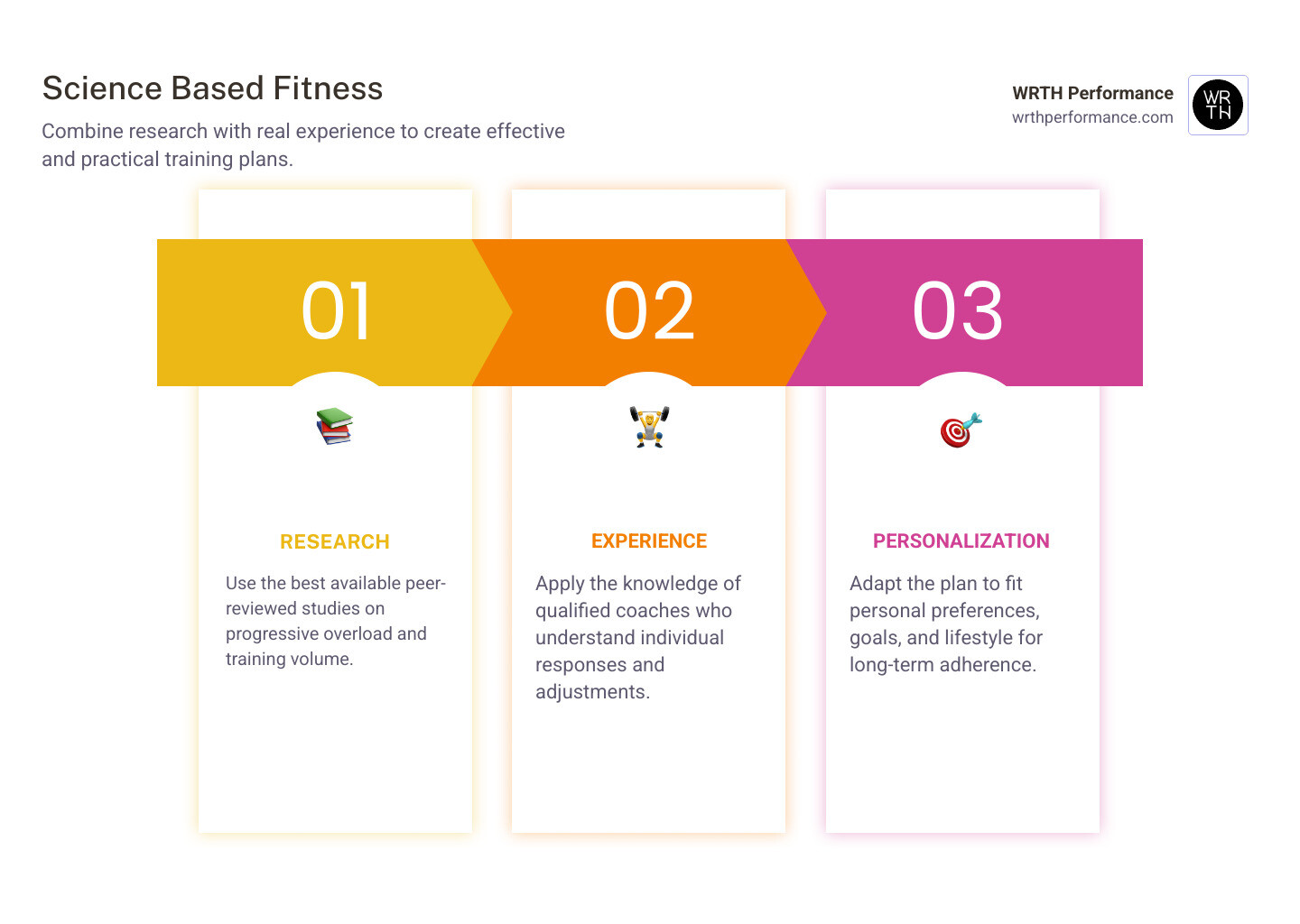
When we talk about Science based fitness, we aren’t just talking about reading a single study and changing your entire life based on the abstract. True evidence-based practice is a three-legged stool: it integrates the best available scientific literature, the expertise of the practitioner (the coach), and the unique preferences and needs of the individual.
In the current landscape of May 2026, we see a massive divide. On one side, you have “bro-science” – anecdotal evidence passed down through locker rooms. While some of it is based on survivorship bias, we shouldn’t dismiss it entirely. If the most muscular people in the world have been doing something for 50 years, there is likely a kernel of truth there that science just hasn’t fully quantified yet.
On the other side, we have “TikTok hacks.” These are often overly complicated “optimizations” that focus on the last 1% of results while ignoring the 99% that actually matters. You’ll see influencers claiming a specific 3-degree wrist angle is the “secret” to chest growth. That isn’t science – it’s clickbait.
According to The Science of Fitness, a truly evidence-based approach filters out the noise by focusing on what is repeatable and statistically significant.
| Feature | Bro-Science | TikTok “Science” | Evidence-Based Training |
|---|---|---|---|
| Source | “The biggest guy in the gym” | 15-second viral clips | Peer-reviewed literature + Experience |
| Focus | Tradition and “feel” | Novelty and “hacks” | Principles and data |
| Flexibility | Rigid (“Do exactly this”) | Chaotic (“Try this new thing”) | Guardrails (Principles with choice) |
| Goal | Hard work (often undirected) | Views/Engagement | Efficient, long-term results |
The “nerds” and the “bros” actually agree on more than they realize. When you strip away the jargon, both groups prioritize lifting heavy things, doing it often, and eating enough protein. In fact, research shows that when both groups follow evidence-based principles, their workouts look about 90% identical.
The Core Principles of Hypertrophy and Strength
To build muscle and strength, you don’t need a secret formula. You need to master the variables that have been proven across thousands of studies. At WRTH Performance, we focus on these foundational “movers” of progress.
- Progressive Overload: This is the golden rule. You must challenge your muscles more over time. Whether you add 5 pounds to the bar, perform an extra rep, or improve your form, your body must have a reason to adapt.
- Training Close to Failure: Research suggests that for hypertrophy (muscle growth), you need to get within 1 to 3 reps of “technical failure” – the point where you can’t do another rep with good form.
- Volume vs. Intensity: While intensity (how heavy the weight is) is crucial for strength, The Complete Strength Training Guide notes that total weekly volume (sets x reps) is the primary driver of muscle size.
- Full Range of Motion (ROM): Moving a weight through the entire distance a muscle can travel generally leads to better growth than partial reps, primarily because it subjects the muscle to tension in a stretched position.
Optimizing Science Based Fitness Through Exercise Selection
Not all exercises are created equal. Modern research has given us a “cheat sheet” for exercise selection that maximizes mechanical tension.
For example, a 2022 study found that overhead tricep extensions resulted in about 40% more hypertrophy compared to regular press-downs, even when volume was matched. Why? Because the overhead position puts the long head of the triceps in a deeper stretch. Similarly, a 2020 study showed greater hamstring growth with seated leg curls over lying leg curls because the seated position keeps the hamstrings in a more lengthened state.
These Foundational training guides suggest that we should prioritize movements that challenge muscles at their longest lengths. This is known as stretch-mediated hypertrophy.
The Role of Big Data in Modern Hypertrophy
In May 2026, we have more data than ever. However, science usually tells us what works for the average person in a study. It doesn’t always tell us what works for you.
This is where individual variation comes in. Some people are “high responders” to volume, while others thrive on lower-frequency, high-intensity work. As we discuss in Longevity: The New Performance Standard, the goal isn’t just to work hard today, but to ensure your biomarkers (like heart rate variability and grip strength) remain optimal for the long haul.
Minimalism and Efficiency: When Less is More
One of the greatest gifts of Science based fitness is the realization that you don’t need to live in the gym. If you are short on time, research-backed minimalist approaches can deliver 80-90% of the results in a fraction of the time.
Programs like Body by Science advocate for high-intensity training (HIT), where you perform very few sets but take them to absolute, grinding failure. While this might not be “optimal” for a competitive bodybuilder, it is incredibly effective for a busy professional in Orlando who only has 30-40 minutes to spare.
To maximize efficiency, we use techniques like:
- Antagonistic Supersets: Pairing a chest exercise with a back exercise. While one muscle works, the other rests, allowing you to double your work in the same timeframe.
- Myo-Reps: A form of “rest-pause” training where you reach failure, rest for 5 seconds, and then squeeze out a few more “effective” reps.
- Drop Sets: Reducing the weight by 30% after reaching failure to continue the set and increase metabolic stress.
Avoiding Analysis Paralysis in Science Based Fitness
The biggest downside to the “science” movement is analysis paralysis. People spend three hours researching the “optimal” bicep curl and zero hours actually curling.
The “95% Rule” states that 95% of your results come from consistency, intensity, and eating enough. The remaining 5% – the specific exercise order, the exact supplement timing, the specific tempo – is the “icing on the cake.” If you don’t have a cake, the icing doesn’t matter.
Q&A Database for training variables highlights that personal preference is actually a scientific variable. If you love the barbell back squat but a study says the hack squat is 5% better for quad growth, keep squatting. Adherence is the most important factor in any program. A “sub-optimal” workout you do consistently will always beat an “optimal” workout you quit after two weeks.
Debunking Common Myths in Training and Recovery
Science hasn’t just told us what to do; it has told us what we can stop worrying about.
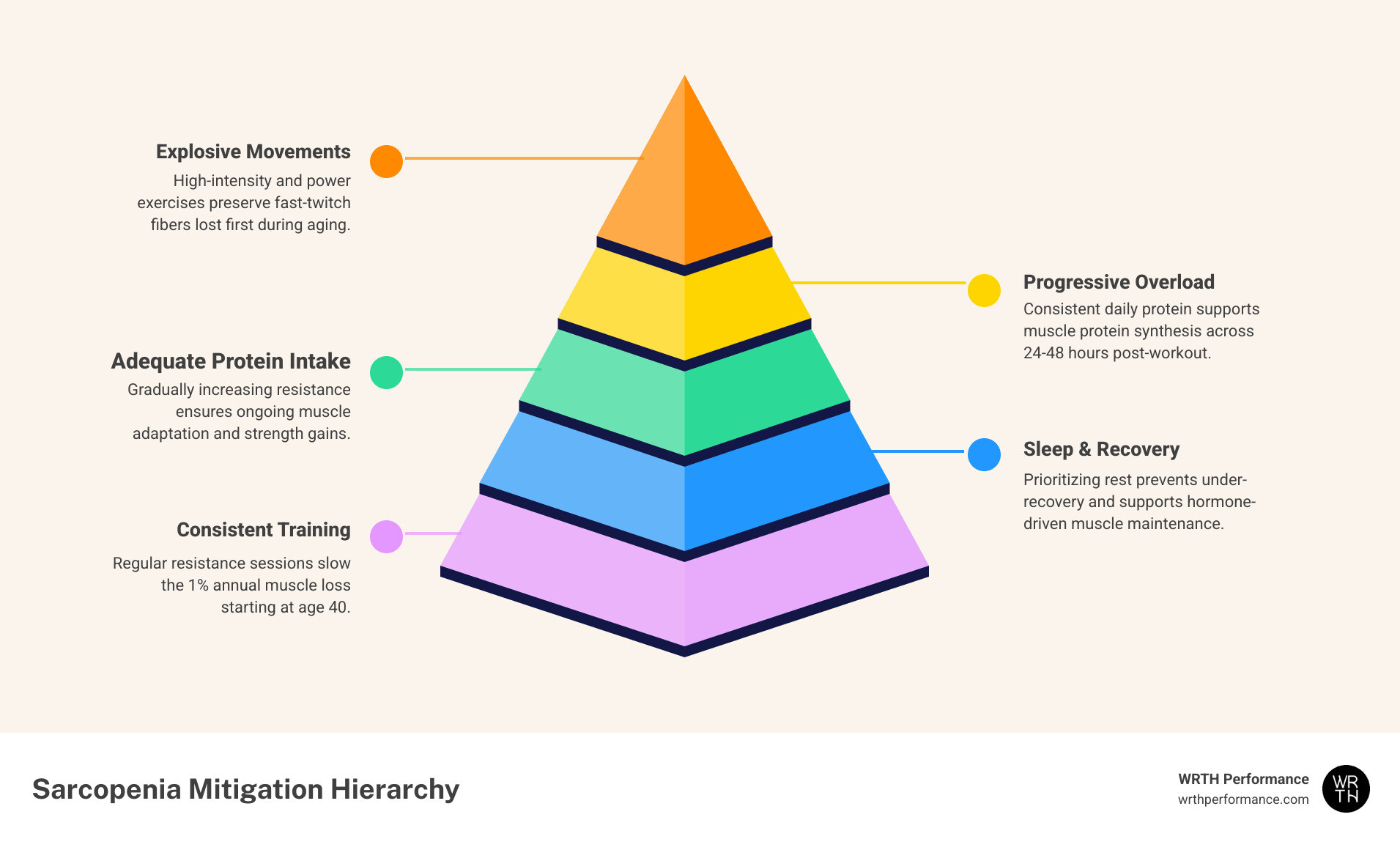
- The Anabolic Window: You don’t need to chug a protein shake within 30 minutes of your workout. Your body remains sensitized to protein for 24-48 hours post-exercise. Total daily protein matters much more than timing.
- Six Meals a Day: Eating more frequently does not “stoke the metabolic fire.” Whether you eat two meals or six, if the calories and protein are the same, the body composition results are generally identical.
- Overtraining: Most people aren’t “overtrained”; they are under-recovered. True overtraining syndrome is rare. Usually, the issue is a lack of sleep or poor nutrition.
- Cold Plunge Timing: While we love the recovery benefits of cold exposure, science suggests that doing a cold plunge immediately after a lifting session can actually blunt muscle growth. If hypertrophy is your goal, wait at least 4-6 hours before hitting the ice.
As we age, the focus shifts toward mitigating sarcopenia (age-related muscle loss). Research shows we lose about 1% of our muscle mass annually starting at age 40. This is primarily a loss of fast-twitch fibers, which is why incorporating explosive or high-intensity movements is vital for longevity.
Frequently Asked Questions about Evidence-Based Training
Is science-based training too rigid for beginners?
Not at all. In fact, it’s more flexible. Because it focuses on principles (like progressive overload) rather than specific “must-do” exercises, it allows beginners to choose movements they feel comfortable with while still ensuring they make progress.
Does cold exposure interfere with muscle gains?
It can, if done immediately after resistance training. The inflammation caused by lifting is actually the signal that tells your muscles to grow. Cold plunges reduce that inflammation, which is great for feeling better, but potentially bad for building maximum size. Save the cold for rest days or at least several hours after your workout.
How many days a week should I train for optimal results?
For most people, 3 to 5 days per week is the “sweet spot.” Research shows that training a muscle group at least twice a week is superior to the old-school “bro-splits” where you only hit a muscle once a week.
Conclusion
At WRTH Performance in Downtown Orlando, we believe that Science based fitness should make your life easier, not more complicated. We provide the state-of-the-art equipment and the science-driven recovery – like PEMF, red light therapy, cold plunge, and our sauna – but we never lose sight of the fundamentals.
Our luxury private membership is intentionally capped to ensure that every member receives personalized, data-driven coaching that prioritizes both high performance today and longevity for the future. You don’t need to spend hours sifting through research papers; we’ve already done that work for you.
If you are ready to stop guessing and start progressing with a plan built on evidence, we invite you to apply for a private membership. Let’s move beyond the trends and build a body that lasts.
Apply for Private Membership at WRTH Performance