
Active Recovery vs Rest Day: Understanding the Key Differences
Understanding the debate between an active recovery vs rest day starts with analyzing how your body adapts to physical stress. When you lift heavy weights or push through high-intensity intervals, you create microscopic tears in your muscle fibers, deplete muscle glycogen stores, and tax your nervous system. Adaptation does not happen during the workout itself; it happens during downtime.
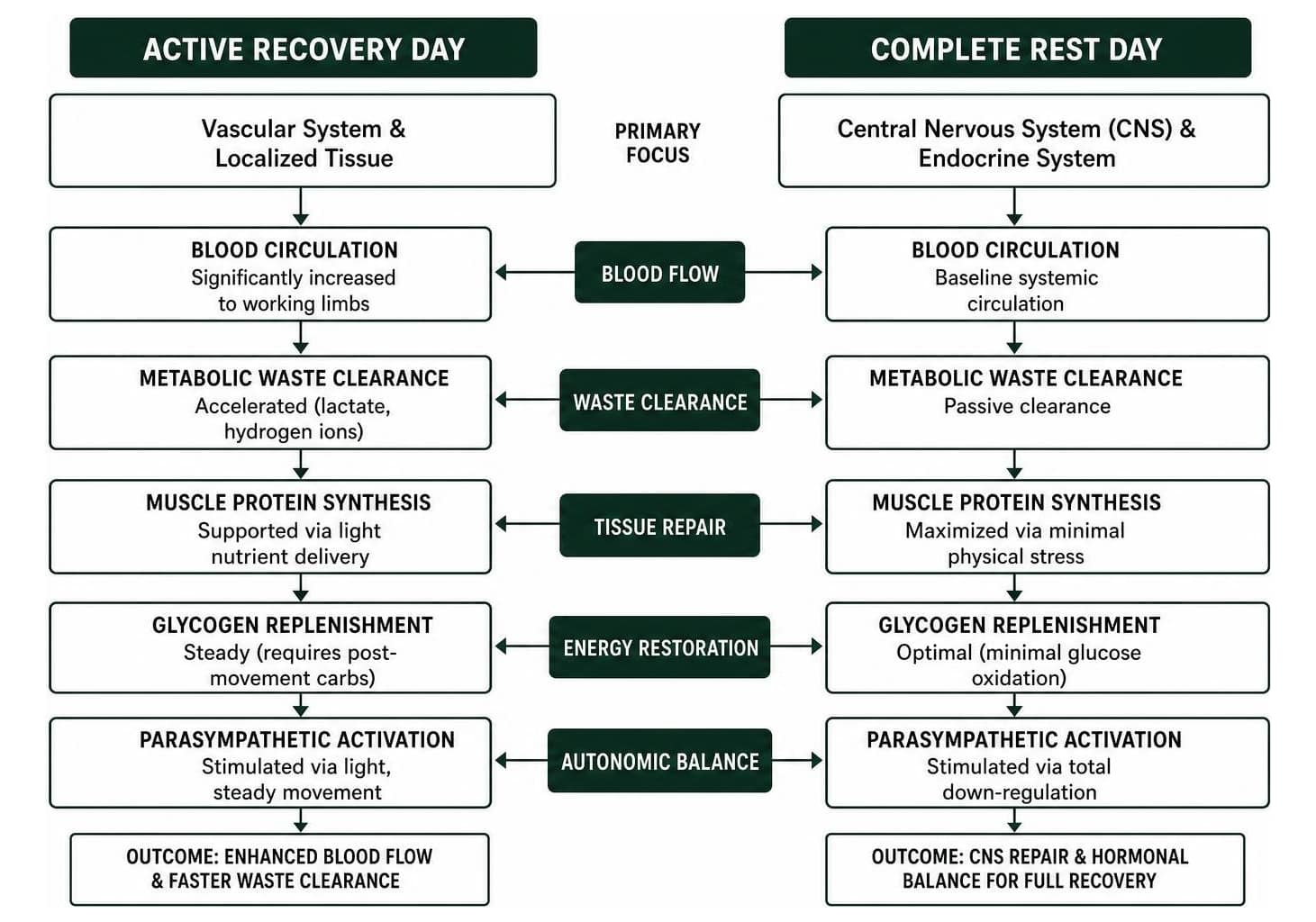
Both active recovery and complete rest support tissue repair and metabolic balance, but they do so through different physiological mechanisms:
| Physiological Parameter | Active Recovery Day | Complete Rest Day |
|---|---|---|
| Primary System Targeted | Vascular system & localized tissue | Central Nervous System (CNS) & endocrine system |
| Blood Circulation | Significantly increased to working limbs | Baseline systemic circulation |
| Metabolic Waste Clearance | Accelerated (lactate, hydrogen ions) | Passive clearance |
| Muscle Protein Synthesis | Supported via light nutrient delivery | Maximized via minimal physical stress |
| Glycogen Replenishment | Steady (requires post-movement carbs) | Optimal (minimal glucose oxidation) |
| Parasympathetic Activation | Stimulated via light, steady movement | Stimulated via total down-regulation |
To optimize these mechanisms post-workout, integrating proper cool-down protocols is essential. For a deep dive on immediate post-workout movement, explore our guide on Post-Workout Recovery: Why You Shouldn’t Skip the Cool Down.
Physiological Benefits of Complete Rest
A complete rest day involves zero structured exercise. For athletes engaged in heavy resistance training or intense powerlifting blocks, complete passive rest is essential for neural recovery.
- Central Nervous System (CNS) Reset: Heavy compound movements like deadlifts, squats, and Olympic lifts strain the brain and spinal cord, not just muscle tissue. Complete rest removes neural demand, restoring neurotransmitter balance and motor unit recruitment efficiency.
- Cortisol and Endocrine Regulation: Prolonged high-intensity training elevates circulating cortisol levels. Taking a true day off helps lower systemic stress, balance the adrenal system, and restore optimal growth hormone release.
- Uninterrupted Muscle Protein Synthesis: Hypertrophy relies on protein synthesis exceeding breakdown. By eliminating mechanical stress, your body devotes full energy to repairing cellular micro-tears.
- Glycogen Restoration: Complete rest allows your digestive system and liver to efficiently shuttle carbohydrates into muscle cells without ongoing glucose oxidation from physical activity.
Physiological Benefits of Active Movement
Active recovery involves low-intensity, non-fatiguing movement – strictly keeping your heart rate in Zone 1 (under 60% of your maximum heart rate or below 120 BPM).
- Enhanced Blood Flow and Oxygenation: Light physical movement acts as a muscle pump, delivering oxygen and nutrient-rich arterial blood directly to healing tissue.
- Faster Waste Clearance: Active movement speeds up the clearance of metabolic waste products, such as hydrogen ions and lactate, from skeletal muscle. Research shows 20 minutes of easy cycling reduces muscle soreness significantly compared to sitting still.
- Reduction in Perceived Soreness (DOMS): While active recovery does not alter the actual rate of structural cellular repair, it significantly decreases the perception of delayed onset muscle soreness (DOMS) by reducing fluid retention and muscle stiffness.
- Parasympathetic Shift: Rhythmic, low-stress movement stimulates the vagus nerve, shifting the autonomic nervous system out of sympathetic (“fight or flight”) mode into parasympathetic (“rest and digest”) dominance.
How to Assess What Your Body Needs: Symptoms and Metrics
Deciding between an active recovery vs rest day comes down to listening to your body’s specific signals.

Active Recovery vs Rest Day Decisions Based on Heart Rate Variability and CNS Stress
Objective metrics provide clarity when subjective feelings are hard to gauge.
- Heart Rate Variability (HRV): HRV measures the variation in time between consecutive heartbeats. A drop in HRV of more than 15% below your weekly baseline indicates significant autonomic nervous system stress, signaling the need for a complete rest day.
- Resting Heart Rate (RHR): An elevated RHR (5 to 6 beats per minute higher than your normal average upon waking) is a clear indicator of systemic fatigue or impending illness. Choose complete rest over active movement when RHR spikes.
- Perceived Exertion and Motivation: If your warm-up weights feel unusually heavy, your bar speed drops dramatically, or your mental drive to train is absent, your CNS is under fatigue. Opt for a full rest day.
How to Tell Soreness (DOMS) Apart from Systemic Burnout
Differentiating between localized muscle soreness and systemic exhaustion is key:
- Delayed Onset Muscle Soreness (DOMS): Muscles feel tight, tender, or achy 24 to 48 hours post-workout, but your overall energy, sleep quality, and mood are intact. Solution: Active recovery. Light walking, cycling, or dynamic mobility will increase blood flow and relieve stiffness.
- Systemic Burnout: Symptoms include heavy brain fog, sleep disruptions, lingering joint pain, elevated resting heart rate, and mood irritability. Solution: Complete rest. Adding movement, even light movement, adds extra stress to an already overloaded nervous system.
Programming Recovery Strategy by Training Goal and Fitness Level
Recovery must be programmed with the same intention as strength or conditioning sets. The proper balance between active recovery and passive rest depends on your training age, athletic goals, and weekly workload.
Active Recovery vs Rest Day for Muscle Hypertrophy and Strength
- Strength & Powerlifting Goals: Heavy strength work relies heavily on CNS output. A complete rest day directly following high-intensity squat or deadlift sessions preserves central drive and restores maximum force production.
- Hypertrophy Goals: High-volume hypertrophy work causes localized muscle damage. Incorporating active recovery sessions mid-week helps flush metabolic waste and maintain joint mobility without adding extra mechanical tension.
- Endurance & Fat Loss Goals: Active recovery fits naturally into endurance programs. Easy Zone 1 cycling or walking maintains aerobic rhythm, promotes fat oxidation, and keeps habits consistent without taxing energy stores.
Weekly Recovery Schedules for Beginners, Intermediates, and Advanced Athletes
According to programming standards from NASM, your recovery capacity scales with your training experience:
- Beginners (0–1 Years Training):
- Schedule: 3 days strength, 2 complete rest days, 2 active recovery days.
- Rationale: Beginners take longer to recover neural and structural tissues from unaccustomed stress.
- Intermediates (1–3 Years Training):
- Schedule: 4 days strength, 1 complete rest day, 2 active recovery days.
- Rationale: Intermediate athletes can absorb higher weekly volumes, utilizing active recovery to maintain joint health between sessions.
- Advanced Athletes (3+ Years Training):
- Schedule: 5 days strength/conditioning, 1 complete rest day, 1 active recovery day (or 1 full complete rest day every 10–14 days during peak blocks).
- Rationale: Advanced athletes possess high work capacity, but periodic complete rest remains non-negotiable to prevent central nervous system fatigue.
Effective Active and Passive Recovery Modalities
Combining physical movement with recovery technology yields optimal results.

To learn more about modern recovery tools, read our comprehensive overview on An Essential Guide to Gym Recovery Equipment.
Active Recovery Activities: Duration and Intensity Rules
Active recovery must stay easy. The goal is to finish feeling energized and loose, never tired.
- Target Duration: 20 to 40 minutes maximum.
- Target Intensity: Zone 1 heart rate (50–60% max HR, or under 120 BPM). Rate of Perceived Exertion (RPE) should be 2 to 3 out of 10.
- The Talk Test: You should be able to hold a full, unhurried conversation without catching your breath.
Top Active Recovery Activities:
- Low-Incline Walking: 20–30 minutes on a flat or slightly elevated surface. Excellent for lower-body blood flow.
- Stationary Cycling: 20 minutes at low resistance. Smooth pedal revolutions accelerate lactate clearance without joint impact.
- Restorative Yoga & Mobility Work: Gentle dynamic stretching and hip/thoracic mobility drills relieve soft tissue tightness.
- Foam Rolling (Self-Myofascial Release): Spending 60–90 seconds per tight muscle group improves local tissue hydration and reduces stiffness.
Enhancing Rest Days with Passive Modalities
When taking a complete rest day, passive modalities support deep recovery without adding physical strain:
- Cold Plunge Therapy: Cold water immersion (10–15°C for 10–15 minutes) causes acute vasoconstriction, driving blood toward your core and significantly reducing localized swelling and DOMS. Discover how temperature exposure impacts recovery in our article on Cold Plunge Therapy.
- Infrared Sauna Therapy: Deep penetrating heat causes vasodilation, increasing peripheral circulation, relaxing hypertonic muscles, and supporting autonomic down-regulation. Explore the benefits of heat through Infrared Sauna Therapy.
- PEMF & Red Light Therapy: Pulsed Electromagnetic Field (PEMF) and Red Light Therapy support cellular energy (ATP) production, optimize microcirculation, and assist repair processes. Learn more at PEMF Red Light Therapy.
Nutrition, Hydration, and Sleep Support for Optimal Recovery
Proper nutrition, hydration, and sleep form the foundation of any recovery strategy. Without these, choosing between an active recovery vs rest day makes little difference.
For more details on how thermal exposure supports systemic wellness, read From Stress to Soreness: How Cold Plunges Boost Your Well-Being.
Nutritional Protocols for Off-Days
- Protein Consistency: Muscle protein synthesis remains elevated for 24 to 48 hours post-exercise. Keep your protein intake consistent on rest days (1.6 to 2.2 grams per kilogram of body weight) to ensure adequate amino acids for cellular repair.
- Carbohydrate Replenishment: Do not drastically cut carbohydrates on rest days. Carbs are necessary to replenish depleted liver and muscle glycogen stores for your next training session.
- Caloric Intake: Keep caloric intake near baseline maintenance. A minor calorie drop may occur naturally from lower physical activity, but severe calorie restriction hinders tissue repair.
- Hydration and Electrolytes: Adequate water intake maintains tissue turgor and speeds metabolic waste transport. Hydrate consistently throughout off-days, supplementing with sodium, potassium, and magnesium.
The Critical Role of Sleep Architecture in Cellular Repair
Sleep is the ultimate recovery strategy. During Stage 3 and Stage 4 slow-wave deep sleep, your body releases the vast majority of its daily human growth hormone (HGH).
- Sleep Hygiene: Maintain a consistent sleep schedule, ensure a cool room temperature (18–20°C / 65–68°F), and eliminate blue light exposure 60 minutes before bed.
- Sleep Deficit: Sleep restriction directly impairs muscle protein synthesis rates and elevates baseline cortisol. If choosing between 30 minutes of light foam rolling and 30 extra minutes of quality sleep, always choose sleep.
Frequently Asked Questions About Recovery Strategies
How long and intense should an active recovery session be?
An active recovery session should last between 20 and 40 minutes. Intensity must strictly remain in Zone 1 (below 60% of your maximum heart rate or under 120 BPM), carrying an RPE score of 2 to 3 out of 10. If you cannot maintain a continuous conversation without pausing for breath, you are working too hard and accumulating extra training fatigue.
Should I reduce calorie intake on a complete rest day?
You should not cut calories significantly on rest days. Your body requires amino acids, carbohydrates, and micronutrients to repair micro-tears and replenish glycogen. Eating near baseline maintenance supports muscle protein synthesis and prepares your body for high-level effort during your next scheduled workout.
Is cold plunge better on active recovery or complete rest days?
Cold plunging can be useful on both active recovery and complete rest days, depending on your focus. On active recovery days, combining light movement with a 3-5 minute cold plunge (10–15°C) reduces muscle soreness and joint stiffness. On complete rest days, cold exposure aids systemic down-regulation by stimulating parasympathetic tone. Note: Avoid cold plunges immediately following hypertrophy workouts if your main goal is raw muscle growth, as cold exposure can transiently reduce inflammatory signaling necessary for building muscle.
Conclusion
Choosing between an active recovery vs rest day comes down to evaluating the specific type of fatigue you are experiencing. Use active recovery when localized muscle soreness (DOMS) is your primary symptom and your overall energy levels are stable. Opt for complete rest when dealing with central nervous system exhaustion, elevated resting heart rate, suppressed HRV, or high stress levels.
At WRTH Performance in Downtown Orlando, Florida, we combine personalized training protocols with science-backed recovery amenities, including contrast therapy, infrared saunas, red light therapy, and PEMF. Space is limited to maintain a private environment focused on long-term performance and athletic longevity.
Ready to elevate your training and recovery? Discover elite recovery services at WRTH Performance and claim your space today.
