
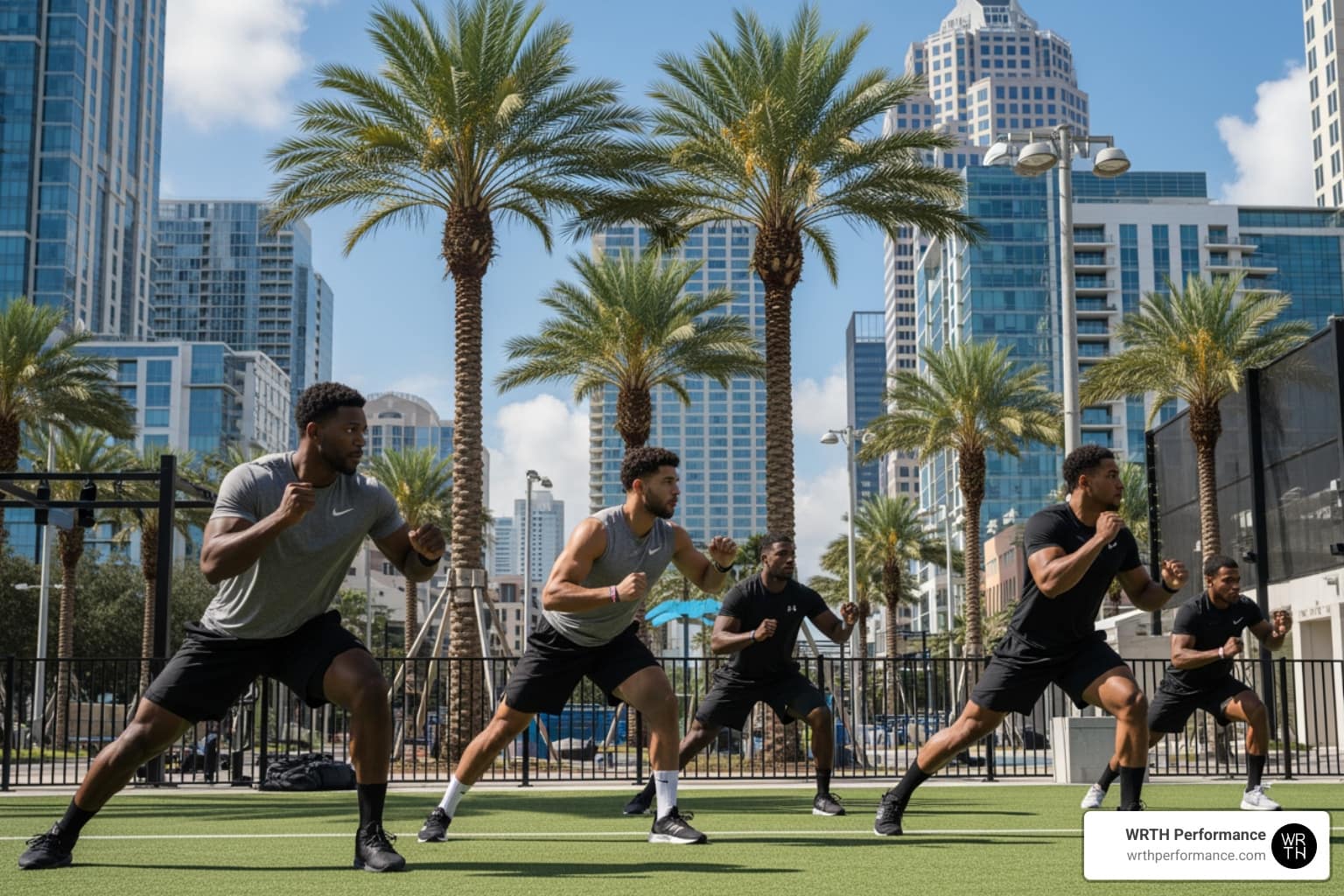
Why Orlando Athletic Training Sets the Standard for Serious Athletes
Orlando athletic training has evolved into one of the most competitive and resource-rich sports performance ecosystems in the country. Whether you’re a high school athlete chasing a college scholarship, a professional preparing for a combine, or a driven adult who refuses to plateau — Orlando has the infrastructure to match your ambition.
Here’s a quick look at what Orlando’s athletic training landscape offers:
| Category | What’s Available in Orlando |
|---|---|
| Performance Training | Speed, strength, agility, sport-specific drills |
| Recovery Tools | Contrast therapy, compression, infrared sauna, hyperbaric chambers |
| Sports Medicine | Orthopedic care, physical therapy, biomechanical assessments |
| Specialized Programs | Combine prep, golf, running, return-to-sport |
| Athlete Levels Served | Youth, high school, college, professional |
Orlando’s year-round warm climate, deep collegiate pipeline, and density of certified experts have made it a genuine hub for athletes at every stage of development. The city’s training culture punches well above its weight — and the standards keep rising.
I’m Jason Kasheta, a former NCAA college football player and owner of WRTH Performance in Downtown Orlando, with over 20 years of experience designing strength, nutrition, and recovery programs at the intersection of Orlando athletic training and modern performance science. In this guide, I’ll break down everything you need to know to find — or build — the training environment that actually moves the needle.
The Elite Landscape of Orlando Athletic Training
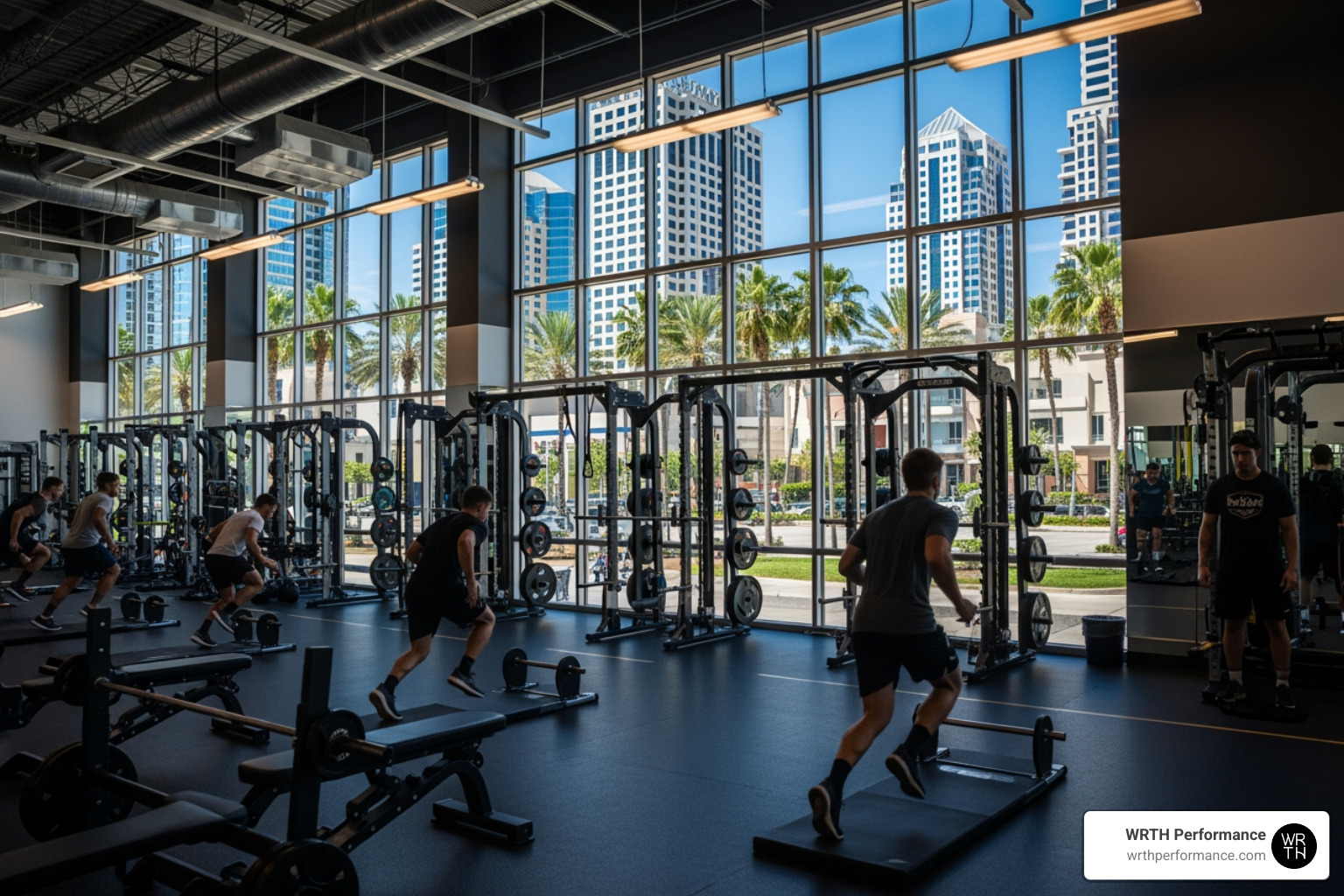
Orlando is not just a city with gyms. It is a city with a full athlete-development ecosystem.
That matters because serious performance is rarely built by one workout, one coach, or one piece of equipment. It is built by the combination of training, recovery, movement quality, nutrition, and consistency over time. In Orlando, athletes can access all of those layers in one metro area.
Across the city, athletes can find:
- Performance coaching for speed, strength, agility, and power
- Recovery services ranging from compression to contrast therapy
- Rehab and physical therapy support
- Sport-specific development for field sports, golf, and running
- Return-to-play systems that help bridge the gap between injury rehab and full competition
One reason the city stands out is the level of medical and sports-science support available locally. For example, the AdventHealth Training Center brings sports medicine, performance, and rehabilitation together under one roof, and Rothman Orthopaedics specialists there evaluate more than 80,000 sports injuries every year. That volume matters. It means Orlando athletes train in a market where injury care, prevention, and performance are all taken seriously.
Here is what tends to separate an elite training environment from a regular fitness facility:
| Feature | Standard Gym | Elite Athletic Training Environment |
|---|---|---|
| Programming | General workouts | Sport-specific progression |
| Assessment | Minimal | Movement, strength, and power testing |
| Recovery | Basic stretching area | Structured recovery protocols |
| Coaching | General instruction | Performance coaching with data tracking |
| Rehab Integration | Usually separate | Built into the athlete plan |
| Longevity Focus | Often overlooked | Performance now and durability later |
Professional Standards and Regulation
If you are evaluating Orlando athletic training, credentials matter.
In Florida, athletic trainers are regulated at the state level. You can verify licensure and professional requirements through the Florida Board of Athletic Training. This is especially important because the term “trainer” gets used loosely. A personal trainer, strength coach, physical therapist, and licensed athletic trainer may all do excellent work, but they have different scopes of practice.
A few credentials worth understanding:
- ATC means Board of Certification credentialed athletic trainer
- LAT means licensed athletic trainer in Florida
- CSCS often indicates advanced strength and conditioning knowledge
- PT or DPT indicates physical therapy licensure and training
- Sports specialist designations often reflect advanced rehab and return-to-sport expertise
We believe athletes should ask better questions before trusting anyone with their body:
- What is this coach qualified to assess?
- How is progress measured?
- How is recovery programmed?
- What happens if pain or overload shows up?
- Is the plan built for long-term performance, not just short-term fatigue?
If you want one-on-one coaching in a private setting, our personal training services are built around that higher standard: individualized programming, recovery integration, and a clear performance goal.
Why Orlando is a Sports Performance Hub
A few local advantages explain why Orlando keeps attracting athletes year after year.
First, climate. Warm weather makes year-round field work, sprint work, and outdoor conditioning much easier than in colder markets. Fewer weather interruptions means more consistent development.
Second, athlete density. Between youth sports, high school programs, college athletes, and professionals training in the area during off-seasons, Orlando creates a strong competitive environment. Good athletes tend to sharpen each other. Iron sharpens iron. Also, sled pushes sharpen quads.
Third, collegiate and professional influence. Orlando sits close to major university pipelines and pro-team resources, which raises expectations around training quality, rehab, and sports medicine. The result is a market where “good enough” does not stay good enough for long.
Finally, the city supports both performance and lifestyle. Athletes can train hard, recover well, and still manage school, work, or family life. That balance is a big reason Orlando works for both aspiring pros and ambitious adults.
Specialized Performance: From Youth to Professional Levels
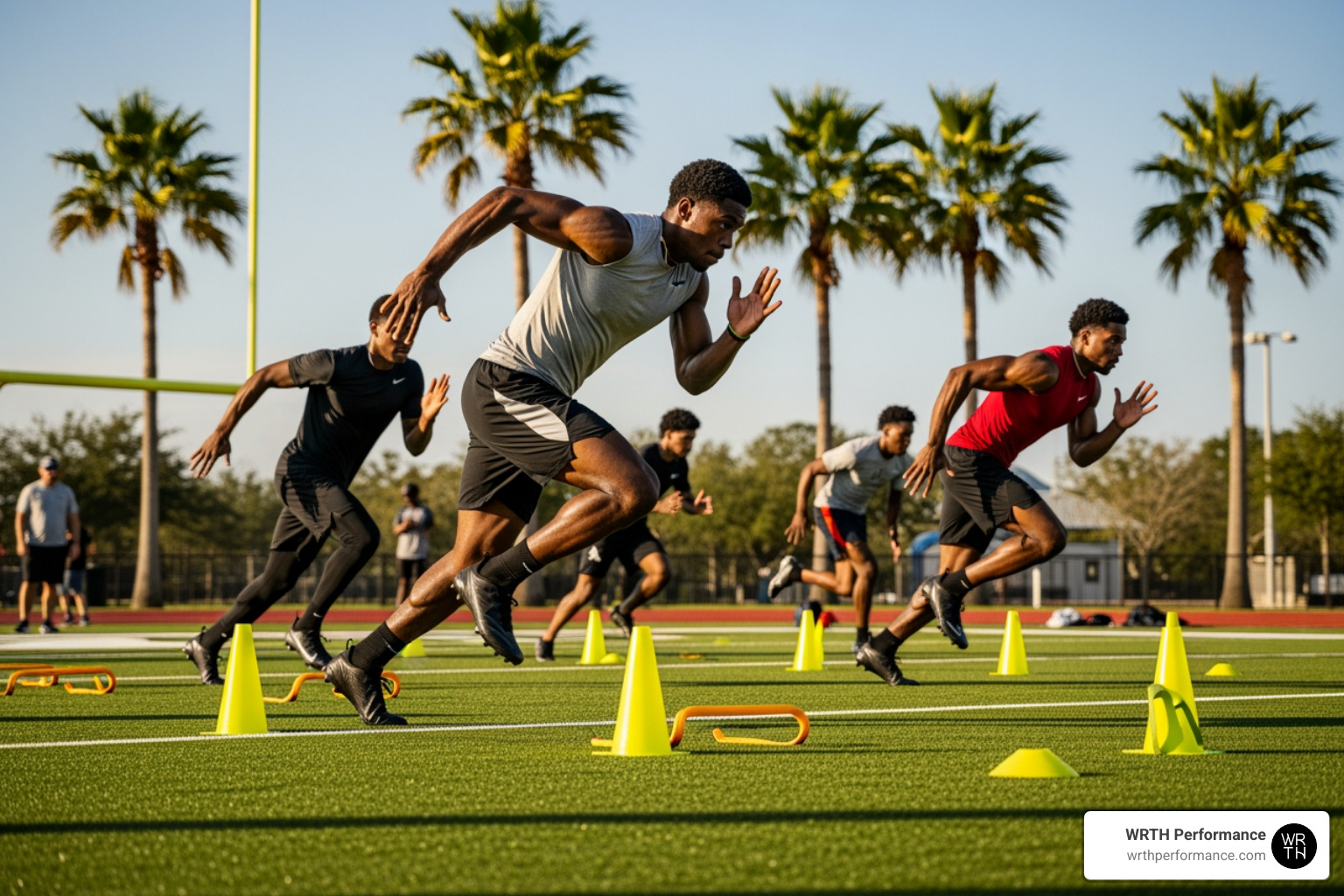
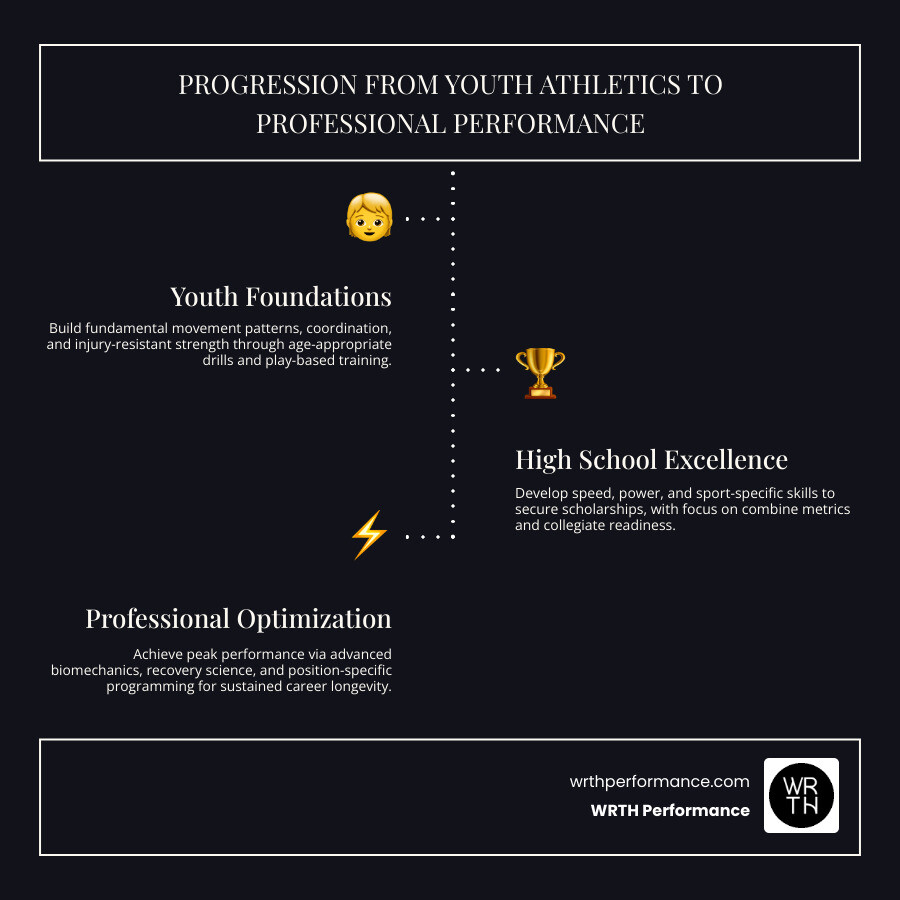
One of the biggest strengths of Orlando athletic training is range. A middle school athlete learning movement basics, a high school player chasing a scholarship, a college athlete in off-season development, and a pro preparing for testing all need different things.
The best training environments recognize that.
For younger athletes, the priority is usually movement quality, coordination, speed mechanics, and strength foundations. For high school and college athletes, training becomes more targeted toward force production, power, deceleration, injury resistance, and sport transfer. For professionals, the work gets highly specific and often data-driven.
Some Orlando programs use structured academy models, including 10-week strength and speed formats for high school and college athletes. These can be useful when they combine assessment, coaching, and progression rather than random high-intensity sessions.
At WRTH Performance, we favor a more private model for athletes who want focused attention, premium recovery access, and a quieter environment than the crowded performance floor. Our boutique gym approach is designed for people who want high standards without the chaos.
Orlando Athletic Training for Professional Combine Prep
Combine prep is one of the clearest examples of why specialized coaching matters.
Football athletes may need to improve:
- 10-yard acceleration
- 40-yard dash mechanics
- broad jump and vertical power
- pro-agility and change of direction
- position-specific movement efficiency
Basketball pre-draft work often focuses on:
- first-step explosiveness
- reactive agility
- repeat sprint ability
- jump profiling
- body composition and recovery management
Baseball off-season training usually emphasizes:
- rotational power
- force transfer through the kinetic chain
- sprint efficiency
- shoulder and hip integrity
- workload management
In Orlando, athletes can find coaches and facilities built around these high-stakes phases. Some local programs specifically advertise NFL Combine, NBA Draft, and MLB off-season preparation, often beginning with assessments that include jump testing, sprint testing, and broad musculoskeletal screening. Research from one Orlando provider notes assessments that capture more than 50 musculoskeletal measurements in a 60-minute session, which shows how detailed modern performance profiling has become.
That level of detail matters because combine prep is not just “train harder.” It is train the test, train the sport, and protect the body at the same time.
Specialized Programs for Golf and Field Sports
Orlando is especially strong in sport-specific programming.
Golf and running programs have become more advanced in recent years because they rely heavily on biomechanics, asymmetry detection, and movement efficiency. The AdventHealth Training Center highlights golf- and run-specific performance pathways that use motion analysis to identify where an athlete leaks power or absorbs stress poorly.
For golf, key metrics often include:
- rotational power
- hip and thoracic mobility
- balance and ground-force sequencing
- swing efficiency
- asymmetry between lead and trail sides
For field sports, useful performance markers often include:
- acceleration mechanics
- top-end speed
- deceleration braking ability
- lateral power
- repeat-effort capacity
- change-of-direction efficiency
For runners, common focus points include:
- stride efficiency
- force production
- cadence and contact time
- hip stability
- load tolerance
This is one reason generic bootcamp-style training often falls short. A golfer, wide receiver, midfielder, and 5K runner may all be “athletes,” but their movement demands are not remotely the same.
Advanced Recovery and Performance Support
Training creates adaptation only if recovery supports it.
That is why recovery has become a major part of Orlando athletic training. The old mindset was simple: work hard, stretch a little, and hope for the best. The modern mindset is better: stress the body intentionally, then recover with equal intention.
Across Orlando, higher-end facilities may offer tools such as:
- contrast therapy
- compression systems like Normatec
- infrared sauna
- hyperbaric chambers
- manual therapy
- mobility sessions
- recovery boots
- guided breathing or nervous-system downregulation work
Some local performance centers market very advanced recovery menus, including hot and cold tubs, sauna, hyperbaric chambers, and compression tools commonly associated with pro athletes. That reflects a broader trend: recovery is no longer reserved for the pros.
For athletes and high-performing adults alike, the question is not whether recovery matters. It is which tools fit your training load, schedule, and goals.
For example, our recovery approach at WRTH Performance centers on practical, science-driven methods that members can use consistently, including infrared sauna therapy and cold plunge therapy. Fancy tools are great. Consistent use is better.
Advanced Recovery in Orlando Athletic Training
The most useful recovery tools generally support one or more of these goals:
- reduce perceived soreness
- improve circulation
- help manage inflammation
- support nervous-system recovery
- improve sleep and readiness
- maintain training frequency without breakdown
At WRTH Performance, we also use modalities like PEMF and red light therapy as part of a broader recovery strategy. These are best understood as support tools, not magic tricks. If sleep, nutrition, and training load are a mess, no recovery device is going to save the week.
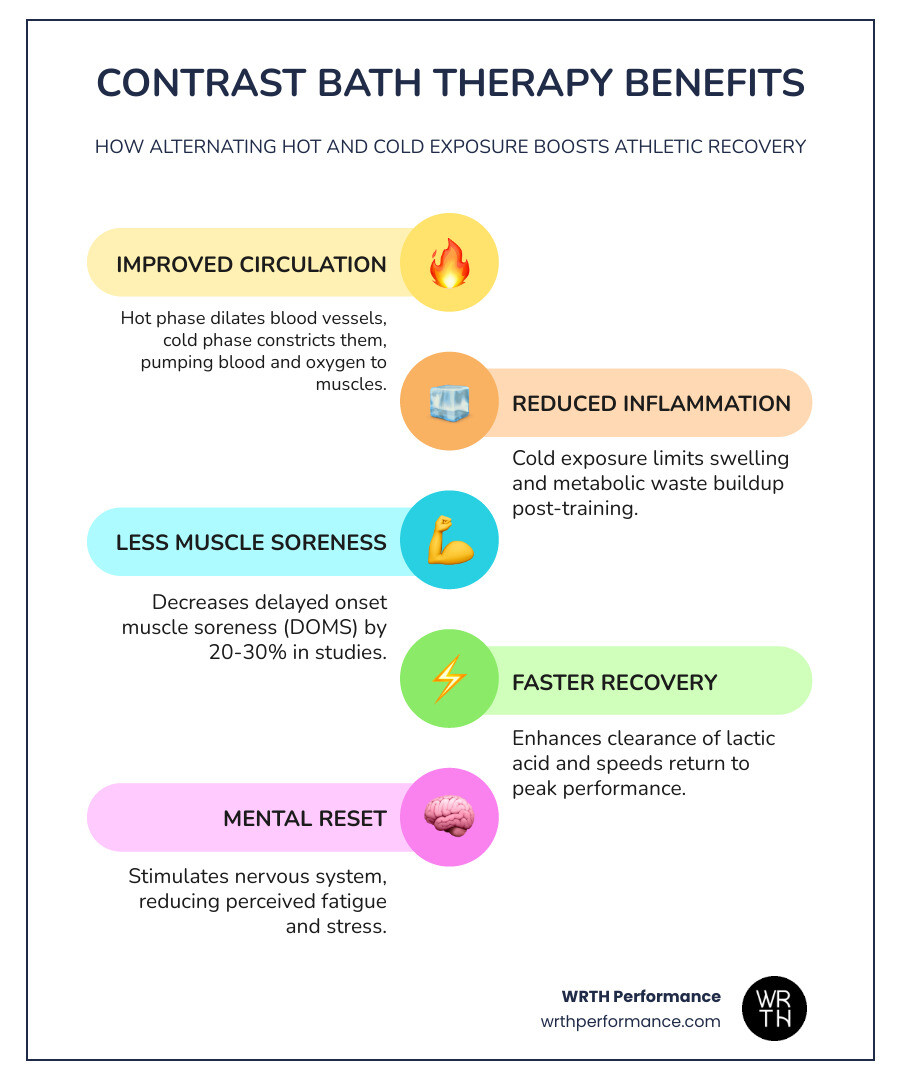
Contrast therapy deserves special mention because it is one of the most recognizable recovery methods in athletic settings. Alternating hot and cold exposure may help athletes feel fresher, improve circulation dynamics, and mentally reset after demanding sessions.
The real win with recovery is not luxury for luxury’s sake. It is preserving your ability to train well tomorrow, next month, and next season.
Neurostrength and Cognitive Performance
One of the more interesting developments in Orlando’s performance scene is the rise of brain-body training.
Some local facilities now incorporate neurostrength or cognitive performance systems such as NESTRE™, which are designed to connect physical output with reaction, mental recovery, and cognitive load. In plain English: not all fatigue is muscular. Athletes can be physically ready but mentally slow, overstimulated, or late to react.
That matters in sports where processing speed changes outcomes:
- quarterbacks reading coverage
- point guards making split-second decisions
- hitters timing velocity
- soccer players scanning space under pressure
Cognitive performance work can include:
- visual reaction drills
- dual-task movement challenges
- decision-making under fatigue
- breathing and regulation strategies
- coordination work tied to timing and awareness
We see this as part of a broader performance truth: the body and brain do not compete for importance. They work together. If one is lagging, performance drops.
Integrating Performance Training and Rehabilitation
One of the biggest gaps in athletics is what happens after basic rehab ends.
An athlete may be cleared from physical therapy but still not be truly ready to sprint, cut, jump, absorb contact, or tolerate practice volume. That in-between stage is where smart Orlando athletic training can make a huge difference.
The strongest systems connect:
- Pain reduction
- Movement restoration
- Strength rebuilding
- sport-specific loading
- return-to-play progression
- long-term resilience planning
This integrated model is a major reason medically connected facilities stand out. At the AdventHealth Training Center, performance, rehab, and sports medicine are deliberately linked, which is valuable for athletes working back from injury.
We apply that same principle in our own way at WRTH Performance: training should not ignore previous injuries, asymmetries, or fatigue patterns. The goal is continuity, not random intensity.
Biomechanics and Motion Analysis
Assessment should come before hard programming.
In Orlando, more advanced performance environments now use screening and motion analysis to identify issues that the naked eye can miss. Research from local sports performance programming shows several common assessment elements:
- toe-to-shoulder range-of-motion screening
- asymmetry analysis
- jump testing
- sprint profiling
- force and power evaluation
- corrective exercise planning
Some Orlando assessments start around $175 and include 60 minutes of structured testing. That kind of baseline can be useful for athletes who need objective direction rather than guesswork.
Common musculoskeletal measurements may include:
- ankle mobility
- hip internal and external rotation
- hamstring length
- thoracic rotation
- shoulder mobility
- core stability
- single-leg control
- landing mechanics
The point of data tracking is simple: if we cannot identify the bottleneck, we are just throwing workouts at the wall and hoping one sticks.
Injury Prevention and Return-to-Play
Injury prevention is not a separate program you do once. It should be built into the way you train.
That includes:
- smart exercise selection
- proper sprint and deceleration mechanics
- gradual workload progression
- mobility where needed
- strength where lacking
- recovery matched to stress
- nutrition that supports adaptation
Return-to-play systems are especially effective when they bridge the gap between clinical rehab and full-speed sport. Some Orlando programs now offer modified performance tracks for athletes in early-, mid-, and late-stage rehab, which is a smart step forward.
Nutrition also belongs in this conversation. Several local athletic training environments now integrate nutrition coaching or meal planning because tissue repair, energy availability, body composition, and recovery are all influenced by what athletes eat. We agree completely. Performance is not just what happens during the workout.
That is one reason we encourage athletes to think beyond the next game and toward durability. Our perspective aligns with a bigger idea we discuss here: Longevity: The New Performance Standard. If your training gets results but breaks you down, it is not elite. It is expensive chaos.
Frequently Asked Questions about Orlando Athletic Training
What are the top recovery tools used by Orlando athletes?
The most common advanced recovery tools in Orlando include contrast therapy, compression systems like Normatec, infrared sauna, hyperbaric chambers, recovery boots, manual therapy, and guided mobility work. At WRTH Performance, we focus on practical tools that members can use consistently, including sauna, cold plunge, PEMF, and red light therapy.
How do Orlando facilities support football and basketball pre-draft preparation?
They usually start with testing. That may include sprint timing, jump analysis, movement screening, and body composition work. From there, programs are often tailored to combine and pre-draft demands like acceleration, vertical power, agility, repeat effort, and recovery between high-output sessions. Good programs also include biomechanics, workload management, and position-specific movement work.
What certifications should I look for in an Orlando athletic trainer?
Look for licensure and role-specific credentials. A licensed athletic trainer in Florida should meet state requirements outlined by the Florida Board of Athletic Training. Depending on your goals, helpful credentials may include ATC, LAT, CSCS, PT, DPT, or sport-specific specialty certifications. The key is matching the professional’s scope of practice to your needs.
Conclusion
Orlando has earned its reputation as a serious destination for athletic development. The city offers year-round training, strong sports medicine support, sport-specific performance pathways, and increasingly advanced recovery options for athletes who want more than generic fitness.
At WRTH Performance, we bring that same standard into a private, high-touch Downtown Orlando setting. Our model is intentionally different: luxury private membership, capped capacity, state-of-the-art equipment, personalized training, nutrition support, and science-driven recovery that includes sauna, cold plunge, PEMF, and red light therapy.
If you want a quieter, smarter, more individualized path through Orlando athletic training, we invite you to start with us at WRTH Performance. Space is intentionally limited, because results usually improve when the room is not overcrowded and the coaching is not diluted.
