

Why Athletic Recovery Services Are the Missing Piece in Your Performance Plan
Athletic recovery services are structured programs that use science-backed tools and techniques to help your body repair, adapt, and perform at a higher level between training sessions.
Here’s a quick breakdown of what they include and who they’re for:
- What they are: Guided recovery sessions using modalities like cold plunge, infrared sauna, red light therapy, PEMF, massage, and assisted stretching
- Who they’re for: Elite athletes, recreational athletes, high-stress professionals, and anyone whose body isn’t bouncing back the way it used to
- Why they matter: Your body doesn’t get stronger during training – it gets stronger during recovery. Skip that phase, and you plateau, burn out, or get hurt
- What to expect: A personalized approach based on your goals, training load, and how your body responds
- How often: Most people benefit from 1-3 dedicated recovery sessions per week, depending on training intensity
Here’s the truth most people miss: you can only be as good in your training as you are in your ability to recover. Yet recovery is almost always the last thing people invest in – if they invest in it at all. High performers train hard. The best ones also recover with the same intention.
I’m Jason Kasheta, a personal trainer and exercise science specialist with over 20 years of experience working with athletes and high-performance individuals, and athletic recovery services are a core part of the system I’ve built at WRTH Performance. If you’ve hit a wall with performance, energy, or results, what I’ve seen over two decades is that recovery – not more training – is usually the answer.
What Are Athletic Recovery Services?
To truly understand athletic recovery services, we first need to distinguish between passive recovery and active, guided recovery. Passive recovery is what most people do by default – sitting on the couch, sleeping (which is incredibly important, of course), or simply taking a day off from the gym.
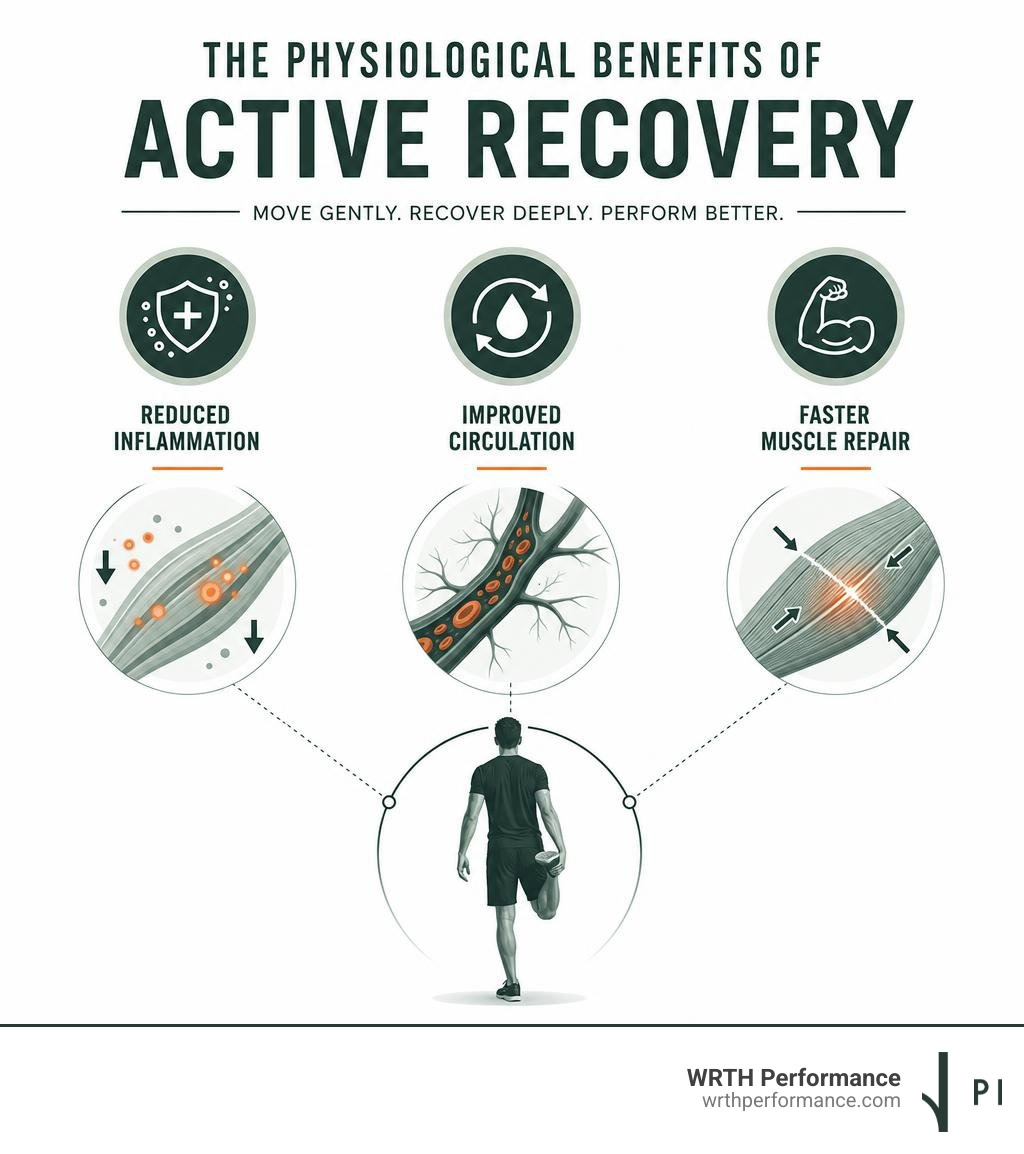
Guided athletic recovery, on the other hand, is a proactive, structured system designed to accelerate the body’s natural healing processes. Instead of waiting days for muscle soreness to dissipate, we use targeted modalities to speed up cellular repair, optimize circulation, and restore tissue elasticity.
At its core, professional recovery is about nervous system regulation. When you train hard, your body is locked in a sympathetic state – the “fight or flight” response. This state is necessary for lifting heavy weights or sprinting, but you cannot heal or rebuild while staying there. True recovery requires shifting your body into a parasympathetic state – the “rest and digest” mode.
By utilizing structured recovery tools, we signal to the brain and nervous system that the threat is gone, allowing cellular repair to begin immediately. This holistic approach is why many forward-thinking fitness environments are transitioning into comprehensive wellness spaces, as detailed in our guide to The Ultimate Recovery Hub: Gyms with Advanced Wellness Services.
In Orlando, active recovery is becoming the standard for anyone serious about their physical longevity. By utilizing structured recovery tools, the goal remains the same: helping you return to your next training session fully recharged.
Key Modalities in Modern Athletic Recovery
Modern recovery science has evolved far beyond basic ice packs and static stretching. Today, we utilize a suite of advanced technologies that work synergistically to restore your body.

One of the most effective ways to accelerate healing is through contrast therapy – alternating between extreme cold and heat. This process creates a “vascular pump” effect. Cold exposure constricts your blood vessels, pushing metabolic waste products out of your muscles. Heat exposure then dilates those vessels, flooding the tissues with fresh, oxygenated, nutrient-rich blood.
Additionally, technologies like pneumatic compression therapy sleeves are highly valued for their ability to mimic the body’s natural muscle pump, helping to clear lymphatic fluid and reduce swelling. In fact, statistics show that 97% of American professional sports teams use pneumatic compression therapy to enhance their athletes’ recovery.
To help you understand how these modalities compare, we’ve broken down the key metrics below:
| Modality | Typical Temperature | Ideal Duration | Primary Physiological Benefit |
|---|---|---|---|
| Cold Plunge | 45°F – 55°F | 3 – 5 minutes | Vasoconstriction, systemic inflammation reduction, nervous system reset |
| Infrared Sauna | 120°F – 140°F | 15 – 30 minutes | Vasodilation, cellular detoxification, cardiovascular conditioning |
| Red Light / PBM | Ambient | 10 – 20 minutes | Mitochondrial stimulation, ATP production, tissue repair |
| PEMF Therapy | Ambient | 15 – 30 minutes | Cellular voltage restoration, pain reduction, deep relaxation |
Science-Backed Cold Plunge Therapy as Part of Athletic Recovery Services
Cold water immersion is one of the most powerful tools in our recovery arsenal. When you submerge your body in cold water, it triggers rapid vasoconstriction, pulling blood away from your extremities and toward your vital organs. This process helps shut down systemic inflammation and dramatically reduces delayed onset muscle soreness (DOMS). Research on cold-water immersion has also found that it can help reduce muscle soreness after exercise, as summarized in this cold-water immersion review published by PubMed.
Beyond the physical benefits, cold exposure is a masterclass in building mental resilience. Intentionally stepping into freezing water forces you to control your breath, calm your heart rate, and manage your stress response under pressure. To dive deeper into the protocols we recommend, explore our comprehensive breakdown of Cold Plunge Therapy.
Infrared Sauna and Heat Exposure
While traditional saunas rely on heating the air around you, infrared saunas use light waves to heat your body directly from the inside out. This deep, penetrating heat promotes intense vasodilation, expanding your blood vessels to maximize circulation and deliver vital nutrients to sore muscles and joints.
This deep heat also stimulates the release of heat shock proteins, which play a critical role in preventing muscle atrophy, promoting cellular repair, and supporting overall cardiovascular health.
If you want to maximize your flexibility, pairing heat with mobility work is incredibly effective. Research shows that participants who sat in a sauna for 15 minutes before stretching saw a 205% increase in flexibility compared to performing the same stretches without the sauna. To learn more about how to integrate this into your routine, read our guide to Infrared Sauna Therapy.
Advanced PEMF and Red Light Therapy
To recover at the highest level, we have to look at what is happening at the cellular level. Pulsed Electromagnetic Field (PEMF) therapy and Red Light Therapy (also known as photobiomodulation) work by directly targeting your cells’ powerhouses: the mitochondria.
Red light therapy uses specific wavelengths of light to penetrate the skin and stimulate mitochondrial activity, boosting the production of Adenosine Triphosphate (ATP) – the primary energy currency of your cells. This accelerated energy production translates directly to faster tissue repair and reduced inflammation.
PEMF therapy complements this by emitting gentle, low-frequency electromagnetic waves that help restore the natural electrical charge of your cells, improving cellular function and promoting deep, restorative sleep. For a complete look at these dual cellular therapies, check out our resource on PEMF & Red Light Therapy.
Who Benefits from Professional Athletic Recovery Services?
There is a common misconception that advanced recovery suites are reserved exclusively for professional or Olympic-level athletes. While elite competitors certainly rely on these tools to maintain their edge, the reality is that anyone who places physical or mental demands on their body can benefit.

Whether you are pushing your physical limits in the gym, managing a demanding corporate career, or simply trying to stay active and pain-free as you age, structured recovery is the key to maintaining a high quality of life.
Here are the primary recovery goals we help our clients achieve:
- Reducing systemic inflammation to alleviate chronic joint and muscle discomfort
- Restoring autonomic nervous system balance to combat chronic stress and burnout
- Enhancing joint mobility and tissue elasticity to maintain pain-free movement
- Optimizing sleep quality by transitioning the body into a deep parasympathetic state
- Accelerating natural cellular repair to allow for consistent, high-quality training
Elite and Recreational Athletes Utilizing Athletic Recovery Services
For competitive athletes, recovery is the ultimate performance enhancer. When you are training at a high volume, muscle soreness and fatigue are inevitable. However, allowing that fatigue to accumulate over weeks and months is a direct path to overtraining, performance plateaus, and acute injuries.
By integrating professional athletic recovery services into your weekly routine, you can safely handle higher training volumes while minimizing down-time. These tools help maintain tissue quality, reduce muscle imbalances, and keep your joints moving through their full, healthy range of motion. To explore the specific tools that can elevate your routine, consult An Essential Guide to Gym Recovery Equipment.
Everyday Active Individuals and High-Stress Professionals
If you are a high-stress professional working long hours in Downtown Orlando, your body is likely locked in a chronic sympathetic state. Mental stress manifests physically, leading to tight shoulders, restricted hips, poor sleep, and systemic fatigue.
For the everyday active individual, recovery services are about burnout prevention and longevity. Taking time to step into a cold plunge, relax in an infrared sauna, or rest on a PEMF mat provides a much-needed physical and mental boundary.
These modalities help lower cortisol levels, improve sleep architecture, and preserve joint health, ensuring you can continue to run, lift, play, and work without pain. For instance, incorporating floatation therapy into your routine – which is widely recommended once or twice per week for optimal results in reducing stress, improving sleep quality, and increasing focus – can be a game-changer for cognitive and physical restoration.
Frequently Asked Questions About Athletic Recovery
Navigating recovery science can feel overwhelming with so many advanced technologies available today. Education is the foundation of a safe and effective recovery program.
Below, we answer some of the most common questions we hear from clients starting their recovery journey in Orlando.
What should I expect during my first recovery session?
Your first session is all about orientation, assessment, and setting a baseline. We begin by discussing your current training volume, stress levels, injury history, and wellness goals. We will also look at your baseline flexibility and movement patterns to identify any areas of restriction.
From there, we guide you through each modality step-by-step, explaining how the equipment works, what you will feel, and how to breathe to maximize the benefits. This educational approach ensures you feel completely comfortable and in control, whether you are stepping into the cold plunge for the first time or relaxing under red light panels.
This personalized, movement-informed approach to setting a baseline is a standard best practice shared by top-tier recovery specialists to ensure your program is tailored to your body’s unique needs.
Are there any safety considerations for cold plunge or sauna?
Yes, safety is always our first priority. While cold plunges and infrared saunas can be incredibly beneficial, they place acute stress on the cardiovascular system.
Cold immersion causes rapid vasoconstriction and a temporary spike in blood pressure, while saunas cause vasodilation and an increased heart rate. Therefore, individuals with pre-existing cardiovascular conditions, high blood pressure, or cold-sensitive conditions should seek appropriate clearance before using these modalities.
We always recommend proper hydration before and after sessions, and our team provides hands-on coaching guidance to ensure you are using the equipment at temperatures and durations that are safe and appropriate for your body.
How do recovery services integrate with a weekly training program?
Consistency is key. Recovery services should not be treated as a reactive measure reserved only for when your body is completely broken down. Instead, they should be woven into your training program as a proactive habit.
We generally recommend scheduling deep recovery sessions on your designated rest days to maximize active rest and nervous system relaxation. However, specific modalities can also be used around your workouts. For example, a short session in the infrared sauna before stretching can dramatically improve your range of motion, while a cold plunge after an intense training session can help kickstart the down-regulation process.
The goal is to align your recovery sessions with your training splits to ensure your body is receiving the exact support it needs, when it needs it.
Conclusion
At WRTH Performance in Downtown Orlando, we believe that true fitness is built on a foundation of balance. You cannot train at your best if you do not recover at your best. That is why we have built a luxury private membership gym that seamlessly integrates elite, science-driven recovery – including infrared sauna, cold plunge, PEMF, and red light therapy – with personalized training and expert nutrition coaching.
Our facility is designed for high performers who value their health, performance, and long-term physical longevity. To maintain an elite, uncrowded environment where every member receives undivided attention, our membership capacity is strictly capped.
If you are ready to stop guessing at your recovery and start optimizing your performance, we invite you to take the next step. Apply for the WRTH Performance Waitlist today to secure your spot in our private training and recovery community.
