

What Makes a High Performance Training Gym Different?
A high performance training gym pairs quality equipment with coaching built around your goals. Instead of leaving you to choose workouts on your own, a coach helps you follow a plan, adjust it as you progress, and make room for recovery. When exploring a facility, ask how it handles coaching, nutrition, recovery, and access. The best fit is one you can use consistently.
At WRTH Performance in Downtown Orlando, the focus is personalized training, nutrition counseling, and recovery in a private, membership-capped space.
I’m Jason Kasheta, owner of WRTH Performance and a personal trainer with 20 years of experience in strength, fitness, and nutrition. My background as a former college football player and strongman competitor shapes how I think about a high performance training gym: train with purpose and plan for the long term.
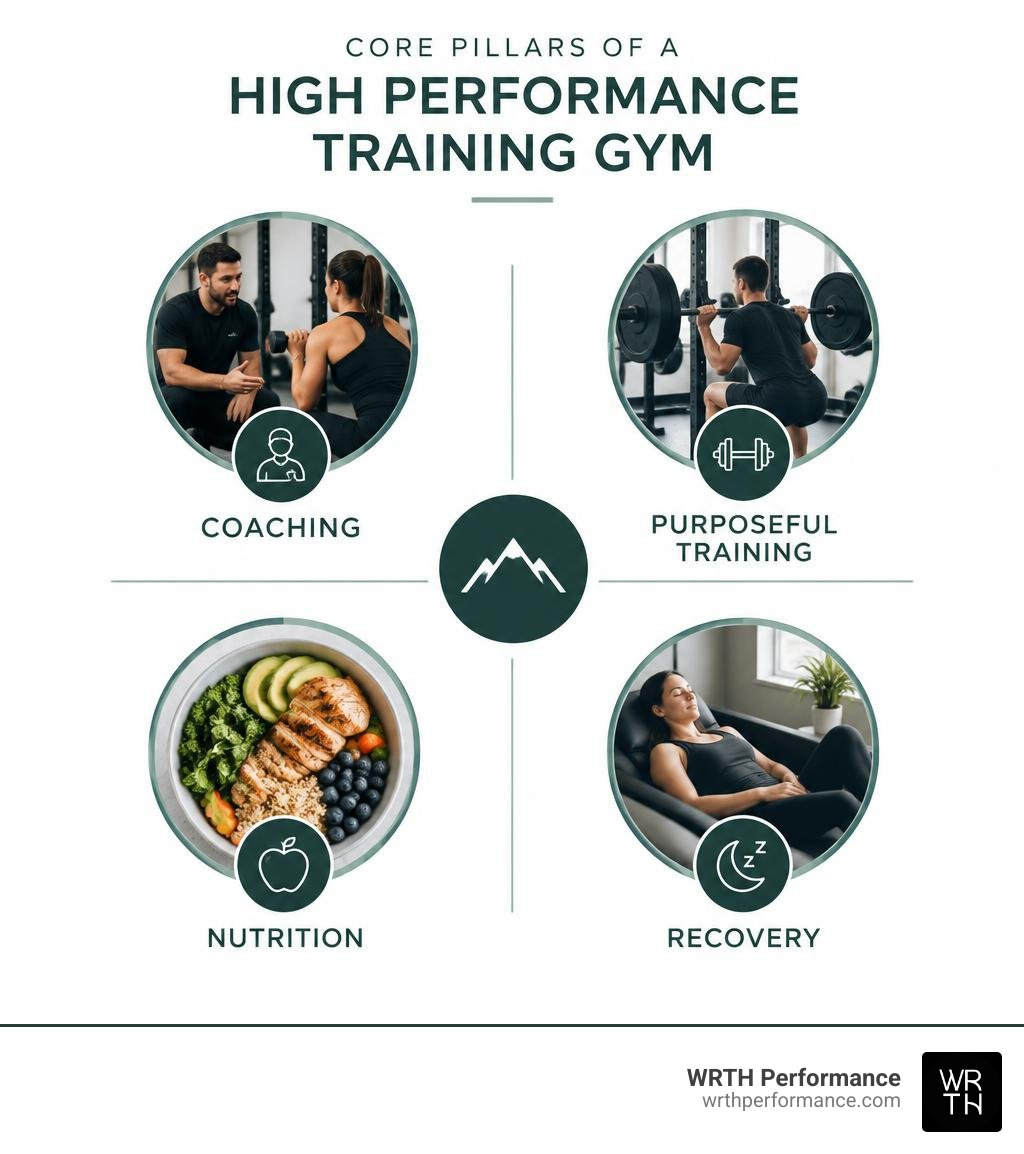
High performance training gym terms to learn:
What Defines a High Performance Training Gym vs. a Traditional Fitness Center?
Step inside a standard commercial fitness club at 5:30 PM, and you will likely see a familiar scene: crowded weight racks, members wandering aimlessly between cardio machines, and generic workout routines copied from social media. These facilities are designed around volume and low overhead, prioritizing the number of memberships sold over the actual progress of the individuals walking through the door.
A high performance training gym operates on a completely different philosophy. Rather than providing rows of passive equipment, these centers create an intentional environment built around human performance, purposeful programming, and athlete-centered care. Every square foot serves a functional role, and every member trains with a clear roadmap.
| Feature | Traditional Commercial Gym | High Performance Training Gym |
|---|---|---|
| Facility Capacity | High volume, open access, often overcrowded | Intentionally capped membership for private access |
| Training Approach | Unsupervised workouts, generic machine circuits | Structured periodization and customized programs |
| Coaching Quality | Minimal floor staff or basic personal training | Certified coaches focused on movement quality |
| Assessment Protocols | Infrequent or non-existent | Routine movement screening and baseline testing |
| Recovery Modalities | Basic locker room sauna or none | Integrated science-backed contrast and cellular therapy |
| Atmosphere | Distracted, crowded, varying etiquette | Purpose-driven, focused, and supportive |
At its core, high-performance training is not about lifting the heaviest weight possible at all costs – it is about refining functional movement patterns, building structural balance, and maximizing physical output while protecting the body from chronic wear and tear. In a high-performance setting, you never have to wonder if what you are doing is working. Your progression is measured, coached, and systematically updated.
For a deeper look into structured coaching methodologies, explore The Ultimate Guide to High Performance Personal Training to understand how individualized attention drives long-term physical transformation.
The Core Pillars of Athlete-Centered Coaching and Personalized Programming
Athlete-centered coaching flips the traditional fitness dynamic on its head. Instead of forcing your body into a rigid, one-size-fits-all workout class, the coach molds the training around your unique biomechanics, training age, daily stress levels, and lifestyle demands.
Peer-reviewed exercise science underscores the importance of this approach. Research published in Personalized, Evidence-Informed Training Plans and Exercise Prescriptions for Performance highlights that tailoring training variables – such as volume, intensity, and exercise selection – to individual physiological profiles yields significantly greater performance gains and reduces the incidence of non-functional overreaching compared to generic group models.
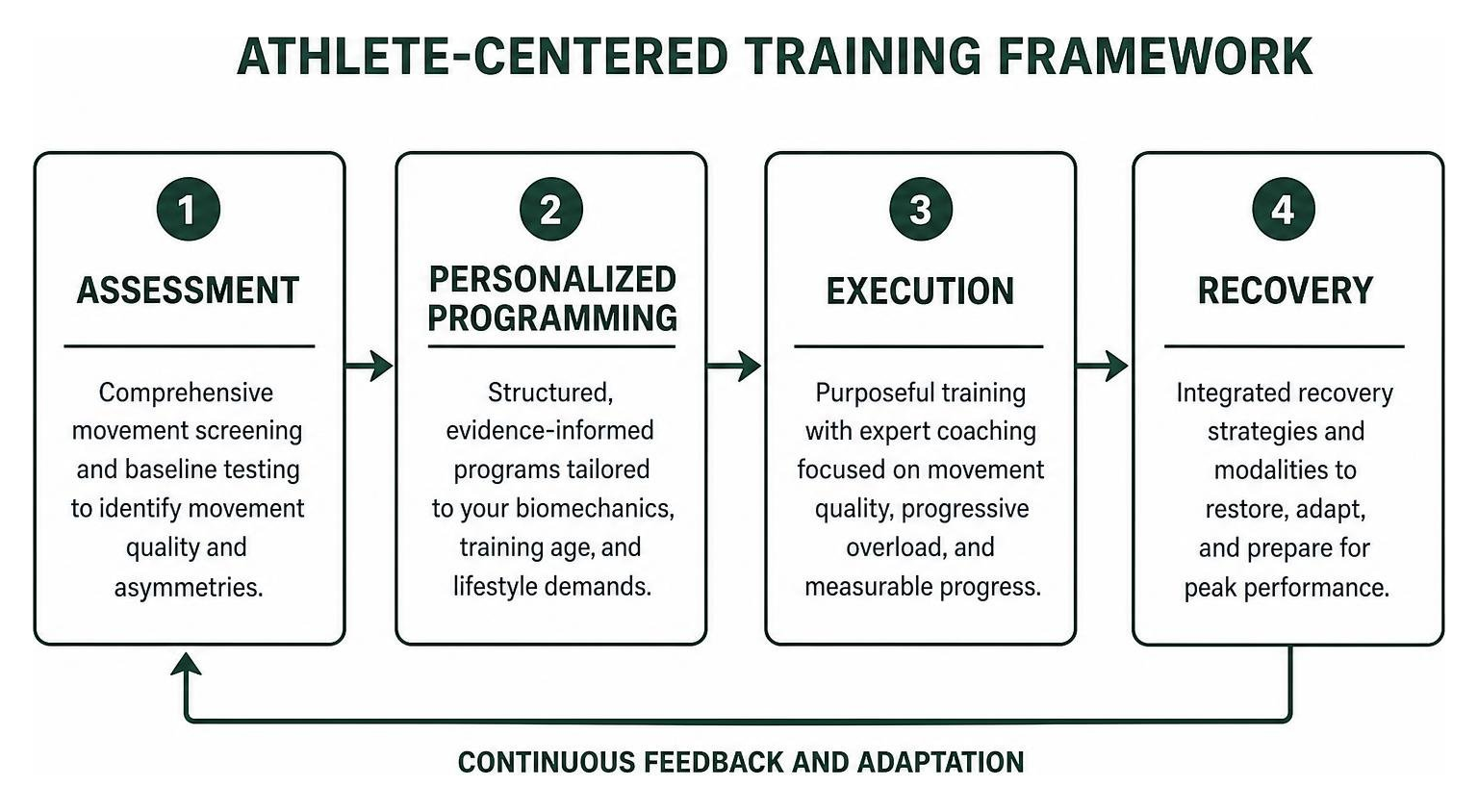
How a High Performance Training Gym Designs Individualized Pathways
Building an athlete-centered program involves a systematic process that bridges the gap between where you are today and where you want to perform tomorrow:
- Comprehensive Movement Screening: Before touching a barbell, we assess joint mobility, movement quality, and side-to-side asymmetries. This baseline evaluation ensures your body is prepared for loaded patterns.
- Baseline Performance Testing: We establish clear metrics across power, strength, and energy system capacity using precise evaluation protocols.
- Structured Load Monitoring: Progressive overload requires balance. We track volume, intensity, and mechanical stress to ensure you are stimulating adaptation without pushing into chronic fatigue.
- Adaptive Periodization: Life happens – travel, work stress, and poor sleep can impact readiness. Athlete-centered coaching adjusts daily training loads in real time based on how you present on the gym floor.
Utilizing The Best Advanced Gym Machines for Serious Athletes allows us to target specific movement mechanics, reinforce strength through full ranges of motion, and build durable joints without unnecessary spinal loading.
Specialized Training Zones and Purpose-Built Equipment

A high-performance training facility requires an intentional layout. Rather than jamming machines shoulder-to-shoulder, the gym floor is organized into dedicated performance zones designed for specific training adaptations:
- Olympic Lifting and Power Platforms: Built with heavy-duty hardwood inserts and competition-grade rubber drop zones to develop explosive rate of force development.
- Functional Turf and Sled Tracks: Continuous turf lanes designed for resisted sled pushes, sprint mechanics, dynamic deceleration, and hybrid fitness competition preparation.
- Multi-Functional Cable and Free Weight Arrays: Heavy dumbbells ranging up to 150 lbs, adjustable functional trainers, and specialty barbells (safety squat bars, trap bars, and Swiss bars) to train around joint limitations.
- Energy System Development Stations: Non-impact cardio equipment, such as curved manual treadmills, ski ergs, and fan bikes, paired with precision tracking tools to build both aerobic engines and anaerobic power.
Integrating Recovery Modalities and Nutrition for Peak Adaptation
Training is merely the stimulus for progress; real adaptation, muscle repair, and strength gains occur during the recovery window. A high performance training gym treats recovery as an essential component of the training block rather than an afterthought.
Science-Driven Recovery Inside a High Performance Training Gym

To support consistent output, modern performance facilities integrate dedicated recovery suites that combine active and passive restoration modalities:
- Infrared Sauna Therapy: Penetrates deep into muscle tissue, promoting vasodilation, improving circulation, and encouraging cardiovascular efficiency through heat-shock protein expression.
- Cold Plunge Therapy: Utilizes controlled cold exposure to rapidly modulate systemic inflammation, facilitate central nervous system recovery, and build mental resilience.
- PEMF (Pulsed Electromagnetic Field) Therapy: Delivers targeted electromagnetic pulses to stimulate cellular energy production and accelerate tissue restoration after high-load lifting.
- Red Light Therapy: Employs specific wavelengths of red and near-infrared light to support mitochondrial ATP production, skin health, and muscle recovery.
Learning How Orlando Athletes Master Performance and Recovery demonstrates that pairing contrast therapy with intentional rest cycles keeps your nervous system primed for heavy training week after week.
Nutrition Coaching and Long-Term Durability
Performance nutrition is about far more than just hitting arbitrary calorie counts. It is about fueling high-intensity training, optimizing metabolic health, and protecting joint integrity over decades.
Our nutrition coaching focuses on practical, whole-food protocols designed to support lean mass retention, stabilize blood glucose, and enhance systemic recovery. By aligning your macro- and micronutrient intake with your training cycle, we ensure your body has the raw building blocks required to repair connective tissue, maintain metabolic health, and support long-term durability. Read more about why Longevity: The New Performance Standard is reshaping how everyday athletes approach lifetime fitness.
Accessibility, Community Culture, and Modern Facility Experience
There is a common misconception that high-performance training is reserved strictly for professional athletes and that everyday fitness enthusiasts would feel out of place. In reality, an elite training facility thrives on a welcoming, ego-free environment where individuals at every level work side-by-side with mutual respect and shared focus.
Facility Access and Member Experience
Crowded gyms create friction, leading to skipped sets, rushed rest periods, and lost momentum. A luxury performance gym solves this by capping its total membership base.
By limiting the roster, every member enjoys seamless access to squat racks, turf lanes, and recovery suites without waiting in line. In addition, modern facilities utilize seamless entry systems, dedicated mobile booking apps, and streamlined access to ensure that training fits effortlessly into a busy professional routine. Discover actionable strategies for Surviving and Thriving in a High-Performance Environment to make the most of private facility access.
Cultivating an Ego-Free Community and High-Level Accountability
Training alongside people who are equally committed to self-improvement elevates everyone’s performance. In an athlete-centered environment, accountability is woven into the culture:
- Supportive Small Group Dynamics: Whether you are training one-on-one or in an intimate small-group setting, coaching attention remains individualized, and the environment remains focused.
- Welcoming, Inclusive Spaces: Dedicated, thoughtful coaching ensures that everyone—from beginners building baseline strength to female lifters mastering heavy compounds—feels empowered and confident on the training floor.
- Accountability Systems: Routine coach check-ins, performance tracking, and clear milestone reviews keep you consistent over months and years, not just weeks.
If you are currently evaluating your training options, review these 10 Smart Ways to Find Performance Training Gyms You’ll Wish You Knew Sooner to make an informed decision for your personal wellness goals.
Frequently Asked Questions About High-Performance Training
Can beginners and everyday fitness enthusiasts train in a high-performance environment?
Yes. The principles of athletic development – moving with proper mechanics, building structural strength, improving aerobic capacity, and prioritizing recovery – apply to every human body. In an athlete-centered training facility, every exercise is scalable. A certified coach modifies movements, working loads, and training volumes based on your starting baseline, ensuring you build strength safely without feeling overwhelmed.
How does an athlete-centered training facility support sports like HYROX?
Hybrid fitness competitions like HYROX demand a delicate balance of heavy sled pushes, functional endurance, running mechanics, and tactical pacing. A high-performance facility provides the specialized turf zones, curved treadmills, and rowing/ski ergs necessary to run race-specific simulations. More importantly, personalized coaching ensures you balance high-intensity engine work with proper strength training and recovery to avoid overtraining.
What should you look for when choosing an elite training and wellness facility?
When evaluating a high-performance training gym, look beyond surface-level aesthetics:
- Coaching Credentials: Ensure the coaching staff holds reputable certifications (such as CSCS) or an education in a related field and demonstrates extensive practical experience.
- Membership Capping: A true private performance gym limits its capacity so you never have to compete for equipment or space.
- Integrated Recovery Amenities: Look for full-spectrum recovery suites featuring infrared saunas, cold plunge tubs, PEMF, and red light therapy.
- Holistic Programming: Verify that the facility provides clear baseline testing, progressive training frameworks, and comprehensive nutrition coaching.
Conclusion
Athlete-centered coaching transforms your fitness journey from a series of random, disconnected workouts into a cohesive, sustainable lifestyle. When you combine purposeful movement, customized programming, whole-food nutrition guidance, and advanced recovery modalities within a private, capped-membership setting, you unlock true physical potential and long-term durability.
At WRTH Performance in Downtown Orlando, we are dedicated to helping you move better, build lasting strength, and optimize your recovery in an exclusive, low-distraction atmosphere. We invite you to experience elite coaching and private facility access at our boutique gym and discover what happens when your training is built entirely around you.
