

Why Personal Sports Training Gives Athletes an Edge
Personal sports training is coaching built around your sport, goals, and current ability. Instead of following a generic workout, you work on the skills and physical qualities you need most, such as speed, strength, movement, and endurance. A coach can adjust the plan as you improve and help you balance hard training with recovery.
It can help competitive athletes prepare for a season, recreational athletes build confidence, and busy professionals make better use of limited training time. The key is a clear starting point, a plan you can follow, and regular checks on your progress.
I’m Jason Kasheta, owner of WRTH Performance and a former NCAA football player and strongman competitor. I’ve spent 20 years building strength, fitness, and nutrition programs, and this guide explains what to look for in personal sports training.
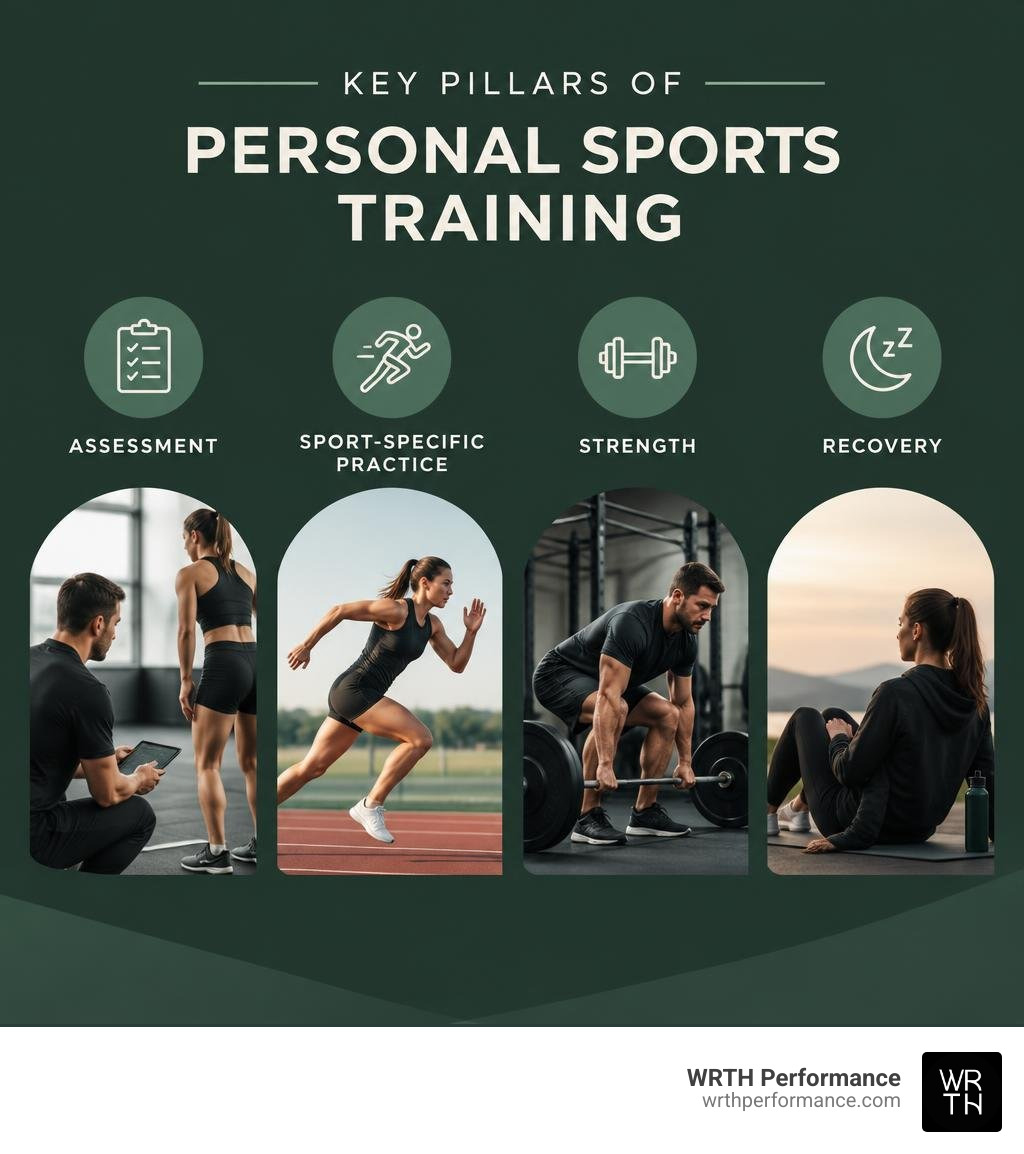
Personal sports training terms made easy:
What is Personal Sports Training and Who Benefits Most?
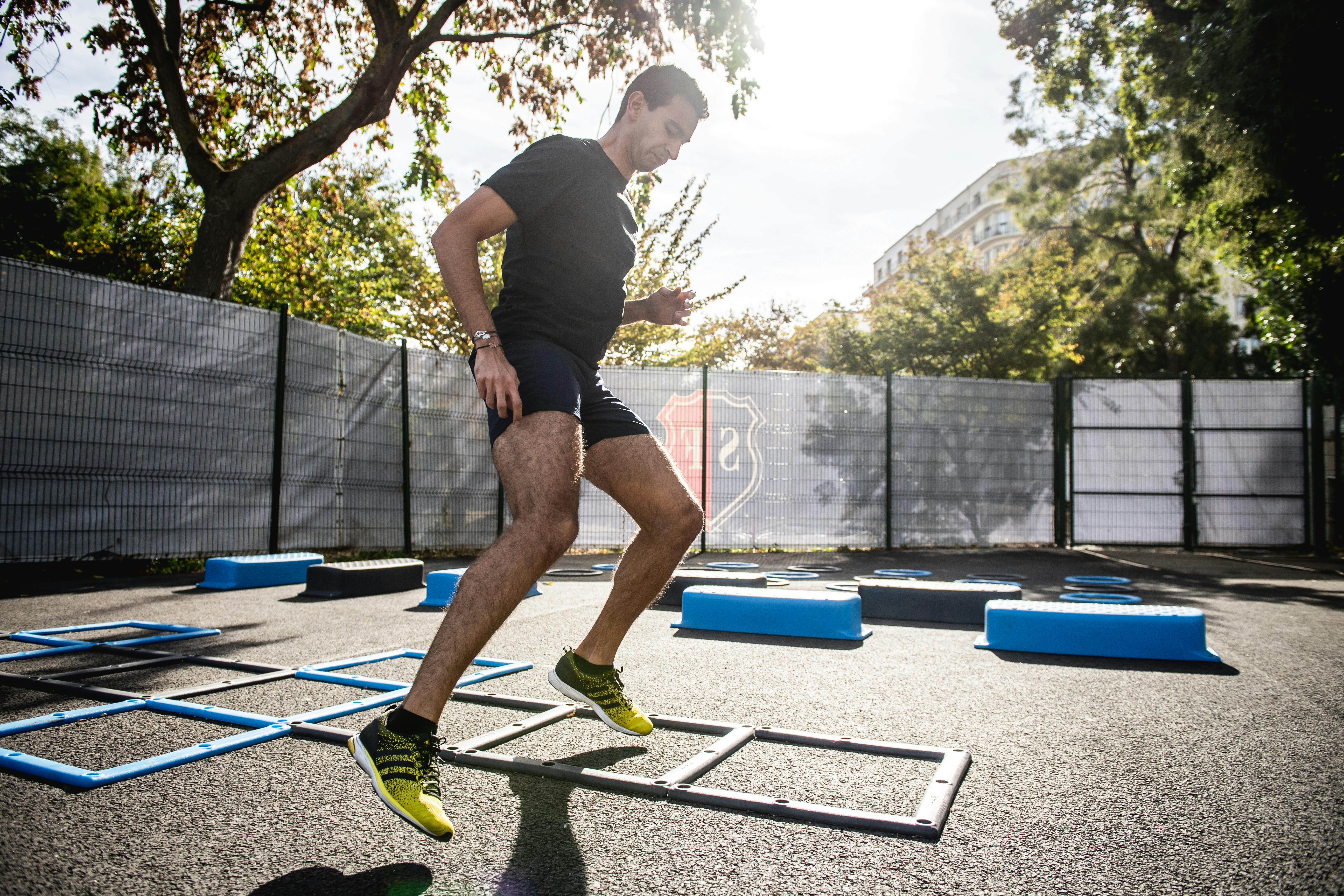
Standard gym workouts generally focus on burning calories or adding general muscle size. While there is nothing wrong with those goals, athletic success demands a much sharper focus. Personal sports training is an individualized approach to physical preparation that develops the exact movement qualities, energy systems, and strength profiles required for athletic competition.
Whether your arena is the basketball court, the soccer pitch, or a local 10K road race, your body relies on precise motor patterns and energy pathways. When you hire an expert coach, you bypass the generic routines found online and step into a system designed entirely around your physical baseline, mechanics, and athletic aspirations. We see athletes from all backgrounds use this structured approach to gain an undeniable edge over their competition.
Foundations of Personal Sports Training
Every high-level performance program rests on measurable movement mechanics rather than guesswork. When establishing a solid athletic foundation, we focus on:
- Movement Quality and Screening: Pinpointing structural compensations, restricted hip or ankle mobility, and asymmetrical movement patterns before adding heavy loads.
- Sprint and Deceleration Mechanics: Teaching athletes how to apply force into the ground efficiently, transition between acceleration and top speed, and decelerate safely to change direction without losing momentum.
- Rotational and Explosive Power: Developing rate of force development (RFD) through medicine ball throws, plyometrics, and Olympic-style lifting progressions tailored to your sport.
- Energy System Conditioning: Conditioning the specific metabolic pathways used in your sport (such as short, repeated anaerobic bursts versus steady aerobic endurance) so you stay sharp in late-game situations.
To truly understand how targeted conditioning elevates athletic performance, exploring everything you need to know about high performance personal training can provide deep insight into how elite programs are structured.
Tailoring Programs for Diverse Athlete Demographics
Athletic development is not one-size-fits-all. Different stages of life and athletic careers require tailored programming:
- Youth and Middle School Athletes: At this stage, the focus is strictly on foundational motor skills, coordination, bodyweight control, and fostering a genuine love for movement. Early specialization often leads to burnout; multi-sport movement literacy builds a resilient athletic base.
- High School and Collegiate Competitors: These athletes need advanced strength periodization, linear and lateral speed development, and sport-specific physical resilience to prepare for high-stakes competition and showcase environments.
- Adult and Executive Competitors: Many adult athletes participate in competitive tennis leagues, master’s swimming, triathlons, or recreational leagues while balancing demanding careers. For these individuals, maximizing training efficiency, preserving joint longevity, and building functional strength are top priorities. Integrating functional personal training ensures these athletes build real-world physical capability that translates seamlessly to daily life and sport.
Key Benefits: How One-on-One Coaching Transforms Performance
Working one-on-one with a dedicated coach transforms how your body generates and absorbs force. Instead of wandering through random sets, every repetition serves a clear purpose in your athletic blueprint.
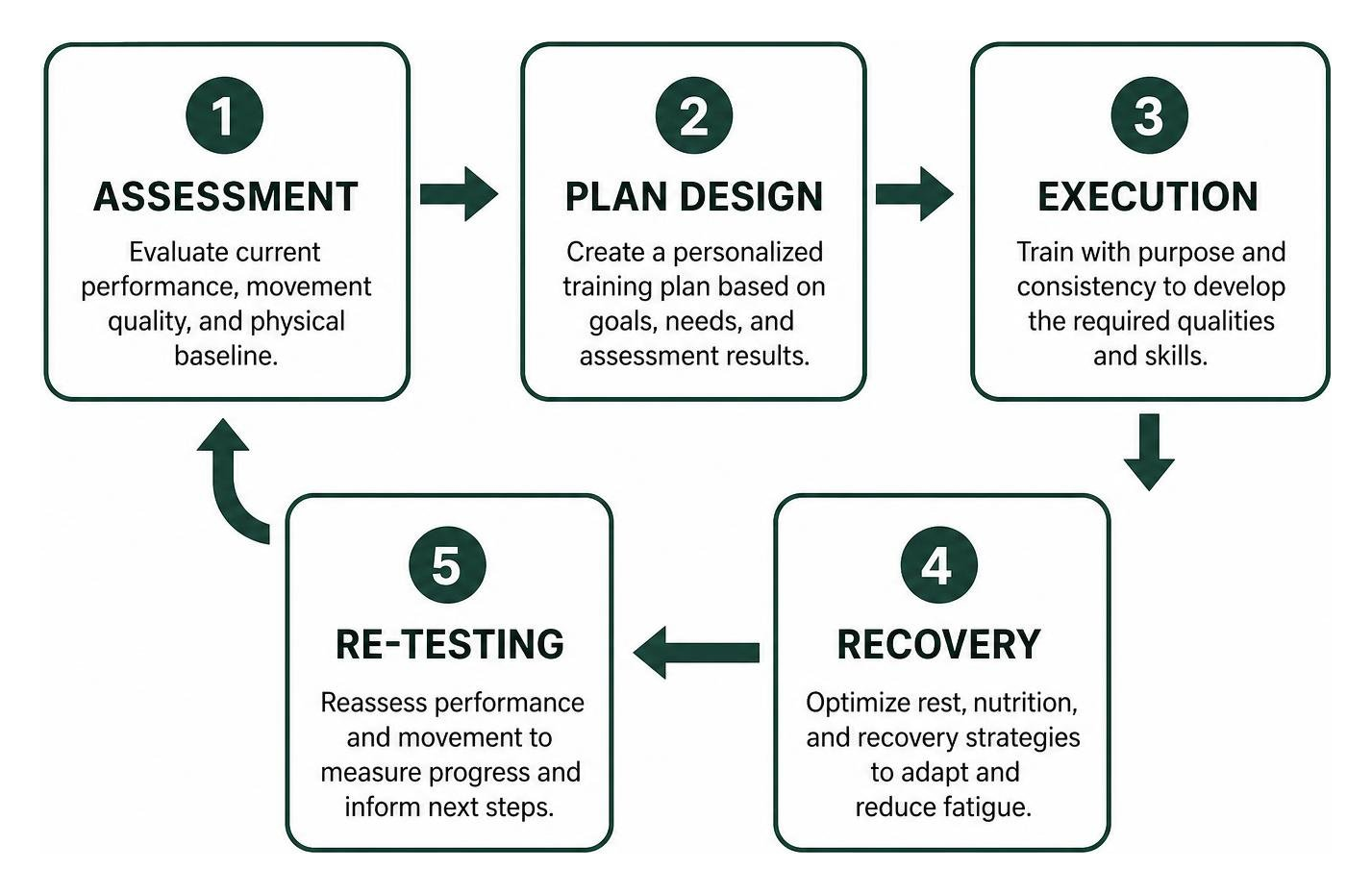
Sport-Specific Biomechanics and Movement Efficiency
Athletic greatness often comes down to fractions of a second and inches of clearance. When your movement patterns are efficient, you waste less energy moving across the court or field, allowing you to sustain a higher pace for longer.
Specialized coaching breaks down complex sporting movements – such as the triple extension needed for a vertical jump or the hip-shoulder separation required for a powerful swing – into teachable components. By improving your movement mechanics, you learn to produce greater ground reaction forces with less joint stress.
Active Injury Risk Reduction and Load Management
While no training program can eliminate injury risk entirely, targeted strength and conditioning acts as a protective shield for your body. The primary causes of non-contact athletic injuries are muscular imbalances, poor landing mechanics, and chronic overuse.
A dedicated coach identifies these vulnerabilities early. By strengthening stabilizing muscles, improving eccentric hamstring strength, and teaching proper deceleration techniques, we dramatically reduce the stress placed on vulnerable ligaments and joints. Following a personalized training programs step by step guide ensures that training loads are periodized systematically, avoiding the sudden spikes in training volume that often trigger soft-tissue strains.
Program Formats, Pricing Structures, and Session Frequency
Choosing the right personal training format depends on your budget, schedule, learning style, and specific athletic goals. Today’s training landscape offers flexible options to fit various lifestyles.
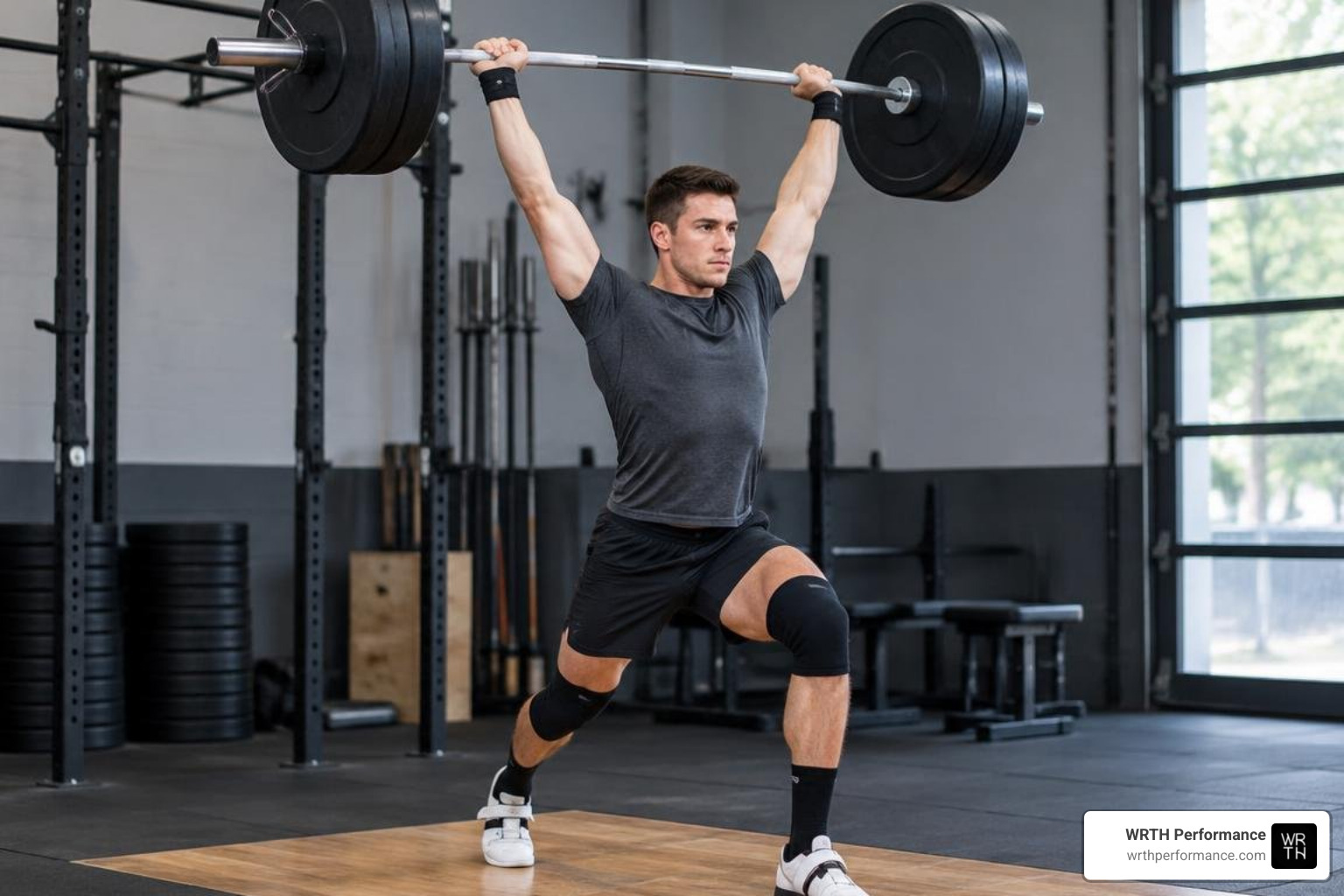
Comparing Training Formats for Maximum Impact
| Training Format | Ideal For | Key Advantages | Typical Session Dynamics |
|---|---|---|---|
| 1-on-1 Private Coaching | Elite competitors, athletes with specific mechanical flaws, or high-level executives | Complete individual focus, real-time technique adjustments, customized programming | Single athlete with a coach; 45–60 minutes |
| Semi-Private (2–4 Athletes) | Teammates, training partners, or budget-conscious athletes | High coach-to-athlete ratio, competitive camaraderie, cost savings | Small group sharing targeted circuits; 60 minutes |
| Small Group / Camp (5–8 Athletes) | General athletic conditioning, youth team development | High energy, social motivation, affordable per-session cost | Structured group training; 60 minutes |
| Hybrid / Online Coaching | Traveling athletes, triathletes, self-motivated competitors | Extreme schedule flexibility, access to specialized coaches remotely | Digital workout delivery paired with periodic virtual check-ins |
For athletes seeking a comprehensive, high-touch solution that blends custom training with premium wellness tools, choosing an all-inclusive performance package can streamline your athletic development under one roof.
Investment Standards and Common Pricing Models
The cost of hiring a sports performance coach varies based on location, facility quality, coach credentials, and package sizes. Industry rates across the country illustrate the wide range of pricing models available:
- Single Sessions & Multi-Session Bundles: Single sessions at community facilities often range from $60 to $100 per hour. Multi-session packages offer built-in savings; for example, packages of 5 to 10 sessions typically bring the hourly cost down to $65–$80 per hour.
- Elite Private Coaching Packages: Private training with former professional athletes often costs between $80 and $100 per hour when purchased in 4- to 8-session packages.
- Small Group Formats: Budget-friendly small-group training options can cost as little as $25 per person per session for groups of up to eight participants, or around $50 per person for smaller groups of 3-4.
- High-End Executive Coaching: Data-driven programs featuring advanced performance testing often use monthly retainers ranging from $1,500 to $2,400 (or equivalent domestic rates) for multi-session weekly commitments.
To better understand what influences these price variations, reviewing the real breakdown behind private fitness coaching rates will help you evaluate coach experience, equipment quality, and facility access when budgeting for your training.
Integrating Modern Recovery Modalities with Sports Conditioning
Training is simply the stimulus that breaks down muscle tissue and challenges your nervous system; true athletic adaptation happens during the recovery window. If you fail to recover adequately between high-intensity sessions, your performance will plateau, and your injury risk will rise.
Maximizing Longevity Through Science-Backed Rest
At WRTH Performance in Downtown Orlando, we believe recovery is just as vital as the time spent under the barbell. Modern athletic facilities utilize targeted recovery modalities to speed up tissue regeneration, clear metabolic waste, and calm the central nervous system:
- Infrared Sauna Therapy: Penetrates deep into soft tissues to increase circulation, encourage muscle relaxation, and improve cardiovascular efficiency.
- Cold Plunge Therapy: Uses cold water immersion to reduce exercise-induced soreness, blunt acute inflammation, and reset the autonomic nervous system.
- Pulsed Electromagnetic Field (PEMF) Therapy: Delivers gentle electromagnetic waves to stimulate cellular repair, optimize cellular energy production, and support overall tissue health.
- Red Light Therapy: Employs specific light wavelengths to enhance mitochondrial function, support collagen synthesis, and accelerate soft-tissue recovery.
Athletes who combine hard training sessions with restorative recovery practices achieve greater consistency and long-term durability. You can explore how athletes master performance and recovery to see how systematic rest enhances athletic output.
Nutrition and Lifestyle Strategies for High-Output Training
Physical conditioning and advanced recovery modalities produce optimal results only when fueled by sound daily habits:
- Energy Availability: Consuming adequate carbohydrates to fuel intense anaerobic efforts and sufficient protein to support muscle repair.
- Hydration and Electrolyte Balance: Replenishing fluid losses and key electrolytes (sodium, potassium, magnesium) to prevent cramping and maintain neural drive.
- Sleep Hygiene: Prioritizing 7 to 9 hours of uninterrupted sleep each night, which remains the single most effective natural recovery tool available.
- Holistic Lifestyle Integration: Balancing work, mental stress, and physical training ensures the body avoids excessive systemic strain. Mindset, proper fueling, and consistent lifestyle routines are inseparable from physical athletic success.
How to Select the Ideal Coach for Your Sport
Finding the right coach is one of the most important decisions you will make in your athletic journey. The right trainer is not just someone who pushes you until you are exhausted – they are an educator, a strategist, and an objective guide.
Essential Qualifications in Personal Sports Training
When vetting prospective trainers, look past flashy social media clips and evaluate their underlying credentials:
- Recognized Certifications: Look for gold-standard certifications such as the Certified Strength and Conditioning Specialist (CSCS) through the National Strength and Conditioning Association (NSCA), or certifications from ACE, NASM, or ISSA.
- Academic Foundation: Degrees in Exercise Science, Kinesiology, or Human Movement demonstrate a thorough grasp of anatomy, biomechanics, and exercise physiology.
- Verified Background and Track Record: Reputable coaches can provide verified references and a proven history of helping athletes reach their goals safely.
For a comprehensive guide on evaluating local trainers, read our breakdown on how to find the perfect local personal trainer to elevate your fitness journey.
Assessing Coaching Philosophy and Sport Specialization
Beyond credentials, a coach’s training philosophy must match your sporting needs. A track athlete requires different programming than a collision-sport athlete, and a rotational athlete (such as a golfer or baseball player) needs training focused on multi-planar power.
Frequently Asked Questions About Personal Sports Training
How many times per week should an athlete train with a personal trainer?
Training frequency depends on your competition schedule, training age, and current season:
- Off-Season (3–4 sessions/week): This is the ideal window to build foundational strength, correct mechanical imbalances, and develop explosive power while competitive demands are low.
- In-Season (1–2 sessions/week): The focus shifts toward maintaining strength and power, supporting tissue recovery, and managing overall physical fatigue between games.
- Beginners and General Fitness (2–3 sessions/week): Allows adequate time to learn fundamental movement patterns while giving muscles and connective tissues sufficient time to adapt.
What happens during an initial sports performance assessment?
An initial assessment is a baseline-setting session, not an exhausting workout. It typically includes:
- Movement Screening: Evaluating posture, joint mobility (hips, shoulders, ankles), and movement stability through standard patterns like squats, lunges, and overhead reaches.
- Performance Baselines: Testing jump height, sprint acceleration, lateral agility, or upper/lower body power using objective measurement tools.
- Goal and History Review: Discussing past injuries, upcoming athletic milestones, weekly schedules, and nutritional habits to shape a tailored training roadmap.
Can personal training help athletes transition between competitive seasons?
Yes. The transition period between sports seasons – often called the active recovery or preparatory phase – is critical. A personalized coach helps you safely deload after a demanding season, addresses chronic joint tightness or muscular imbalances developed during competition, and steadily rebuilds multi-directional athleticism before the next season begins.
Conclusion
Personal sports training provides athletes with a clear, science-backed roadmap to reach their physical potential. By combining comprehensive movement assessments, sport-specific strength and conditioning, and modern recovery practices, you can build explosive power, sharpen movement efficiency, and stay durable throughout your competitive career.
At WRTH Performance in Downtown Orlando, we provide a private, luxury training environment with capped memberships. Our members enjoy access to top-tier equipment, custom programming, and science-driven recovery therapies – including infrared sauna, cold plunge, PEMF, and red light therapy. If you are ready to take your physical capabilities to the next level, elevate your performance with personal training and discover what happens when expert coaching meets dedicated effort.
