

Workout Recovery Equipment: Top Options at a Glance
Workout recovery equipment includes tools that help manage post-training soreness, improve mobility, and make it easier to stay consistent with demanding workouts.
| Equipment category | Best for | Typical investment |
|---|---|---|
| Foam rollers and massage balls | Everyday tightness and mobility work | Low |
| Percussive massage devices | Targeted muscle tension before or after training | Low to mid-range |
| Dynamic air compression systems | Tired legs after running, cycling, or hard lower-body sessions | Mid to premium |
| Cold plunges and cold therapy | Short-term soreness management and post-event recovery | Mid to premium |
| Infrared saunas and heat wraps | Relaxation, warmth, and stiff muscles | Mid to premium |
| Red light, PEMF, and vibration tools | Technology-focused recovery routines | Mid to premium |
The right choice depends on your training, goals, space, and budget. A foam roller may be all a beginner needs, while frequent runners, lifters, and high-performance athletes may value targeted percussion, air compression, cold exposure, heat, or newer light-based tools.
I am Jason Kasheta, a personal trainer with more than 20 years of experience in strength, fitness, nutrition, and performance coaching. At WRTH Performance, a private fitness, training, recovery, and wellness facility, I help clients pair smart training with workout recovery equipment that supports long-term performance.
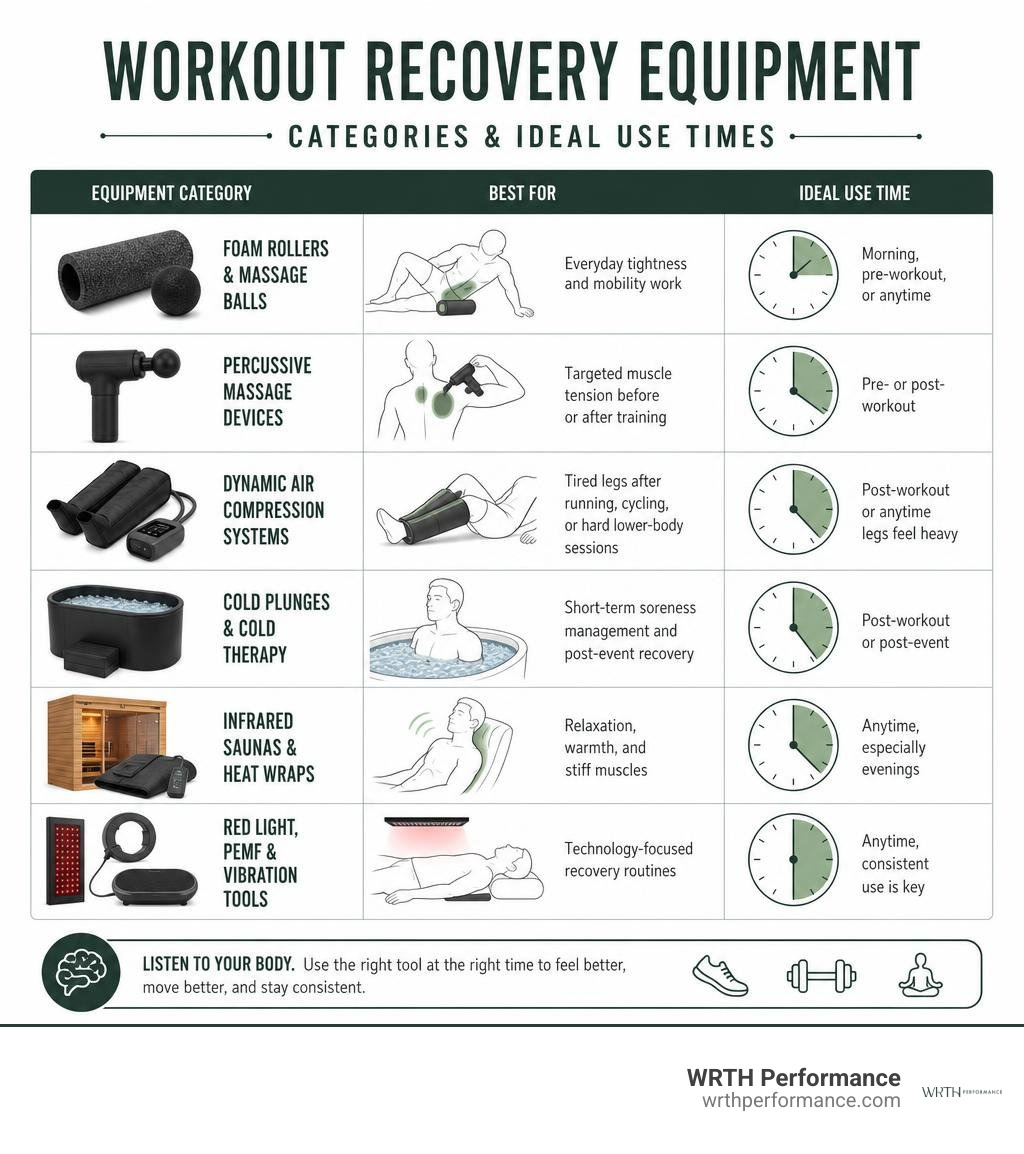
Comparing Top Workout Recovery Equipment Categories
When navigating the modern fitness landscape in 2026, understanding how different categories of workout recovery equipment function helps you build an efficient regimen tailored to your training intensity. From self-myofascial release tools to advanced technology-driven systems, each recovery modality addresses tissue fatigue in a distinct way. For a comprehensive overview of how setting up a structured environment maximizes these benefits, check out An Essential Guide to Gym Recovery Equipment.
Below, we break down the primary categories, exploring how specific mechanisms target soreness, circulation, and tissue revival.
Percussive and Vibration Devices
Percussive massage guns and vibration platforms deliver rapid, repetitive mechanical strokes or oscillations directly into muscle tissue. High-amplitude percussive therapy works by overriding pain signals sent to the brain while simultaneously stimulating blood circulation in localized target areas.
Modern top-tier devices—such as the Theragun PRO Plus – integrate multi-modal treatments into a single unit. Modern massagers operate across motor speeds typically ranging from 1500 to 2500 RPM, offering adjustable amplitudes to penetrate deep into heavy muscle groups like quads, glutes, and lats.
Key advancements in this space include:
- Heated percussive attachments: Combining heat with mechanical percussive massage preps tight muscles 3x faster than percussion alone, making pre-workout mobilization significantly more rapid.
- Near-infrared LED integration: Built-in light heads allow simultaneous deep-tissue stimulation and light wave absorption during a massage session.
- Vibration modes for sensitive areas: Dedicated low-amplitude vibration settings provide gentle relief around delicate joints and bony prominences where high-impact percussion might feel too harsh.
Cold and Heat Modalities
Thermal therapy remains a cornerstone of performance recovery. Temperature manipulation acts directly on blood vessels, cellular metabolic rates, and nervous system tone.
- Active Cold Plunge Tubs: Contemporary cold plunge systems use high-powered water chillers to cool water down to as low as 37°F or 39°F without requiring manual ice bags. Active water filtration and continuous ozone purification keep water pristine. To dive deeper into how cold immersion influences performance, read our detailed guide on Cold Plunge Therapy.
- Far-Infrared Saunas: Units constructed from low-EMF Canadian Hemlock wood deliver deep radiant heat. Far-infrared wavelengths penetrate past the surface of the skin to heat body tissues directly, causing blood vessel vasodilation, promoting systemic sweating, and soothing stubborn joint stiffness.
- Contrast Therapy Protocols: Alternating between hot environments (infrared sauna at 120°F–150°F) and cold immersion (cold plunge at 49°F–52°F) creates a rapid vascular pumping action. Vasodilation from heat followed immediately by vasoconstriction from cold accelerates blood turn-over across systemic tissue beds.
Dynamic Air Compression Gear
Dynamic pneumatic compression systems utilize multi-zone inflatable sleeves that fit over the legs, hips, or arms. By applying structured, sequential pressure from the furthest extremities inward toward the heart, these systems mimic the body’s natural venous valves and muscular pumping actions.
Leading models like the Normatec 3 Lower Body and the high-pressure Reboots One utilize patented pulse patterns across 5 to 8 overlapping air chambers. Delivering customizable pressure levels up to 240 mmHg, dynamic air compression helps clear metabolic waste products like blood lactate following high-volume training. Full-length lower-body and hip sleeves extend treatment up through the glutes and lower back, avoiding circulatory bottlenecks in the groin area and offering complete lower-body regeneration.
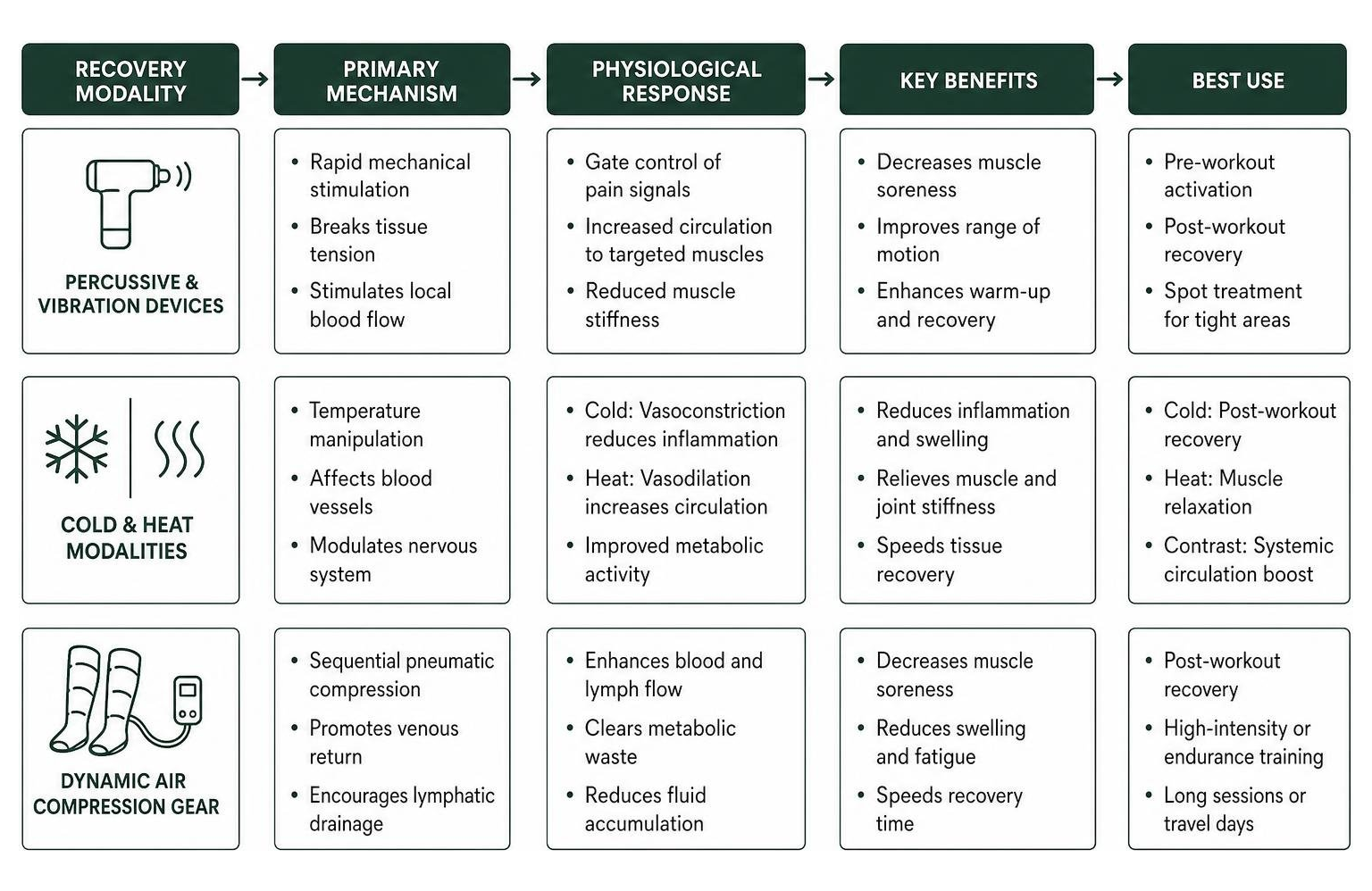
How Recovery Modalities Reduce Soreness and Enhance Performance
Exercise produces micro-tears in muscle fibers and generates metabolic byproducts that lead to delayed onset muscle soreness (DOMS). Integrating targeted recovery tools helps shorten the downtime required between grueling workouts. Understanding the physiological principles behind cool-downs is key. Explore Post-Workout Recovery: Why You Shouldn’t Skip the Cool Down to learn how transition protocols lay the groundwork for effective recovery.
Cold Exposure vs. Heat Therapy
Choosing between cold plunge exposure and far-infrared heating depends heavily on your immediate training context and timing:
- Cold Exposure (Vasoconstriction): Submerging in cold water triggers rapid vasoconstriction, temporarily restricting blood flow to active tissues and numbing nerve endings to dull acute pain. This reduces acute tissue inflammation post-event. However, routine cold plunging immediately following hypertrophic strength workouts can blunt muscle growth pathways; timing cold sessions several hours away from heavy lifting preserves hypertrophy signals while still mitigating extreme soreness. Learn more in our breakdown on From Stress to Soreness: How Cold Plunges Boost Your Well-Being.
- Heat Therapy (Vasodilation): Infrared heat relaxes tight muscle fibers, increases soft tissue elasticity, and accelerates localized systemic circulation. Using far-infrared heat prior to exercise or on rest days preps tight muscle tissue up to 3x faster than resting alone, easing stiffness and enhancing joint mobility.
Red Light and Pulsed Electromagnetic Field Tech
Modern wellness spaces frequently feature non-invasive energy therapies that work at the cellular level:
- Red and Near-Infrared Light Therapy: Red light (around 660 nm) and near-infrared light (around 850 nm) penetrate deep tissue layers to stimulate cytochrome c oxidase within cellular mitochondria. This boosts adenosine triphosphate (ATP) production, giving cells more energy to execute repair processes. Discover how this works in our overview of PEMF Red Light Therapy.
- Pulsed Electromagnetic Field (PEMF) Technology: PEMF devices emit gentle, non-invasive electromagnetic waves at specific low frequencies that match the Earth’s natural magnetic field. These waves help rebalance cellular electrical charges, supporting nutrient transport across cell membranes and relaxing stressed joint tissues. Read A Practical Guide to PEMF Therapy Benefits for a full breakdown.
Comparing Budget, Mid-Range, and Premium Options
Building a home recovery setup involves selecting tools that deliver the highest performance return for your available budget and space.
| Investment Tier | Typical Price Range | Featured Equipment | Key Capabilities |
|---|---|---|---|
| Budget | $15 – $150 | Manual foam rollers, massage peanut balls, resistance bands, basic kinesiology patches | Targeted myofascial release, portability, low maintenance, localized edema control |
| Mid-Range | $150 – $600 | Percussive massagers (Hypervolt 3 Pro, Theragun Relief), heat wraps, basic air compression | Adjustable speeds, smart app Bluetooth routines, active thermal attachments |
| Premium | $600 – $3,000+ | Full-body pneumatic compression systems (Normatec 3 Full Body, Reboots ONE), active cold chillers, far-infrared saunas | Active 37°F cooling, low-EMF heating, pressure up to 240 mmHg, automated filtration |
| Luxury / Commercial | $8,000 – $45,000+ | Sitting hyperbaric oxygen chambers (1.4 to 2.0 ATA), commercial-grade massage chairs, whole-body vibration suites | High atmospheric pressurization, whole-body coverage, maximum biological stimulation |
Selecting High-End Workout Recovery Equipment for Home Use
When investing in home recovery tech, pay close attention to operational features that ensure convenience, durability, and safety:
- Sanitation and Water Filtration: Premium cold plunge chillers should feature continuous ozone purification and multi-stage polypropylene cotton filtration. This avoids constant water changes while keeping water crystal clear.
- Energy Efficiency and Operating Costs: Advanced chillers like the Nuvio Recovery Chiller Pro utilize eco-friendly 300W compressors capable of cooling water to 37°F while maintaining daily energy costs around 19 cents.
- Smart App Scheduling and Control: Remote app integration allows you to pre-cool a tub or pre-heat an infrared sauna prior to finishing your workout, ensuring your setup is ready the moment you step into your home wellness space.
- Noise Levels: Look for devices that operate between 40 and 50 dB so that compression pumps or chillers run quietly indoors without disrupting your living space.
Integrating Workout Recovery Equipment into Daily Routines
To maximize recovery tools without feeling overwhelmed, structure your usage around specific training phases:
- Pre-Workout Activation (10–15 Minutes):
- Use a percussive massage gun with a heated head attachment on major muscle groups for 2 to 3 minutes per zone.
- Perform light dynamic compression on low pressure settings (30–60 mmHg) with hips extended to prime leg muscles.
- Post-Workout Recovery (20–30 Minutes):
- Apply dynamic air compression sleeves within 60 minutes after intense cardio or lower-body training at medium-to-high pressure (100–180+ mmHg) to clear metabolic waste.
- For acute joint inflammation, complete a 2- to 3-minute cold plunge session at 49°F–52°F.
- Active Recovery & Rest Days (30–45 Minutes):
- Spend 20 to 30 minutes in a far-infrared sauna at 130°F to encourage circulation and sweating.
- Relax on a red light or PEMF mat to support systemic relaxation.
Frequently Asked Questions About Muscle Recovery
What recovery equipment is most effective for runners versus weightlifters?
Runners typically benefit most from dynamic air compression leg systems and cold plunge tubs. Air compression helps move lymph fluid and clear metabolic waste from high-mileage legs, while cold immersion soothes repetitive joint impact in the ankles, knees, and hips.
Weightlifters often get greater value from percussive massagers, heated soft-tissue tools, and far-infrared saunas. Percussive therapy breaks up stubborn localized muscle knots in thick tissues like the lats, glutes, and hamstrings, while infrared heat increases connective tissue pliability before heavy lifting sessions.
What is the optimal water temperature setting for a cold plunge tub?
While some commercial units cool down to 37°F, the optimal recommended therapeutic temperature range for home cold plunging is 49°F to 52°F. Operating within this range delivers all the physiological cold-shock benefits, such as reduced acute soreness and nervous system stimulation, while keeping energy consumption manageable and reducing unnecessary tissue distress. Most users see excellent benefits from immersing for 2 to 3 minutes per session.
Can dynamic air compression systems be used daily after workouts?
Yes, dynamic air compression gear is safe and effective for daily post-workout use. Using compressed air systems for 20 to 30 minutes following intense exercise helps clear blood lactate and reduces post-workout heaviness. For best results, use the equipment while lying in a slightly reclined position with extended hips to allow unobstructed blood flow throughout the lower body and groin.
Conclusion
Selecting the ideal workout recovery equipment comes down to aligning your personal training demands with tools that provide consistent, enjoyable relief. Whether you begin with a simple foam roller or build out a dedicated home wellness space equipped with smart cold plunges, percussive massagers, and pneumatic compression systems, prioritizing post-workout recovery helps ensure long-term performance and joint durability.
At WRTH Performance, located in Downtown Orlando, we believe recovery is just as vital as the time spent under the barbell. As a luxury private membership gym and recovery facility with intentionally capped membership, we provide our members with exclusive access to top-tier, science-backed recovery modalities – including Theraguns, full spectrum infrared saunas, active cold plunges, PEMF, and red light therapy – alongside expert personal training and nutrition counseling. To experience a higher standard of athletic longevity and explore our private facility, learn more at The Ultimate Recovery Hub.
