

What a Health Personal Trainer Adds to Your Workouts
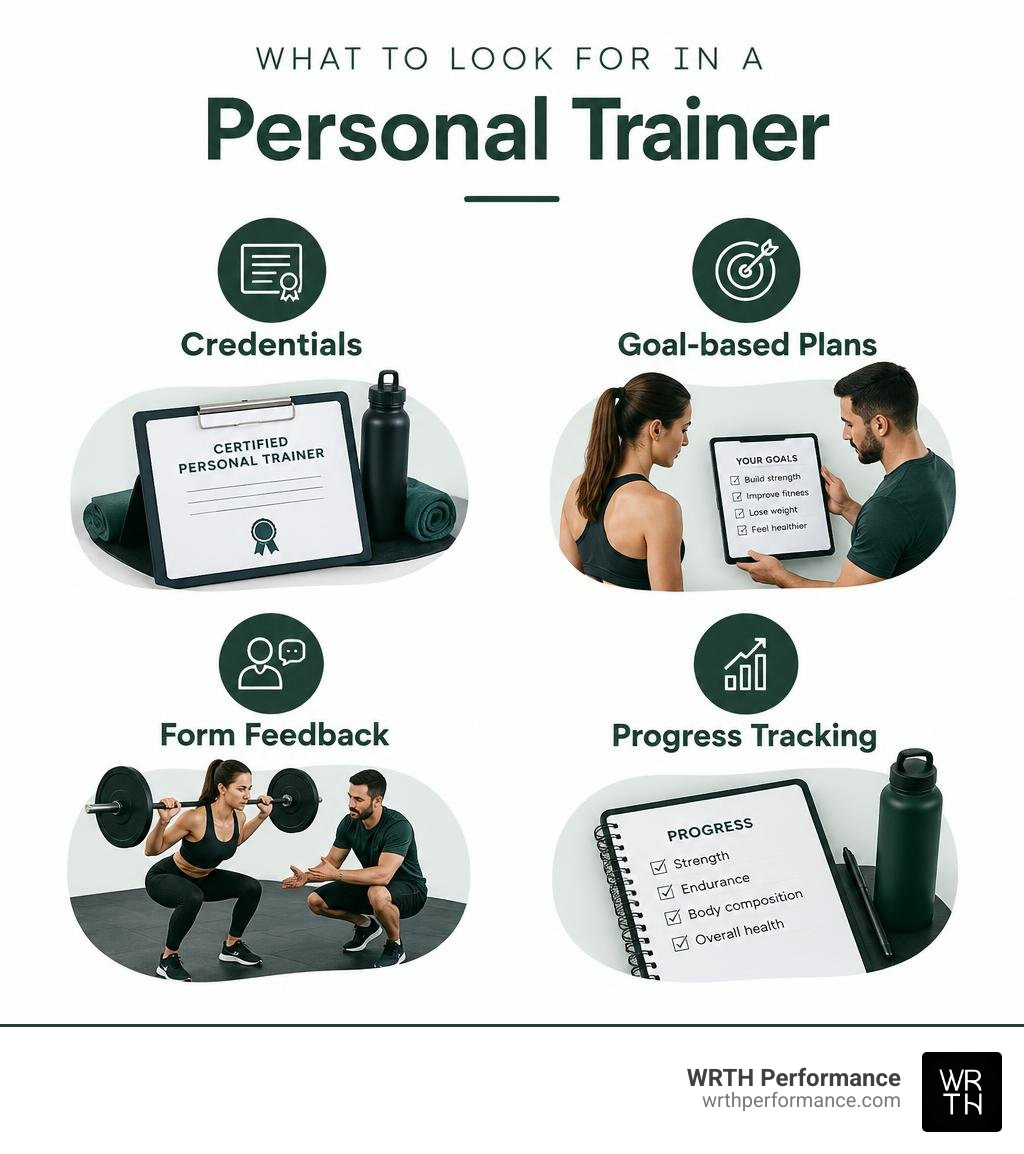
Hire a personal trainer if you want a plan built around your goals, feedback on your form, and help staying consistent. Look for a relevant certification, clear experience with your goals, and a coach who can explain how they will track progress. Training alone costs less, and a workout partner can help you show up. A qualified trainer adds individual guidance that neither option reliably provides.
That matters when your schedule is tight or your progress has stalled. The right coach can adjust your workouts as you get stronger, help you build useful nutrition habits, and make each session count.
I’m Jason Kasheta, a health personal trainer and the owner of WRTH Performance in Orlando. I have degrees in Exercise Science and Nutritional Chemistry, and I’ve spent 20 years helping more than 1,000 people work toward strength, fitness, and weight-loss goals.
Learn more about a health focused personal trainer:
What Does a Health Personal Trainer Actually Do?
Many people assume a fitness coach exists simply to stand over you with a stopwatch, shout generic encouragement, and count to ten. In reality, an elite personal trainer operates as an exercise architect, biomechanics specialist, and accountability partner all in one.
At WRTH Performance, our approach to high-performance personal training guidance begins with data and structured observation rather than random exertion. A professional coach does not guess what your body needs; they evaluate your unique physiology to design a roadmap tailored for sustainable performance and longevity.
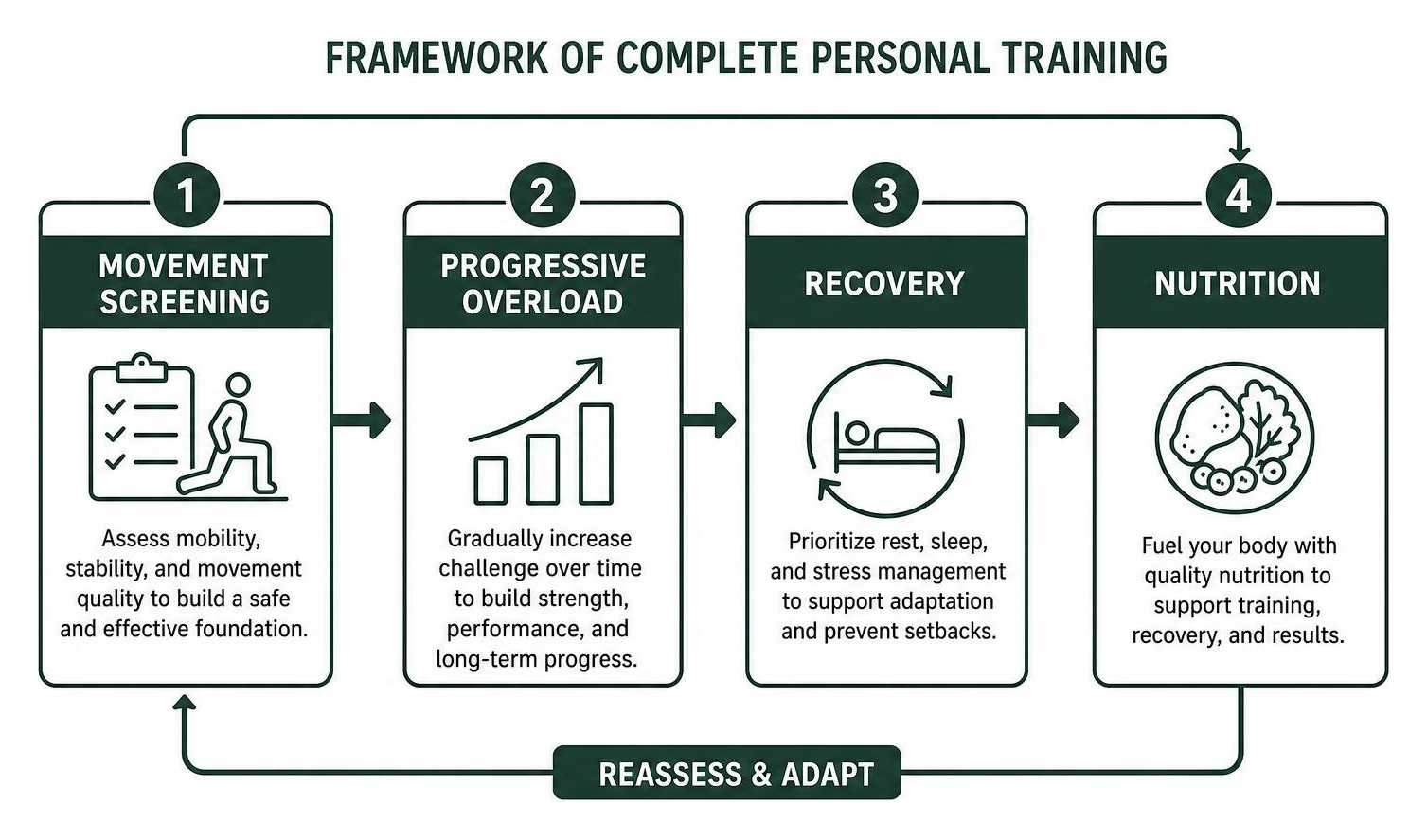
Beyond Counting Reps: Movement Screening and Safe Mechanics
Before you load a barbell or perform high-intensity intervals, a dedicated fitness coach conducts thorough baseline movement screenings. This process includes analyzing postural alignment, joint mobility, core stability, and movement compensation patterns.
When you exercise without professional oversight, subtle muscular imbalances often go unnoticed. Over time, poor movement mechanics under load lead to joint irritation, chronic tightness, and setbacks. Utilizing functional personal training methods ensures that every hinge, squat, push, and pull reinforces proper joint tracking.
Your coach provides real-time tactile and verbal feedback, ensuring progressive overload is applied safely. This targeted attention allows you to build genuine strength without sacrificing joint integrity.
Integrating Habit-Based Nutrition and Lifestyle Support
Exercise makes up only a fraction of your week. What you do during the other 165 hours dictates whether your body adapts or burns out. A knowledgeable fitness professional extends their guidance beyond the gym floor by integrating habit-based nutrition strategies and lifestyle support.
Rather than forcing unsustainable, restrictive crash diets, we provide structured nutrition counseling focused on macronutrient balance, adequate protein intake, and consistent hydration. Coaches help you navigate real-world obstacles like business dinners and travel schedules, while offering actionable advice to optimize sleep quality and daily stress management.
By addressing the complete lifestyle picture, a dedicated trainer turns sporadic efforts into permanent daily habits.
The Proven Science: Training Alone vs. Partner vs. Supervised Coaching
When pursuing body composition goals, many people debate whether hiring a private coach is worth the investment compared to working out solo or finding a gym buddy. Clinical research provides clear answers (Lu et al., 2024).
A 12-week randomized controlled trial evaluated 66 healthy individuals divided into three distinct groups: individual training (IT), exercising with a partner (EP), and training under personal trainer (PT) supervision (Lu et al., 2024). The results demonstrated clear differences across body composition, strength progression, and safety metrics.
| Metric / Outcome | Solo Training (IT) | Partner Training (EP) | Personal Trainer Supervised (PT) |
|---|---|---|---|
| Fat Mass Reduction | -0.39 kg | -0.51 kg | -1.61 kg (p = 0.033) |
| Muscle Mass Gain | +0.33 kg | +1.16 kg | +1.38 kg (p = 0.002) |
| Squat 1RM Increase | +20.05 kg | +26.27 kg | +36.21 kg (p < 0.001) |
| Nutritional Adherence | Low baseline | Moderate | High consistency (p < 0.001) |
| Recorded Injury/Discomfort | 188 occurrences | 167 occurrences | 60 occurrences |
Why Working with a Health Personal Trainer Outperforms Solo Training
The clinical data highlights that while training with a partner provides competitive motivation and outperforms solo workouts for strength, personal trainer guidance produces unmatched body composition changes (Lu et al., 2024).
In the 12-week study, only the personal trainer group achieved significant fat reduction (-1.61 kg) compared to baseline (Lu et al., 2024). Furthermore, when assessing squat performance, the supervised group vastly outpaced the solo group, gaining an average of 36.21 kg on their one-rep max compared to just 20.05 kg for individual lifters (Lu et al., 2024).
Safety data was equally revealing. Solo lifters recorded 188 instances of sports-related discomfort and minor injuries, and partner groups recorded 167 (Lu et al., 2024). In contrast, the professionally supervised group recorded only 60 instances (Lu et al., 2024). Professional supervision delivers superior strength and fat loss while drastically reducing physical setbacks.
The Synergistic Role of Advanced Recovery Modalities
Modern fitness coaching recognizes that your progress is limited by your ability to recover from training stress. At WRTH Performance in Downtown Orlando, we combine personalized exercise prescription with evidence-backed recovery modalities to support long-term physical resilience.
Integrating infrared sauna sessions promotes cardiovascular circulation and muscular relaxation. Cold plunge therapy assists in reducing exercise-induced inflammation and balancing the nervous system. Additionally, pulsed electromagnetic field (PEMF) therapy and red light exposure stimulate cellular recovery and tissue support.
When your coach pairs intelligent strength programming with science-driven recovery protocols, you adapt faster, feel energized, and maintain peak performance year after year.
Evaluating Qualifications, Accreditations, and Training Formats
The fitness industry has a wide variance in credentialing standards. Finding an exceptional coach requires looking closely at education, accredited certifications, and practical expertise.
A landmark study evaluating trainers using the Fitness Instructors Knowledge Assessment (FIKA) revealed that 70% of surveyed fitness professionals lacked a degree in an exercise science-related field. Uncredentialed trainers scored 31% lower on foundational exercise science assessments than those with dedicated bachelor’s degrees.
Furthermore, trainers holding credentials from top-tier organizations like the American College of Sports Medicine (ACSM) or the National Strength and Conditioning Association (NSCA) correctly answered 83% of physiological and programming questions. Trainers with non-accredited or lower-tier certifications averaged only 38% accuracy. Years of experience alone was not predictive of scientific knowledge – formal education and accredited training remain the gold standard.
Global Credentialing and Standards Across Regions
Fitness credentialing frameworks vary around the world:
- United States: While Washington D.C. implements local registration, the US market largely relies on third-party accreditation through the National Commission for Certifying Agencies (NCCA) and the United States Registry of Exercise Professionals (USREPS). Organizations such as ACSM, NSCA, NASM, and the American Council on Exercise (ACE) – which oversaw 11.7 million sessions led by certified professionals in 2024 and an estimated 49.4 million client sessions in 2022 – set the baseline for professional competency.
- United Kingdom & Europe: Standards are standardized by CIMSPA (Chartered Institute for the Management of Sport and Physical Activity) and EREPS (European Register of Exercise Professionals), requiring Level 3 and Level 4 personal training qualifications.
- Australia & New Zealand: Governed by AUSactive and the International Confederation of Registers for Exercise Professionals (ICREPs), requiring strict vocational certificate frameworks.
- Brazil: Personal training is legally regulated; trainers must hold a physical education university degree and maintain active registration with the Conselho Regional de Educação Física (CREF).
One-on-One, Semi-Private, and Hybrid Online Coaching Formats
Selecting the right coaching structure depends on your budget, schedule, and individual accountability needs. Reviewing demystified coaching rates helps clarify what format fits your life:
- One-on-One Private Coaching: The gold standard for individualized attention, technique refinement, and customized programming. Ideal for those with specific performance goals, postural imbalances, or demanding schedules.
- Partner and Semi-Private Training: Training alongside a partner provides a motivating social environment while reducing per-person costs. As research confirms, working with a partner provides meaningful strength benefits, making it an excellent middle ground.
- Hybrid and Online Coaching: Combines customized digital workout programming with periodic in-person or virtual check-ins. This setup offers flexibility for frequent travelers who possess baseline lifting competence.
Investment Structures and Selecting Your Coach
Personal training packages are typically structured around multi-session commitments designed to ensure progressive adaptations over time. Understanding common package terms protects your investment:
- Session Lengths: Typically offered in 30-minute high-intensity formats or comprehensive 60-minute blocks that include targeted warm-ups, strength training, and mobility work.
- Package Tiers: Common packages range from 4, 8, 12, or 24-session blocks, often offering preferred rates for larger upfront commitments.
- Expiration Windows: Most facilities implement usage windows (such as 60 to 90 days) to encourage consistent training attendance.
- Cancellation Policies: Industry standard requires a 24-hour notice window to reschedule a session without forfeiting the credit.
Reviewing a step-by-step personalized program guide ensures your investment aligns with a clear, measurable plan of action.
How to Choose the Right Health Personal Trainer for Your Goals
To find a coach who fits your needs, evaluate candidates across four primary pillars:
- Verified Credentials: Confirm an NCCA-accredited certification (e.g., NSCA, ACSM, NASM, ACE) or a relevant university degree in exercise science or kinesiology.
- Assessment Process: Ensure they begin with an in-depth movement screen, health questionnaire, and lifestyle evaluation before prescribing heavy loads.
- Coaching Philosophy: Choose a professional whose methods prioritize longevity, functional strength, and sustainable habits over reckless fatigue.
- Communication and Rapport: Your trainer should provide constructive feedback, active listening, and clear explanations of the physiological reasoning behind your plan.
Frequently Asked Questions About Personal Coaching
What qualifications should a top-tier trainer possess?
Look for an NCCA-accredited certification (such as NSCA-CPT, CSCS, ACSM-CPT, or NASM-CPT) or a bachelor’s degree in exercise science, kinesiology, or sports physiology. They should also maintain current CPR/AED certifications and actively pursue continuing education credits.
How often should you work with a trainer each week?
Most clients achieve optimal results by training 2 to 3 times per week with their coach. This frequency ensures sufficient stimulus for strength adaptations, allows close monitoring of exercise mechanics, and establishes weekly accountability.
How do personal training package rates and expirations work?
Coaching packages are generally billed either per-session, as monthly memberships, or discounted multi-session packages. Sessions typically carry an expiration policy (commonly 60 to 90 days from purchase) to maintain program momentum and consistent scheduling.
Conclusion
Hiring a qualified fitness coach is an investment in your long-term vitality, functional strength, and physical resilience. As clinical research proves, professional oversight delivers superior fat loss, enhanced strength progression, higher nutritional adherence, and dramatically lower injury rates compared to exercising alone (Lu et al., 2024).
At WRTH Performance in Downtown Orlando, we provide an exclusive wellness environment with capped private memberships. By combining personalized strength coaching with advanced recovery modalities – including infrared sauna, cold plunge, PEMF, and red light therapy – we help our clients achieve sustainable health and peak performance.
Explore our private personal training memberships today and take the first step toward a smarter, science-driven fitness journey.
References
Lu Y, Leng X, Yuan H, Jin C, Wang Q, Song Z. “Comparing the impact of personal trainer guidance to exercising with others: Determining the optimal approach..” Heliyon, 2024. PMCID PMC10828695.
For a broader look at how supervised training compares with other approaches, the American Council on Exercise offers research-based guidance on personal trainer effectiveness.
